Travel
How to Make Friends in a New City – Tip #1
- JOIN A LANGUAGE SCHOOL
Now, this may seem like an obvious thing to do if you move to a country where you don’t speak the local language (and no, ordering a burger or asking where the bathroom is does not count), especially if you plan to stay there for a couple of months or more.
But many expats and immigrants, particularly from my “brown” part of the world, prefer to muddle through daily life with vernacular scraps, picked up in various situations and locations, and, needless to say, grammatically atrocious. Coupled with histrionic gestures and deliberately choppy English, they manage to make themselves almost perfectly understood, albeit in a primitive, cave-man sort of way. “I-go-mercado, para shopping.” “This-seat-libre, por favor?” “Me gusta this movie. It is muy bien.” “Tiene scissors, chop-chop?”
The real barrier, though, is the cost of learning a language. Well-reputed language schools promise you many grand things – “Speak Spanish like a native in just six weeks! Three months to your dream job as a parasailing instructor in sun-filled Majorca! Looking for love in Spain? Let us teach you the language of loveee!” But they also require you to dig deep into your pockets for the bargain, which most immigrants cannot afford to do.
However, thanks to my avid habit of reading advertisements in the metro (and everywhere else), I came across a language school that was reasonably-priced, and only a five-minute walk from where we lived, near Puerta del Sol. Upon investigation, I discovered that C.E.E. Idiomas was indeed a legitimate language school, complete with an administrative office, three stories of classrooms, and plenty of bright-faced, noisy internationals crowding its narrow staircases – and not, as I had initially suspected, some sinister racket for trapping gullible foreigners on shoestring budgets.

- Puerta del Sol, “Gate of the Sun”, the very busy symbolic center of Madrid
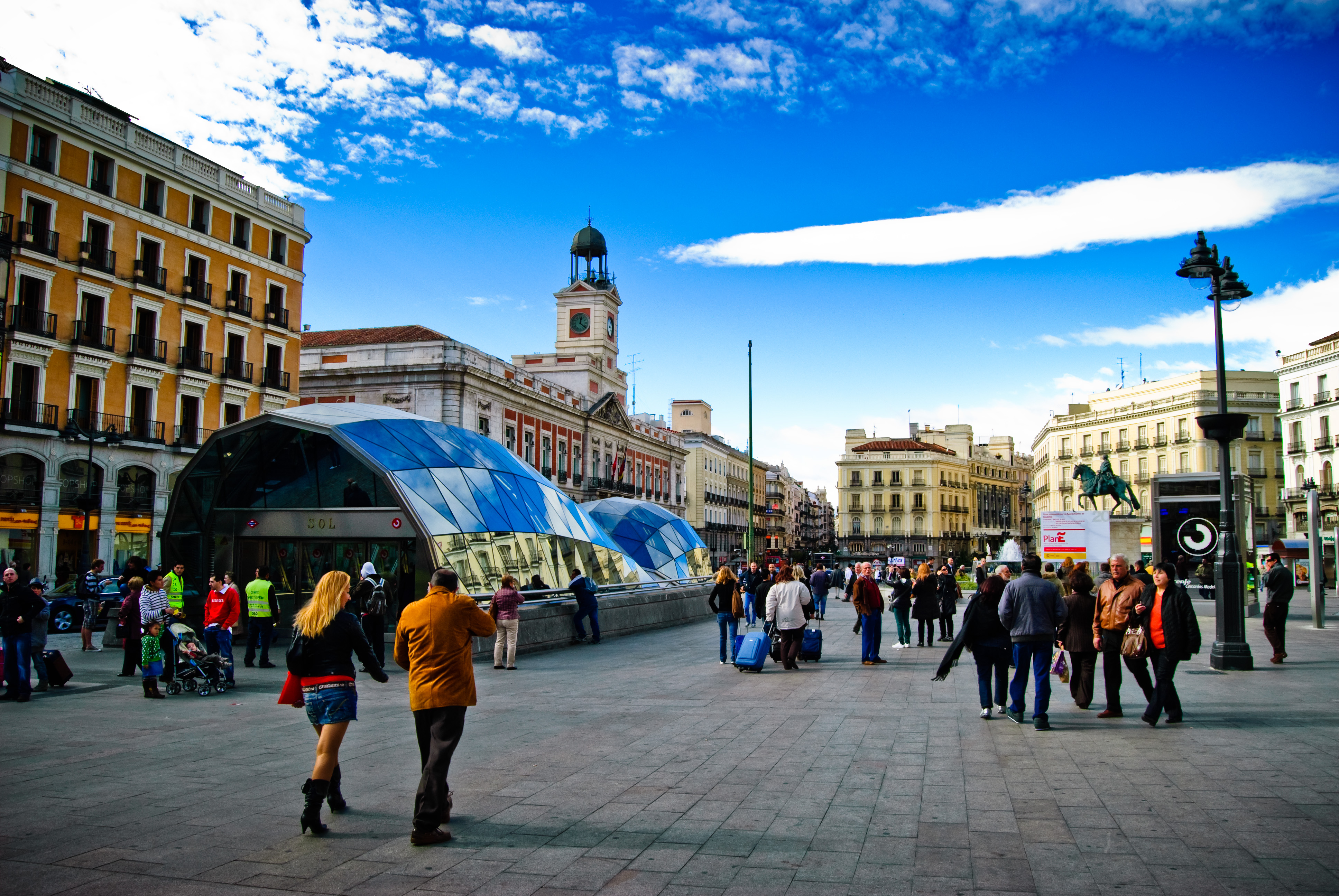
My first day of class I was terribly excited. I’ve always been a bit of a nerd, and loved going to school as a kid. So, I picked out a crisp new Generation kurti, slipped on my favorite orange flats, tossed a purple notebook and Piano pen into my Democracy Now tote bag, and set off bouncing along to class. I wasn’t only going to learn Spanish. Nobody knew it, but I had other intentions. I was friend-hunting.
Unfortunately, my dream of finding a kindred spirit, sitting there waiting for me in the classroom – darkish hair, fairly tall, not unlike myself, whom I would then proceed to hug, and demand, “Where have you been all this time???” – did not quite materialize. None of the students were the right fit. Some were too old (grandmother), some were too young (just out of high school), some had too many responsibilities (committed housewife, mother of two school-goers), and some were just too foreign (Kentucky, USA?). There was only so much we could share or talk about.
But still, peeling off my pajamas and going to class everyday in the fresh morning air, interacting with corporal human beings apart from my husband and the Carrefour lady was admittedly very pleasant. Plus, our Spanish teacher was an absolute riot, and we spent most of the hour laughing, though we didn’t understand half of what she said. I was learning quite a lot, too, very useful and practical things (for example, the important distinction between ojo, eye, and ajo, garlic, which I had confused more than once at the grocery store: “Tiene salsa de ojo?” “Do you have eye sauce?”). And – how can I deny it – I loved being back in ‘school’!
Read Tip #2, Tip #3, Tip #4, Tip #5, and the introductory post of this series!
How to Make Friends in a New City (where you don’t even speak the language!)
Published in BootsnAll, May 19th 2014
When you’ve spent most of your life in one place, you tend to take many things for granted – your aging collection of books, for instance (don’t you love it when the pages start turning yellow?), or sharing wardrobes with your sister (mostly against her will), or that little bakery down the street that sells your favorite lemon rolls (you don’t want to know how they make them, they’re just really good).

Most of all, you take your friends for granted.
Imagine the last time you were out with a group of old friends. There you are, huddled together around a big table at your regular hangout, chattering nineteen to the dozen, laughing uproariously about something no one else would find funny, spooning mouthfuls of steaming pad thai or bread-and-butter pudding into your mouth; faces beaming, teeth flashing, shiny heads bobbing. There, at that moment, you and your friends are the center of the universe. Everything and everyone else is in orbit around you. You are beautiful; you are invincible.
And then, in the midst of that irresistible merriment, your gaze falls upon a forlorn corner of the restaurant, where, at a table for two, somebody is sitting all alone; quietly sipping a coffee, or wrestling with a bit of leftover pasta on the plate; sometimes pretend-texting on her cell phone, sometimes looking up and smiling expectantly at the restaurant. And you think, pityingly, a little smugly, “Oh, that poor lonely human being. She has no friends!”
Well, meet the newest member of One’s Company, or “My cell phone is my best friend” club – me!

I could never imagine being in a situation like this in my hometown, Lahore. Even in that sprawling metropolis of 12 million people, you invariably bumped into a friend, or at least an acquaintance, wherever you went. It made sense: you had friends from school, friends from college, friends from work. You had cousins, cousins’ friends, cousins’ cousins. You had neighbors, family friends, brothers’ and sisters’ friends. You just knew a lot of people, and you all frequented the same handful of restaurants and retail stores. So in a place like Lahore, it was impossible to be ‘friendless’, to sit by yourself in a cafe writing pensively in your diary – because somebody would find you out, and cheerfully plop down on the seat beside you for a catch-up.
But, navigating a new city, adjusting to a new country, fathoming a new language – you were nobody. You knew nobody. You had to start from scratch. Desde cero.
In Madrid, there were no cozy International House socials to dive into, like at Berkeley, or late-night bonding sessions in the corridors with your floormates; there was no common kitchen like at Democracy Now!, where your like-minded, socially-conscious colleagues from around the world congregated to dissect America’s latest foreign policy misadventure over cups of fair-trade coffee; there was no lively Pakistani expat community that materialized, without fail, at every Eid, Independence Day and birthday party, to enjoy haleem and chicken tikkas at a New York dhaba.

No. Madrid wasn’t like Berkeley, or New York, and of course it wasn’t like Lahore. Everything was different, from the streets to the sunlight to the food, people, shops, signs. Everything was new.
When we landed, we didn’t know a thing about the city. Sure, it was exciting, but we weren’t just there as tourists, for a few days or a week, staying at a plush downtown hotel, taking the double-decker tour bus to all the monuments and museums, posing for pictures with the matador in Plaza Mayor, eating out at TripAdvisor-recommended restaurants, buying flamenco figurines at the souvenir shops, and then happily heading back home.
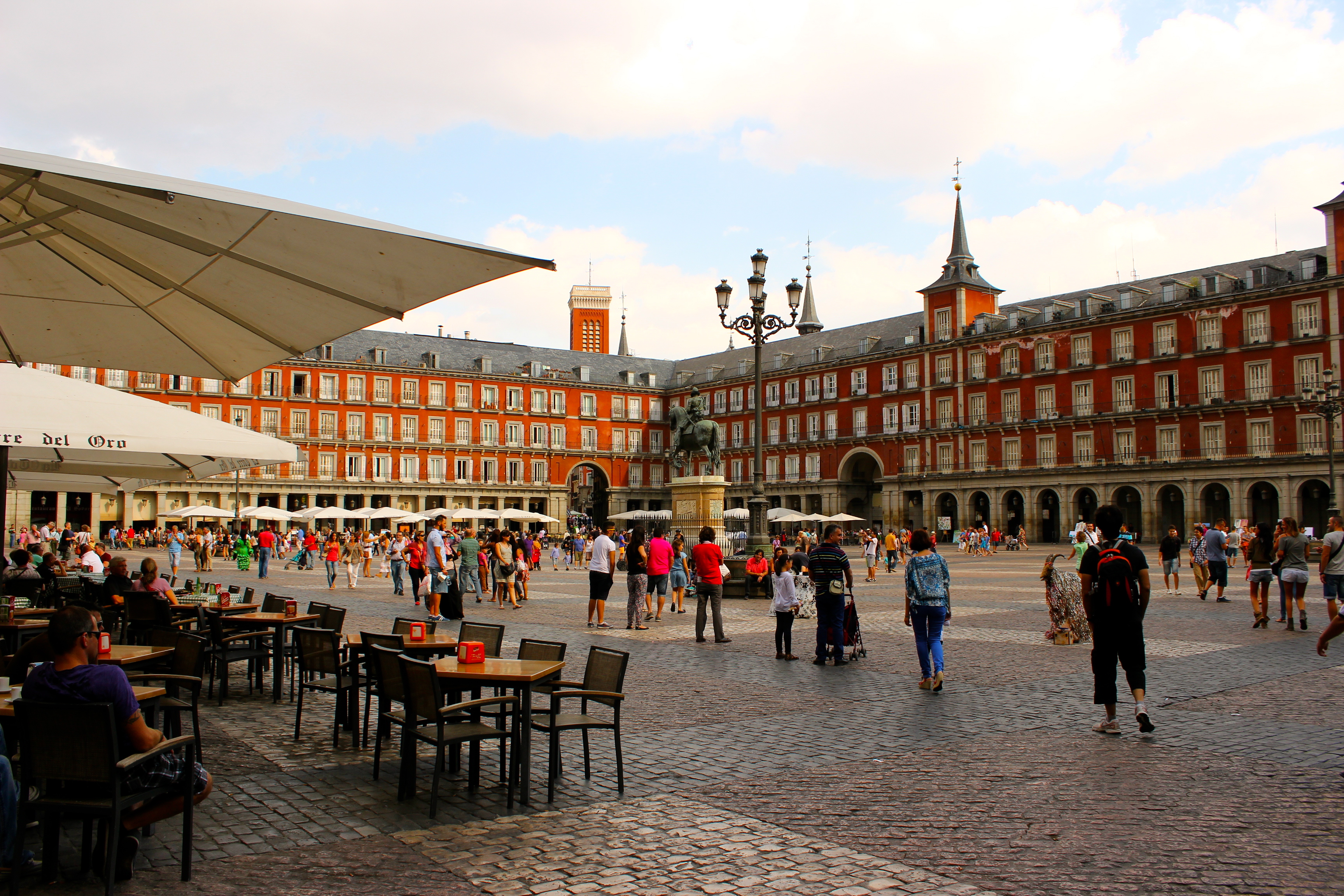
No, we were there to stay. To make a home. And roaming around the streets of Madrid in search of an apartment during our first week, more than once I got that funny feeing in my stomach – like the feeling you get as a kid, standing outside the principal’s office for some primary school misdemeanor you may have committed. I suppose you could call it panic. “How am I going to do this! Where are we going to live? Where will I buy my groceries? Where will I find my turmeric and green chilies and Shaan masalas? Where on earth can I buy bathroom slippers, a 7-Watt light bulb, square-shaped tupperware, 16″x16″ cushion fillings, hummus and baking powder, apart from the ludicrously-priced El Corte Ingles?”
Which cell phone package has the cheapest local rates? Which internet service provider has the least hidden costs? How do I apply for a monthly metro pass? What do I do if I lose my monthly metro pass? What do I do if I get robbed! (Incidentally, these are not hypothetical questions)
Most important of all, how was I supposed to make friends? I could not enroll in a university (95% of the Arts & Humanities courses I was interested in were taught in Spanish), nor did I have a work visa. My level of Spanish was too low to even apply for a volunteer gig. How was I ever going to meet people, and engage in a longer-than-five-minute conversation with anybody, apart from my husband and the Carrefour checkout lady?
Faced with these sundry, seemingly insurmountable challenges, I could let myself sink into despair. That was always easy, and poetic. I could happily wallow in nostalgia – double, triple, quadruple layers. I could become a hermit, pottering about the house in a white robe, watering my herbs, sipping ginger tea and people-watching from the balcony. I could also live quite a gregarious virtual life, through Facebook, Skype, What’s App, Viber. There were just so many options.

But I had a plan. The location was Madrid, and the objective, “Friends”, those slippery creatures that every new immigrant or expat craves….
Read the complete post on BootsnAll, the ultimate online resource for the indie traveler! Or, read Tip #1, Tip #2, Tip #3, Tip #4 and Tip #5 right here on Windswept Words.
Thoughts on Leaving Pakistan
Published in the The Friday Times Blog, October 10th 2013
The last time I put thoughts to paper was a year and a half ago, when Z and I moved back to Pakistan from the U.S. It happened very suddenly, under very sad circumstances, and there we were – thrust into a disorienting new life, filling roles we had never anticipated, never wanted, inhabiting, once again, the cloistered, uninspiring world of Lahore’s privileged class.
Much elapsed during the past 18 months in Lahore – much to rejoice and remember. Engagements, bridal showers, weddings. Baby showers, and babies! Farewell parties and welcome-back parties, birthday parties and Pictionary parties.
PTI fever, elections, and Pakistan’s first peaceful political transition. Cliff-diving in Khanpur under a shower of shooting stars, dancing arm-and-arm with Kalash women as spring blossomed in the Hindukush, tracking brown bears and chasing golden marmots in the unearthly plains of Deosai.
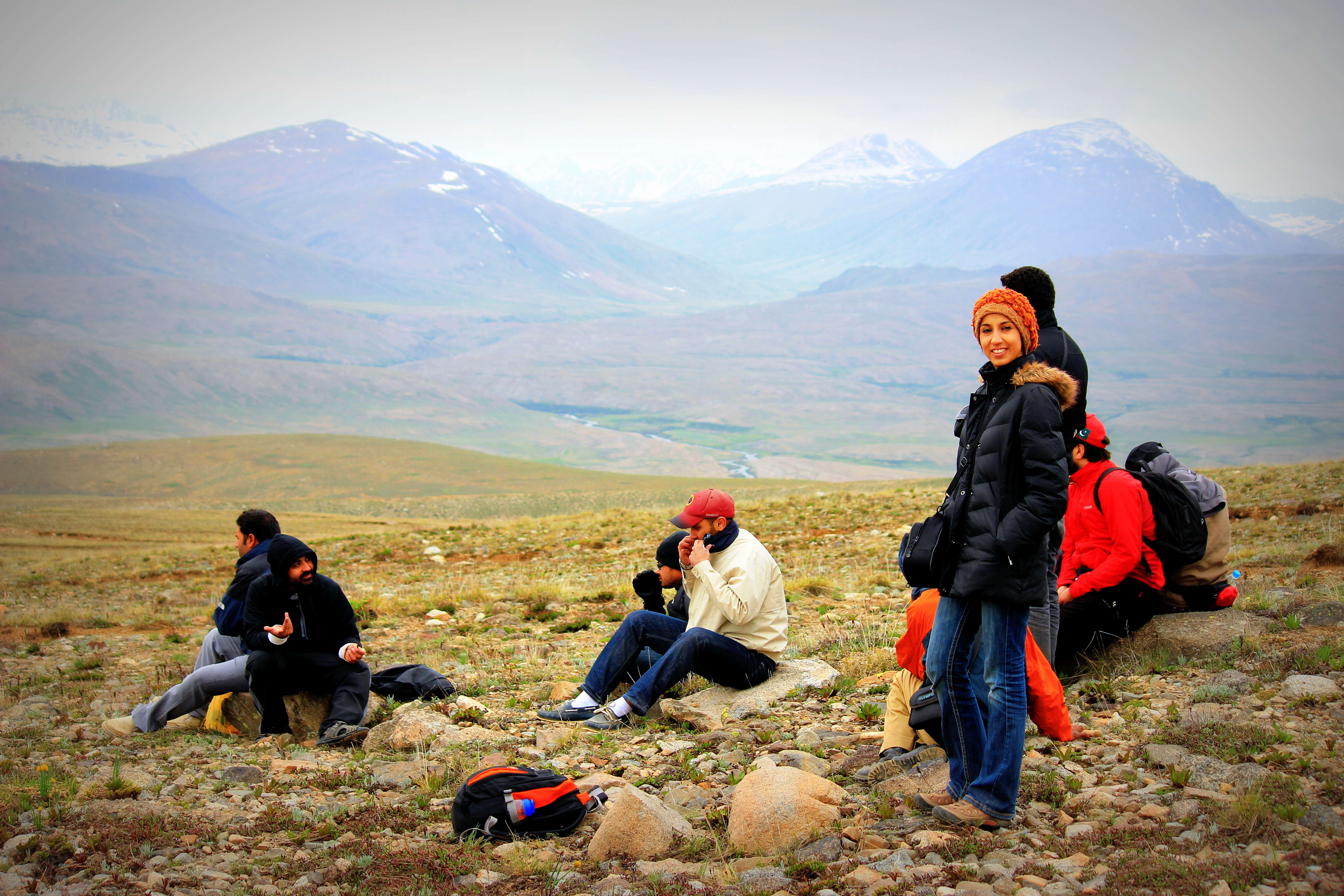
I rediscovered my love of history, of abandoned old places that teemed with a thousand stories and ghosts and memories, thanks to a research job at LUMS. I spent many days wandering the cool corridors of Lahore Museum, many hours contemplating the uncanny beauty of the Fasting Siddhartha, whom I had the privilege of photographing up-close. I stood beneath the most prodigious tree in the world in Harappa. I got down on my knees with a shovel and brush during a student archaeological excavation in Taxila, personally recovering the 2, 000-year old terracotta bowl of a Gandhara Buddhist monk.

But, there was also dissatisfaction. Frustration. Restlessness. When we were not travelling, we were in Lahore. And Lahore was, well, warm. Convenient. Static. Living there again was like a replay of our childhood; like watching a favourite old movie on repeat. After a while it got monotonous, somewhat annoying, and a little disappointing.
In Lahore, I could see what the trajectory of my life would be, the next 10 years down. It was all planned out, neatly copied from upper-class society’s handbook, with but minor divergences here and there.
It wasn’t a bad plan. In fact, it was a perfectly good, even cushy plan, one that would have made a lot of people quite happy.
Not me.
There were other things, too, about Lahore, and about Pakistan, things that had bothered me growing up but now seemed magnified to alarming proportions – the incomprehensible extremes of wealth and want, the insurmountable divisiveness of class, and, most worrying of all, the overwhelming self-righteousness and religiosity.
You could not escape it. Everywhere, from TV talk shows to political rallies, drawing rooms to doctors’ clinics, there was a national fixation with religion. Everybody, it seemed, was desperate to convince others – and themselves – of their absolute piety, their A+ scorecard-of-duties-towards-God, their superficial Muslim-ness. Instead of the genuine, unselfconscious goodness that shines through truly spiritual people, in Pakistanis I just saw fear. Religion for them wasn’t about peace, and love, and knowledge. Religion was base. Religion was social security. Religion was a tool of power.
I wanted to say to these superficial Muslims, to all Pakistanis: Just look at the state of our country. Do you really believe that religion has helped us? Has it at any level, be it individual, societal or state, improved the country? Has it alleviated poverty, reduced rape and murder, mitigated corruption?
Have we as a nation achieved anything positive, anything progressive, in the suffocating garb of “religion”?
No. On the contrary, we, as a nation, have become more intolerant, more oppressive, more barbaric, as our outward religious zeal reaches new heights.
And we still do not realize it. The Matric-fail maulvi at the local mosque still preaches that a woman wearing jeans in public is jahannumi, Hell-bound , the TV reporter interviewing an old peasant who has lost his home in a flood wants to know if he kept his Ramzaan fasts, and that educated, apparently “modern” aunty you met at a family dinner launches into a sermon that the reason Pakistan is beset with crises is because we don’t pray enough.
That was the most terrifying thing I found about Lahore, and about Pakistan. It had become a place where no other framework for discussion about the future of the country, about anything at all, was possible. We were mired in religion. We were stuck. We were deeply and hopelessly stuck.
As for the people who thought differently, the elite and “enlightened” class that I belonged to, they responded to the onslaught by retreating further and further into their elite Matrix – a sequestered, protected world where they met up with friends over Mocha Cappuccinos at trendy New York-style cafes, where they shopped for designer Italian handbags in centrally air-conditioned shopping malls, where their children spoke English with American accents and dressed up for Halloween, where alcohol flowed at raucous dance parties behind the gates of a sprawling farmhouse.
It was a parallel universe, where we all lived free, modern lives, like citizens of a free, modern country, utterly disconnected from the “other” Pakistan, the bigger Pakistan, and for all intents and purposes, the “real” Pakistan. Yet perhaps it was our only survival, the only way to keep sane and creative and happy for those of us who chose to live in our native country.
But I could not reconcile myself with it. I found it schizophrenic. Perhaps living abroad had changed me too much. I could not find balance, I could not find peace in Lahore.
So when Z applied to and got selected for a European Union PhD scholarship based in Madrid, Spain, I was thrilled – and a little relieved. Was I looking for an escape? Maybe. Was that the only solution? I don’t know.
When we left Lahore, on that eerie twilight flight in August, our lives packed into just one suitcase and backpack each, it was bittersweet. I was sad to say goodbye to loved ones, to friends and family whom I had spent such wonderful moments with in the past year and a half. I would miss being a part of their lives. And I would miss the incomparable natural beauty of Pakistan – beauty and heritage that is disappearing day by day due to neglect and ignorance.
Yet, I knew that I had to go. I knew that staying in Lahore – “settling for” Lahore – buying joras from Khaadi, attending tea parties, managing servants, the odd freelancing or part-time job at LUMS, was not going to make me happy. And we could not depend on the love of family and friends to sustain us forever. At the end of the day, everybody had their own lives to lead, their own paths to carve, their own hearts to follow.
And that is how we ended up in Madrid.
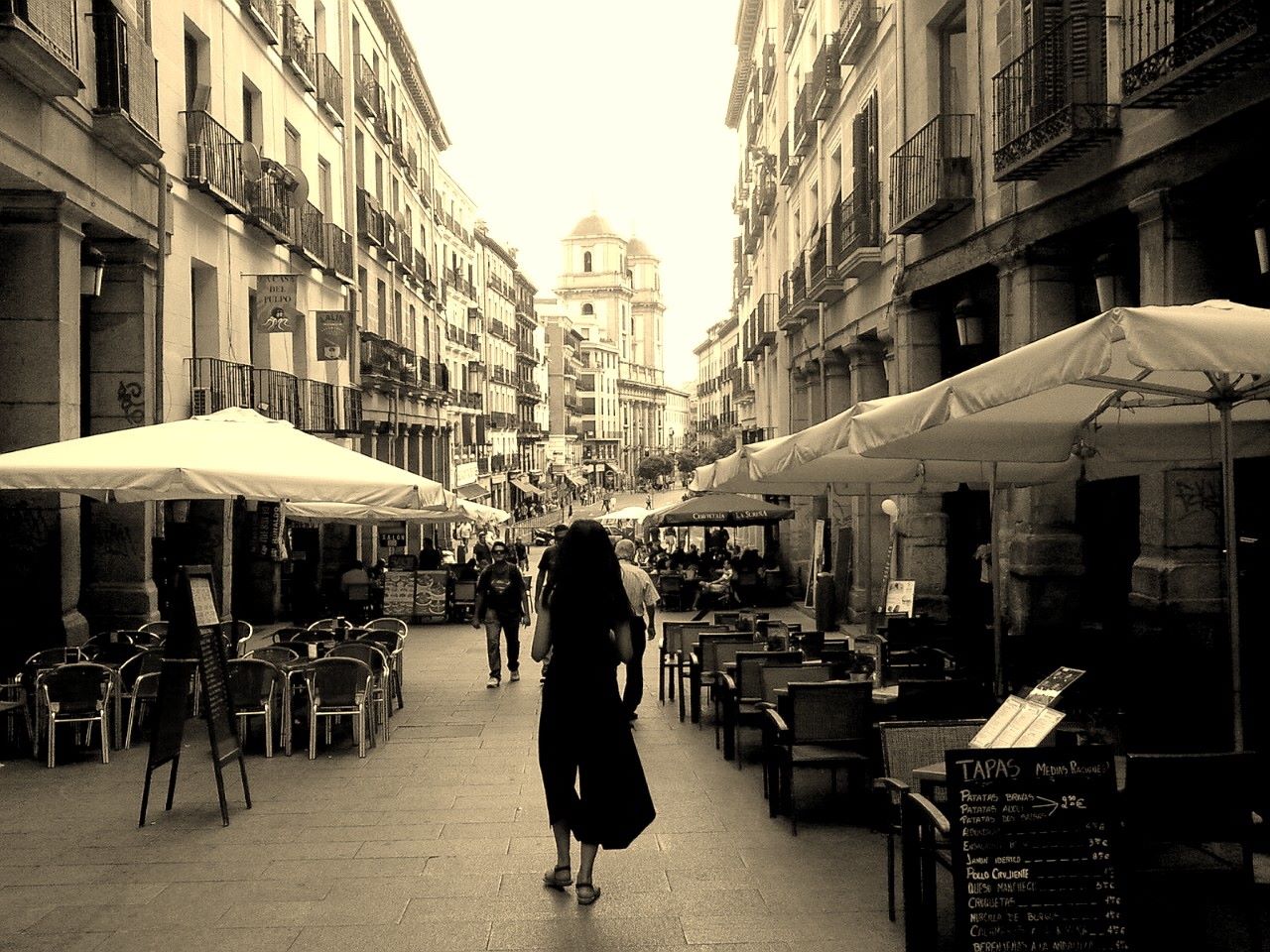
Sitting here in our apartment, a cozy, parquet-floored 1-bedroom affair, I can hear the babble of excited young voices below the window, a medley of idioms and accents; the clink of glasses and clatter of dishes from neighbouring restaurants; the smoky strumming of a flamenco guitar, the wheezy chorus of an accordion; the cries of Nigerian hawkers and Bengali street-peddlers, and the low hum of the occasional taxi cab, rolling along the cobbled streets of this lively old pedestrian barrio of the Spanish capital.
A new city, new adventures, new memories.
The Legend of Saif-ul-Malook Part VI
Lake Saif-ul-Malook, situated at a height 10, 600 feet at the northern tip of the Kaghan Valley in Pakistan’s Himalayas, is one of the most beautiful places on earth. I have been there twice, the first time as a 12-year old and then in 2009, when I determined to capture some of its magic on camera and on paper, in the words of two local storytellers who relate the legend of the Lake to visitors.
It is the story of a prince and a fairy, Saif-ul-Malook and Badr-ul-Jamal – a story of love, adventure, faith, magic, suffering and betrayal – a story of the multitude of human passions.
Many different versions exist, but below is a reproduction of what the storytellers told us, with ample writer’s liberties. I hope you enjoy it!
Read Part I, Part II, Part III, Part IV & Part V of the story
Now, you may wonder, what was Prince Saif up to at the moment Badr Jamal made her escape from the Palace in the shape of a white dove?
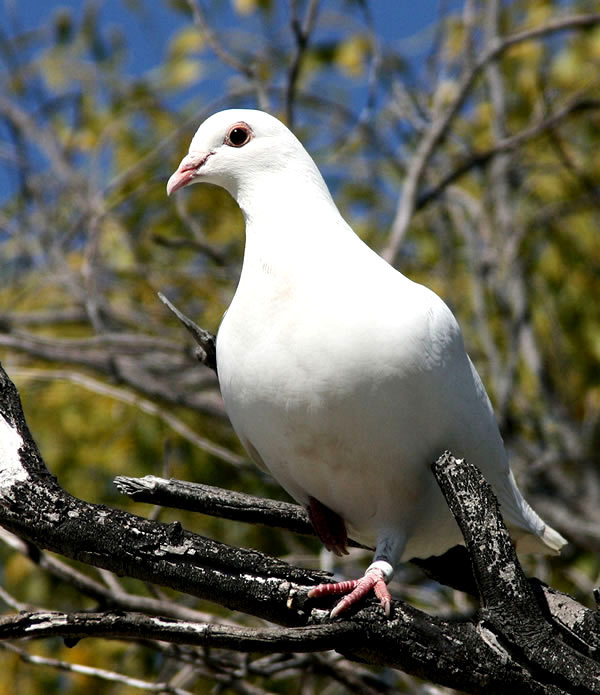
In fact, he was resting beneath the shade of an ebony tree deep in the woodlands of Nubia, after a fruitful but exhausting deer hunt. Eyes half-closed, stretched out on the soft green grass, he was thinking sweet thoughts about his beloved Fairy Queen, when a little white dove came and alighted on a branch above him.
It seemed to Saif that she was the prettiest dove he had ever seen – even though he didn’t consider himself a “bird person” – and he was suddenly possessed by a desire to capture her. “She’d make a nice little pet for my beautiful Badr,” he mused. So, he quietly got to his feet, picked up a net that lay amongst his hunting paraphernalia, and swiftly flung it over the bird.
But the net, as if repelled by an invisible force, bounced straight back at him, while the dove sat merrily on her perch untouched. Saif tried a second time to ensnare the bird, then a third, with the same perplexing result.
Then – and Saif could hardly believe his eyes or his ears, though he had witnessed his fair share of fantastic events – the dove turned her soft white head towards the Prince and spoke to him, in voice he could recognize among millions:
“Your attempts to capture me are in vain, Prince Saif. You can never own me. You can never possess me.”
It was Badr Jamal, of course.
“The only way to convince me of your love,” the bird continued, “the only way you will truly earn my love, is if you follow me to Paristan, my homeland. If you succeed in this, if you are able to brave the journey and seek me out in my father’s palace, among my own kind, I promise I will come back with you, as your wife and partner in life. And I will never leave your side till as long as you live.”
With these words, Badr Jamal fluttered her snowy white wings and was off, leaving Saif in a state of utter discombobulation.
On his return to Egypt, one look at his mother’s swollen red eyes and the funereal aspect of the Palace confirmed Saif’s worst suspicions – Badr Jamal, his beloved, the person he cherished more than anything else in the world, the person whom he had struggled to possess for six long, arduous years, was gone.
Saif didn’t want to hear anything. What had happened in his absence? Why? When? How? All that was irrelevant now. He knew what he had to do.
“Mother, please tell one of the servants to saddle up a good, strong horse and prepare me a travel bag, with enough provisions to last about a month. I’m leaving right away.”
“But, Saif!” his mother pleaded. “Don’t you see? Badr Jamal doesn’t want to be here! Let her go, Saif. She is happier with her own kind. Please, just forget about her! There is no dearth of beautiful ladies here in Egypt. Think, Saif, destiny has afforded you a second chance at a happy, normal life. Don’t gamble it away for an illusion, for a fantasy, my son! Don’t you let this madness get the better of you!”
However, as before, the Queen Mother’s weeping, wailing and emotional threats had no effect on Prince Saif’s resolve. He was an obstinate fellow, and he truly did love Badr. Just as he had found his way to the magical lake in Kaghan Valley, just as he had completed the 40-day penitence, the chilla, and escaped from the Ogre and the Flood with Badr in his arms, so he would bring her back from the deepest, darkest dungeons of Paristan if he had to.
“I’m sorry, Mother,” he embraced the Queen one final time before mounting his ride. “But I can’t give up without even trying.” Kicking the horse into a gallop, Prince Saif rode away from the Palace a second time, without looking back.

Now, Prince Saif didn’t really know where Paristan was, or whether it even existed. Legends placed the kingdom of the fairies “east of Egypt”, somewhere on the mountainous border of Persia and India – and the directions stopped there.
So, he travelled east for several months, crossing Sinai, the fabled rivers Tigris and Euphrates of Mesopotamia, the Great Salt Desert of Persia, the Snowy Mountains of Afghanistan, stopping time to time at some shepherd’s hut or sarai, a highway inn, to rest and refresh his supplies.
Many times he cursed himself for forgetting to carry his Sulemani topi, the magic cap bequeathed to him by the old buzurg during his first quest, which had the power to transport its wearer to any place on earth in the twinkling of an eye.
“I suppose I’m not allowed any shortcuts this time,” he grumbled.
At length, Saif reached Peshawar, or Purushapura, as it was known then, the bustling western capital of the Kushan Empire, gateway to the Indian subcontinent. Merchants from all corners of the Silk Route thronged its narrow streets, hawking their varied wares in loud voices – silk, cashmere, cotton, spices, dry fruit, wine, carpets, woodwork, decorative objects of marble, ivory and jade, gemstones, weapons, secrets and stories – there was nothing you could not find in the legendary markets of Purushapura.

Meandering through the bazaar while his horse rested in the city’s stables, Prince Saif stopped at a chai khana, a tea shop, for a cup of the traditional Peshawari kahwa, hot green tea sweetened with honey or sugar and spiced with cardamom. Looking around the crowded little shop for a place to sit, he spotted an empty stool next to an old man with a flowing white beard, who sat calmly sipping his tea and fingering a rosary.
Prince Saif walked up to the old man, saluted him with a respectful bow, and said, “Venerable sir, would you be so kind as to allow this weary traveller to seat himself beside you?”
The old man looked up at Saif. Their eyes met, and Saif had the sensation that he knew him from somewhere before; that this was not a chance encounter. “My son!” the old man smiled, eyes crinkling at the corners. “Please, it would be my honor.
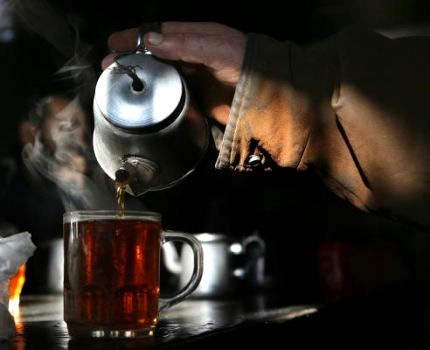
“And now, tell me,” he continued, once Saif had made himself comfortable and given his order. “What brings a gentleman like yourself to this wily merchant’s city?”
Quickly, Prince Saif related to his new friend the objective of his journey: to reach the mythical land of Paristan (which, according to legend, lay somewhere in these parts), and recover his beloved Fairy Queen and true wife, Badr Jamal.
“Paristan? My dear lad!”, the old man let out a bemused chortle. “You know the reason why they call it a ‘mythical’ land? Because Paristan has no physical existence! You will not find it on any map, you will not see any signboards pointing out the way, no gates or city walls to saunter through. On the whole, it is entirely impossible for you to reach there in your present state.”
Seeing Prince Saif’s face fall in despair at this rude reality check, the old man hurried to add. “Oh, but don’t look so glum! The good news is that I can help you. Or, at least I have some things that could help you…” He started rummaging through the coarse jute sack he carried, and duly produced a tattered woolen cloak, and a short wooden staff. Saif was overcome by déjà vu.
“I’m sorry, sir,” he interrupted. “But I feel like we’ve met before. Were you ever in Egypt some years back?”
“Nonsense, son! I’ve never set foot outside the city of Peshawar,” the old man hastily brushed aside the question. “Now, listen to me carefully – for although I have not travelled much, I have learnt a great deal in the long journey of my life, from observing and talking to all the people that pass through this city. And what I tell you now may well be the only hope you have of penetrating Paristan and seeing your wife again…”
It was true. Once more, a nameless old buzurg was to be Prince Saif’s savior.

A few hours later, Prince Saif found himself riding with a caravan of merchants towards Tattoo, a small village in the kingdom of Gilgit, perched on the craggy slopes of the magnificent Karakoram mountains. The merchants, heading for China via the Khunjerab Pass, had agreed to drop Saif off at the village in exchange for his horse, a handsome Arabian steed that would fetch a weighty price in the horse fairs of the Mongolian steppe.
Saif parted with the animal with a heavy heart, but he actually had no further use for it. His real destination was 20 kilometers further off Tattoo, where no horse or mule tracks led; a place called Joot, today famous by its English appellation, Fairy Meadows.
“I have never been to Joot, but I hear tell that it is a most breathtaking place,” the old man at the tea shop had recounted. “They say that a Fairy King of great power established his kingdom there, some 1,000 years ago, in the shadow of that fearsome peak Nanga Parbat, the Naked Mountain.
“Nobody lives in Joot. The locals are wary of venturing there at all because of all the stories; shepherds who went to graze their flocks and never returned; explorers, bandits, naturalists and mystics, attracted to the place by its beauty and its solitude, and never seen again. It is enchanted, they say, the abode of witches and jinns, as perilous as it is beautiful.
“This is where you must go.”

And that is where Saif had arrived, after a grueling uphill hike from Tattoo, following the old man’s directions to the letter. He stood in the middle of a vast green meadow, facing the awesome, ice-covered Nanga Parbat. Dusk was approaching, and there was not a soul in sight. All was silent, except for the gentle hum of the evening breeze amongst the pines.
Saif pulled out from his satchel the tattered woolen cloak. “Once you don this cloak,” the old man had explained, “everything around you that is made from the hands of men, will dissolve from view. Buildings, roads, entire cities, will simply vanish.
“And everything that was hitherto unseen – the realm of jinns and fairies, and all other manner of supernatural creatures – will suddenly come to light, as real, as tangible, as indubitable as that tea cup you hold in your hands.”
As for the wooden staff, the old man had said he had bought it from a wandering Jewish mendicant, who claimed that the staff contained a tiny fragment of the miraculous staff of Moses. Placed in the right hands, it had the power to unlock or open any kind of barrier – gates, doors, chains – both magical and mundane.
Standing before that gigantic mountain in the grassy fields of Joot, the very location of Paristan, all that was left for Saif to do was throw on the cloak, brandish the staff, and smash his way into the Fairy King’s palace to recover his bride.

But Saif hesitated. What if all of this was a lie? What if the old man had tricked him? And now, there he was, alone in that desolate spot with no food, no shelter, no money, not even his horse to help him retrace his steps and make the long journey home…
By this time it was almost completely dark, and a silver slipper of a moon had begun to glimmer above the jagged peaks of the Karakoram.
“Well, I don’t really have another plan, so I might as well give this a shot,” Saif thought. So, taking a deep breath, he grasped the wooden staff and wrapped the woolen cloak around him….
The things that happened henceforth are better left imagined. For sometimes there are sights so wondrous, events so singular that they defy description.
Let’s just say that the old man in the tea shop had known what he was talking about!
Read Part VII, the concluding part of the story
The Legend of Saif-ul-Malook Part IV
Lake Saif-ul-Malook, situated at a height 10, 600 feet at the northern tip of the Kaghan Valley in Pakistan’s Himalayas, is one of the most beautiful places on earth. I have been there twice, the first time as a 12-year old and then in 2009, when I determined to capture some of its magic on camera and on paper, in the words of two local storytellers who relate the legend of the Lake to visitors.
It is the story of a prince and a fairy, Saif-ul-Malook and Badr-ul-Jamal – a story of love, adventure, faith, magic, suffering and betrayal – a story of the multitude of human passions.
Many different versions exist, but below is a reproduction of what the storytellers told us, with some writer’s liberties. I hope you enjoy it!
Read Part I, Part II and Part III of the story
When Deo Safed reached the Lake, there was no one in sight. “Badr, Badr!” he roared. “Badr, Badr, Badr…” the mountains mocked his terrible cries.
Malika Parbat, the loftiest peak in the Kaghan Valley, towered silently above, her white slopes gleaming in the cold moonlight. “She’s gone, Deo Safed, she’s gone”, the Queen of the Mountains seemed to say to him. “Tonight you receive your just deserts.”

Deo Safed became desperate. Could it be? Was Badr Jamal truly lost? Did the Lake consume her, then, sucking her into its bottomless belly like a jealous monster, like he himself had done so many years ago?
There was only one way to find out.
Deo Safed struck one gigantic foot on the southwestern shore of the Lake. There was a dull moan, somewhere deep in the bowels of the earth, and, like a beast awakening, the ground heaved, shuddered, and ripped open where the ogre had stamped his foot.
The serene waters of the Lake began to churn and froth, tumbling out from the crevice in torrents of emerald and blue. Deo Safed had released the Spirit of the Lake.
As the waves went crashing down to the Valley below, Deo Safed stood, in the eye of the storm, rocks and trees and water hurtling over him. “I’ll find her! Even if she is dead, a corpse at the bottom of this accursed bottomless lake, I will find her!”
The water did not stop. It was the first great Flood of Kaghan.
Meanwhile, in the little cemetery on the outskirts of Naran town, Prince Saif and Badr Jamal had just fallen asleep under the shelter of a beautiful old deodar tree, when a tremendous thundering reached their ears, mingled with a hideous, inhuman wailing.
“He’s here!” Badr Jamal gasped, jolting out of her slumber. Her face was blanched.
For ten long years, the full bloom of her youth and beauty, Badr Jamal had been a slave, a prisoner of this monster, Deo Safed. For ten long years, she had not known family, or friendship, or love – only fear, and whispers, and unspoken dreams, the charade of loving a creature whom she reviled from the depths of her heart. He had tried to win her love, the ogre, using all manner of stratagems – fine clothes and jewelry, delicious, exotic foods, marvelous animals of all colors and shapes and sizes, a host of young fairies to attend upon her every wish.
But Badr Jamal was not free. And there was no pleasure in anything, not priceless jewels or the choicest morsel of food, if she was not free.
Now, this moment, was the closest chance she had had of escape, a real escape. And yet, anything could happen. She held close to Saif. They then saw, in the distance, coming from the direction of Malika Parbat above, the Flood.
It was rushing towards them with lightening speed, tearing out trees, submerging sleeping villages, annihilating every thing and creature that lay in its wake. In a matter of seconds, it would reach the cemetery. And that would be the end.
Saif looked at Badr Jamal, and said, shouting over the deafening roar, “This is it, my love. Tonight, we die, or we live. All we can do now is pray. So pray with me!”
Badr nodded, her face resolute, surrendering finally to whatever Fate had in store. And standing there beneath the sacred cedar, in the shadowy graveyard, on that clear, starlit night, they clasped hands, shut their eyes, and prayed.

“So this is what death feels like,” thought Saif. “Not as painful as I’d imagined, at least.”Saif prayed to God, and Badr to her gods, each with equal soul and passion. The roar of the flood was getting closer, and closer, until suddenly it seemed like it was over their heads, then below them, then all around.
But he wasn’t dead. He could still feel Badr’s warm hand clasped tightly around his. He opened his eyes.
Saif and Badr were standing in a cave, dry as leaves. At Saif’s feet lay the Suleimani cap, which he thought he had forgotten at the Lake and despaired of ever finding. “How?….” Saif’s voice trailed off as he stared at Badr, then at the cap, then around him at the cave. “Where are we?” Badr looked around in amazement. “How did we get here?” The cave was wide and airy, with a deceptively low mouth, so that they had to crawl to get out. Once outside, they saw that they were on a mountain high above the cemetery, which was by now completely inundated. Tombstones, rocks and fallen trees floated around in grim silence. The Flood had passed. They were alive. They were safe. God, and the gods, had listened.
But what about Deo Safed? Where was he, the great White Ogre whose fury had precipitated a Flood?
He wasn’t at the Lake anymore. He wasn’t even in Kaghan Valley. No, he was well on his way to his final resting place – to Deosai, Land of the Giants, in Baltistan, where all giants were born, and where each one of them went to die.
For Deo Safed had lost the will to live. Badr Jamal hadn’t drowned in the Lake. She had run away. Run away, from him. All these years, he had believed, he had convinced himself that she loved him. That she returned, to some degree, his ardent adoration for her. The truth was, he couldn’t live without her; nor could he live with the knowledge that she had betrayed him. He had lost. He was defeated, broken.
In Deosai there was peace. There, at the confluence of two of the greatest mountain ranges in the world, the Himalayas and the Karakoram, in the vast, unending plains of his birth, he went, and lay down, and died. His massive body crumbled, killed by unhappiness, till there was nothing left but a mound of earth, and slowly, nothing at all. He wept the whole way there, and his large, heavy teardrops trickled down the slopes in sad streams, accumulating at a meadow in Kaghan Valley to form Ansoo Lake – “Tear Drop Lake” – a lasting memorial to his undying love for Badr Jamal.

Back in Naran, Prince Saif and Badr Jamal were in ecstasies. They couldn’t believe that the struggle was over, that they had survived, that Saif’s quest was complete, that Badr was free, that they were together. Taking the beautiful fairy’s hand, Saif looked into her luminous, moonlike face, and smiled, “Let’s go home, my Queen”.
He summoned his trusty friend, the jinn of the Suleimani cap, and in the twinkling of an eye, the couple was 2, 500 miles away, at the gates of Prince Saif’s palace in Egypt.
The news of the Prince’s return after almost seven years, and that too, with a bride, was the cause of much celebration throughout the kingdom. The King and Queen, Prince Saif’s parents, were beside themselves with joy, and wedding preparations were underway immediately. Soon, the couple was married, in a spectacular, sumptuous ceremony, and the feasting and festivities lasted for many days.
One could end the story here, with “And then they lived happily ever after”… but that didn’t happen. Not just yet!
The Legend of Saif-ul-Malook Part III
Lake Saif-ul-Malook, situated at a height 10,600 ft at the northern tip of the Kaghan Valley in Pakistan’s Himalayas, is one of the most beautiful places on earth. I have been there twice, the first time as a 12-year old and then in 2009, when I determined to capture some of its magic on camera and on paper, in the words of two local storytellers who relate the legend of the Lake to visitors.
It is the story of a prince and a fairy, Saif-ul-Malook and Badr-ul-Jamal, a story of love, adventure, faith, magic, suffering and betrayal – a story of the multitude of human passions.
Many different versions exist, but below is a reproduction of what the storytellers told us, with some writer’s liberties. I hope you enjoy it!
Read Part I & Part II of the story
______________________________________________________________________________________________________________________________
![Badr emerges from the water [Artwork by Liza Lambertini]](https://windsweptwords.com/wp-content/uploads/2012/09/badr-fullmoon.png?w=705)
Suddenly, Prince Saif noticed that the fairies had begun to emerge from the water, and were one by one donning their wings. They were getting ready to leave!
Panicking, he summoned the jinn of the Suleimani cap. “Friend, what shall I do?” he beseeched the jinn. “If I confront Badr Jamal now, she and her cohorts will be sure to take off in fright, ruining my chances forever. How do I stop her from leaving?”
The jinn nodded his head sympathetically, and said in reassuring tones, “Worry not, master. Leave it to me.”
With that, he vanished into the air whence he had come. Unseen to Prince Saif and the Fairies, the jinn stealthily crept up to the shore of the Lake where the Fairies had placed their folded wings and whisked away the largest, most iridescent pair of them all – Badr Jamal’s.
Soon, Badr Jamal arose from the depths, the last of the group, to prepare herself for the return journey. “Has anyone seen my wings?” she asked after a few moments, looking around anxiously.
“You put them right here, next to mine,” said one of her friends, pointing to a large rock by the shore.
Badr Jamal was in utter distress. “They’re gone! My wings are gone!” She dashed about like a frightened animal. “Oh, what will I do? How will I fly back to Koh Kaaf? What will he say?”
Her friends were dressed and ready to leave. What would he say indeed! It was past midnight, and they were already late. He would be in a foul mood, heavily pacing the corridors of the castle, a scowl on his gigantic face, thundering like a black cloud – their master Deo Safed, the White Ogre. They had to go back, now.
Glancing at each other nervously, the Fairies whispered. “There’s some mischief afoot here, surely. Some magic, some trap. We best be on our way, lest we are all ensnared.” And while Badr was still frantically searching for her wings, her back towards them, the Fairies abruptly took flight, and in one unanimous flutter, they were gone.

“My friends, don’t leave me here alone!” Badr Jamal cried, her hands imploring the sky. But there was nothing there. All was silent, except for the gentle lapping of the water against the shore. She was alone.
The Fairy Queen sunk down to the ground, face buried in her hands. How cold she felt, suddenly! How enormous the sky seemed, and her favorite lake so menacing, so suspicious.
All at once, she heard a sound – a shuffling of feet. She looked up, alert.
It was Prince Saif. Standing right before her.
“You…” she said slowly, staring at him with her wide golden eyes. “You…”
“Please, don’t be afraid,” he spoke hurriedly, gently advancing towards her. “I’m not going to hurt you. It was I who stole your wings, but please, let me explain…”
And the whole story came tumbling out – the dream, the old buzurg, his father the King, the Suleimani topi, the six year-long quest that brought him from Egypt to the Himalayas… he didn’t dare look at Badr Jamal in the face, for he was weak from his penance, the chilla, and would not be able to stand the splendor of her beauty.
She was still staring at him, a look of disbelief on her lovely face. Finally, she spoke: “Prince Saif, you were not the only one who dreamt a dream.”
Saif glanced up in astonishment, and their eyes met for the first time. Badr Jamal smiled. “I never thought I’d see you. I didn’t think you were real…”
He couldn’t believe his ears!

A moment Badr was in his arms, and words cannot describe the joy and the peace that flooded over them as they embraced each other. “My sweet love, after all these years…” Saif whispered as he stroked Badr Jamal’s hair, holding her tightly. “We can finally be together!”
Badr Jamal suddenly drew back, as if she had just remembered something. “What’s the matter, my love?” Saif asked with concern.
She looked at him with a certain decisiveness, a certain resignation. “No. I can’t stay here. I must go. I love you, Prince Saif, but I must go. Please return me my wings. I will try to come back. But right now, I must return to Koh Kaaf.”
“Let you go?” Prince Saif repeated, his voice hollow. He grabbed her wrist. “You think I would do that? After begging, searching, praying, struggling for so many years? That I would give you up?” With a strange, violent laugh, he shouted to the sky, “Never!”
“But you don’t understand!” Badr Jamal fell to her knees, distraught. “He’ll kill us, he’ll kill us both! My master, Deo Safed. When my friends return and he finds me missing, he will come looking for me. He’s very powerful! And when he sees us together, he will kill us both. Instantly.” She looked up at him imploringly, her eyes brimming with tears. “So you see, you have to let me go.”
Prince Saif took Badr by the shoulders. “Let him come,” he said passionately. “I am not afraid of him. Let him do what he dare. I am never parting with you.” He held her close, his face resolute, his heart beating with terror at what was to follow.
Covering Badr Jamal in his cloak, Prince Saif fled with her down to the Valley. There, in a graveyard at the edge of the town of Naran, among shadows and secrets and silent tombstones, the couple hid for the night.
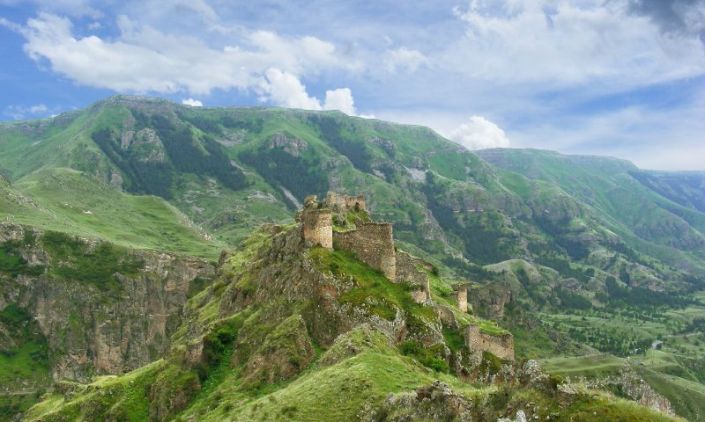
Meanwhile, 1, 600 miles away, in his castle in the Caucasus Mountains of present-day Turkey, Deo Safed was in a rage.
“Where is Badr Jamal?” he bellowed. “Where is she?” The walls shook, the glass windows rattled, and the six fairies huddled together in fear.
“We don’t know, master,” one of them ventured, her voice trembling. “When we came out of the water from our bath, she wasn’t there.”
“Perhaps she drowned…” another suggested tremulously. They could not tell him they had left her there, unprotected, vulnerable. He would kill them for it. He was a frightful creature, Deo Safed, tall as a mountain, white all over like snow, and the earth shuddered when he walked.
“Well, we’ll soon find out!” He stormed out of the palace, club in hand, heading east to the Himalayas.
Deo Safed adored Badr Jamal. He didn’t care about the others, the sniveling lot of them – she was special. He couldn’t forget, how he’d fallen madly in love with her ten years ago, when she was just a child, playing happily in the woods of Paristan, the Land of the Fairies; how he had kidnapped her and brought her to his lair, this vast stone fortress in Koh Kaaf, which was protected by such powerful magic, such fearsome beasts, that even her father, the King of Paristan, had been unable to penetrate it.
He would never have let her out of his sight if he had had his way; but how could he refuse her the simple pleasure of bathing with her friends at her favorite lake twice a month? How could he deny her this one, sweet request? Oh Badr, my moon, my joy, how could you abandon me so? How could you? How dare you…he gnashed his teeth, seething with anger, and with enormous bounding steps hurtled over the mountains towards Kaghan Valley.

Kalash Valley, Pakistan

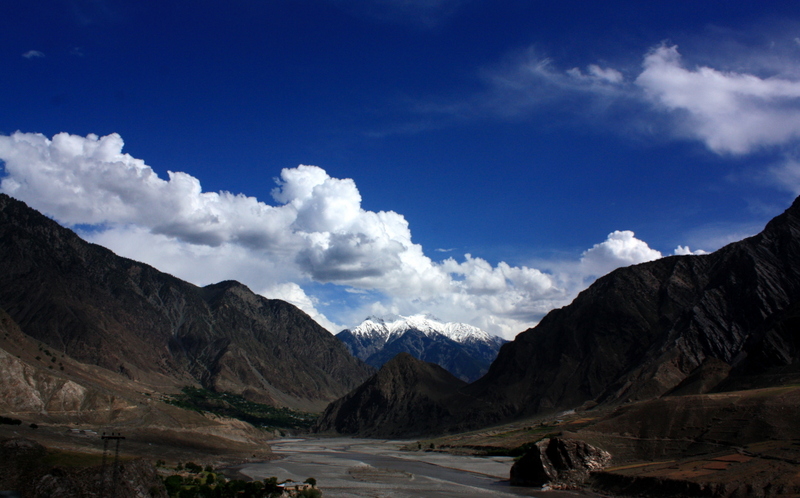
In May 2012, I was lucky enough to take what was truly a once-in-a-lifetime trip, to a remote corner of the Hindukush mountains in northwest Pakistan. Near the town of Chitral (at an elevation of 3, 700 ft), and a 26-hour drive from my hometown in the plains, Lahore, the Kalash Valley is home to a small but unique tribe of people, the Kalash, “the wearers of the black robe”, Indo-Aryans who settled among these rugged peaks thousands of years ago, and have held on to their ancient beliefs, language and customs since then, while the rest of Central Asia assimilated to Muslim culture.
We visited the Kalash village of Bumburait at the time of their annual Spring Festival, “Chilum Josh“, and got the chance to see the iconic Kalash in all their pomp and glory. Their population, which was once fast declining due to forced conversions, is now on the rise; protection by the Pakistani government and growing local tourism has helped them maintain cultural independence.
Let this album take you on a photographic journey, from the windswept highways of Khyber Pakhtunkhwa province to the bustling streets of Chitral town, to the vibrant, beautiful faces of Kalash women and the windy, shadowy alleys of their hamlets on the hill.
Many thanks to the brilliant folks at Adventure Travel Pakistan for organizing the trip!
The Legend of Saif-ul-Malook Part II
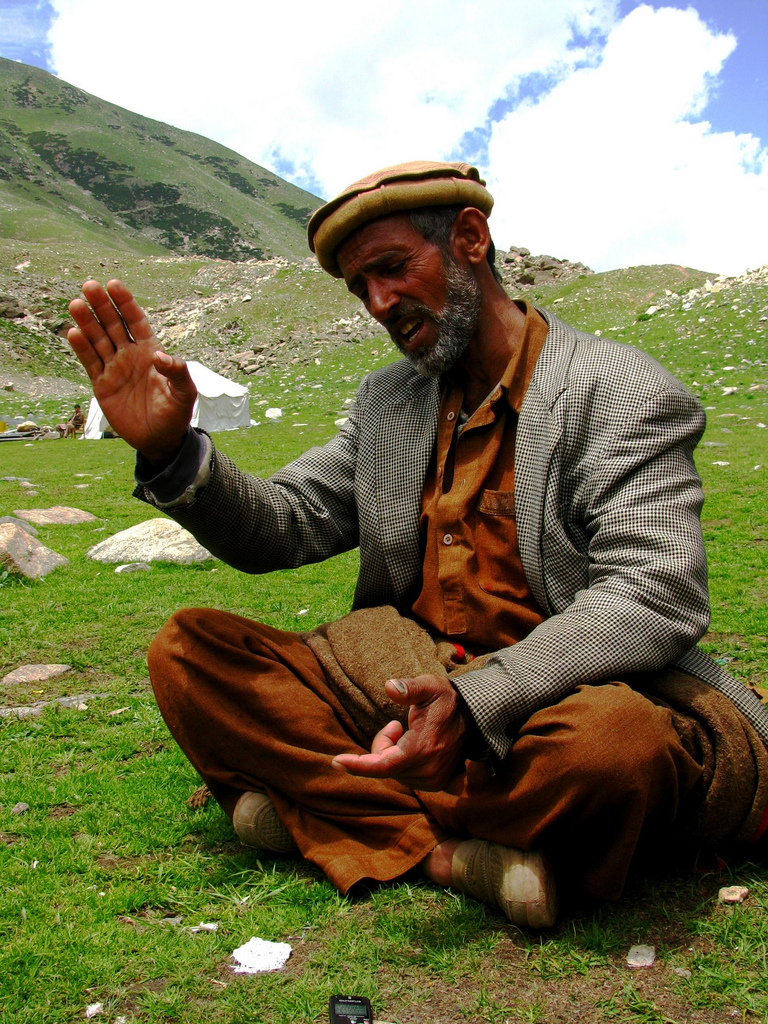
Lake Saif-ul-Malook, situated at a height 10, 600 feet at the northern tip of the Kaghan Valley in Pakistan’s Himalayas, is one of the most beautiful places on earth. I have been there twice, the first time as a 12-year old and then in 2009, when I determined to capture some of its magic on camera and on paper, in the words of two local storytellers who relate the legend of the Lake to visitors.
It is the story of a prince and a fairy, Saif-ul-Malook and Badr-ul-Jamal – a story of love, adventure, faith, magic, suffering and betrayal – a story of the multitude of human passions.
Many different versions exist, but below is a reproduction of what the storytellers told us, with ample writer’s liberties. I hope you enjoy it!
______________________________________________________________________________________________________________________________
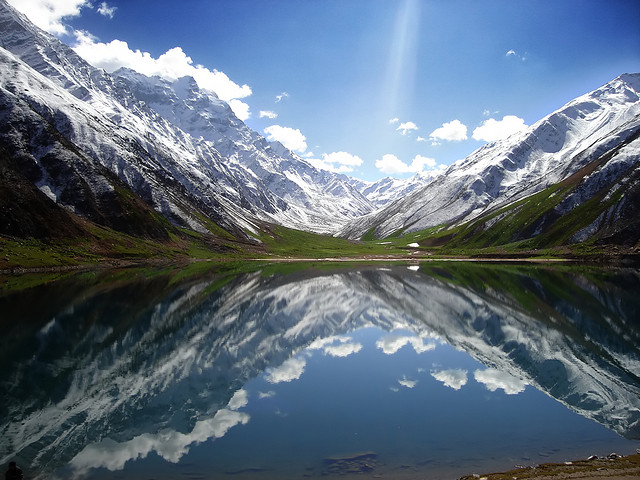
It was the Lake – emerald-green, calm as a mirror, ringed by rugged snow-capped peaks – the very one from his dream.
Saif’s joy was uncontrollable. “I shall find her, I shall find her here!” he cried, jumping up and down like a child. “My suffering is finally over!”
In his excitement, he forgot about how he had been transported to the Lake in the first place – courtesy the jinn of Solomon’s cap, who was at this moment standing behind him in human form.
The jinn cleared his throat. “Ahem, Prince Saif…there is one thing.” Saif turned around with a start. “What…?” he said slowly, peering at the jinn.
“You will not be able to see the Fairy Queen Badr Jamal. She is, like us, naari, borne of fire, hence invisible to the human eye in her true form.”
“So, what must I do to see her?” Saif asked impatiently.
“You may pray,” the jinn replied. “Pray for forty consecutive days – the chilla – without food, drink or sleep, without moving from the circle wherein you sit. Then, and only then, will you be able to see the Fairy Badr Jamal.”
With these somber words, the jinn vanished.
It sounded impossible. Only saints and prophets like Jesus and Moses, and later on Baba Farid Ganj Shakkar and Hafiz of Shiraz, had been known to perform a chilla to completion – others either died or lost their senses in the attempt.

But Saif was not about to be thwarted from his objective so close to the end. “I’ve looked for her for six years, wandering the streets of Egypt with nothing but a kashkol, a begging bowl. Surely I can endure another forty days?”
So, drawing a circle of pebbles on the southern shore of the Lake, he seated himself inside, closed his eyes, and began to pray. He prayed, and prayed, and prayed, and as the suns went down and the moons came up, Saif grew a little weaker, his face thinner, his pain stronger, his yearning deeper. He lost count of the days, and awaited each night with the hope – “Perhaps I will see her tonight?”
But Badr Jamal did not appear.
One night, as the sun cast its dying amber rays on the Himalayan slopes, and twilight crept into the sky with the daub of a divine paintbrush, Prince Saif sat in his circle wondering if he would live to see another day. Physically exhausted, his body was about to give up the struggle, but his mind had never felt sharper, calmer.
It was also a chowdveen ki raat – the 14th of the lunar month, or night of a full moon – and the sight of that perfect silver orb, glowing in the star-studded indigo sky, enveloping the Lake, the mountains and himself in its ethereal light, filled Prince Saif’s heart with peace. “If I were to die here tonight, if my soul were to leave my body tonight, I would be happy man.”
Suddenly, a sound reached his ears – like the fluttering of a great flock of birds, far away at first, then closer – intermingled with a delicate tinkling, like the chime of a thousand tiny bells. Saif looked up; a great white cloud was moving from the west towards the Lake.

“Perhaps it’s the Angels of Death, come to take me home!”, Saif thought.
But they were not Angels, because Prince Saif-ul-Malook was not destined to die that night. That chowdveen ki raat, Saif became one of the handful of human beings to ever complete a chilla, and one of the rarer still to set eyes on the mythical Fairies of Koh Kaaf, the Caucasus Mountains, that magical land that lay at the border of Asia and the savage West. The Fairies flew to the Lake every full moon to bathe, and their Queen was Badr-ul-Jamal.
The white cloud slowly descended at the shore of the Lake, and seven forms emerged – seven beatific creatures, fair-limbed, dark-haired, golden-eyed, with large gossamer wings on their backs that glittered in the moonlight.
Saif was dumbstruck. An invisible force propelled him to his feet and he ran behind some large boulders, from where he could see without being seen. His mouth agape with wonder, he watched as the seven Fairies laughingly doffed their wings, folded them neatly on ground, and dived into the deep, shimmering waters of the Lake.
And then he saw her – Badr Jamal. She was the last to enter the Lake, effortlessly gliding through the water with her long black hair spread out behind her, her face radiant as the full moon, eyes twinkling like a child’s. She was the most beautiful creature he had ever set eyes on.
Prince Saif felt like he would faint from rapture. The object of his quest, of six years and forty days of tortuous struggle, was right there in plain sight; a living, breathing, palpable creature!
Costa Rica Day 3: Ziplining in a Cloudforest, and a Hostel Hunt!
September 5th, 2010
Santa Elena / La Fortuna, Costa Rica
We woke up to the sound of sizzling eggs and childish chatter in Spanish. I rubbed my eyes and looked at the forest-green walls, the lacy white curtain spilling light, the gigantic tiger-print fleece blanket on the bed. “Where am I?”
At a hostel in Santa Elena, of course, hours away from one of the most thrilling activities Costa Rica had to offer, in one of the most pristine cloudforests in the world!

We hurried down to the kitchen, where the hostel-keeper Ronny’s wife was cooking us up a hearty breakfast, while her two adorable children Daniel and Jasmine capered about in their sky-blue school uniforms. Soon, a Turismo van arrived to take us to the Selvatura Adventure Park for our canopy tour.


Selvatura Park is located on 1, 200 acres of virgin cloudforest in the heart of the misty Monteverde Reserve, founded in 1951 by a group of American Quakers. There are no walking or hiking trails traversing the forest, so the only way to see it is through a network of hanging bridges, or on horizontal cable-trolleys called ziplines. Ziplines have been used as a method of transport in remote mountainous regions (including northern Pakistan and India) for over a century , but the modern canopy tour was developed by naturalists in the 1970s as an eco-friendly way of exploring rainforest.
As our guides geared us up with harnesses, gloves and helmets and hammered out instructions, I had that familiar fluttery feeling in my stomach – What if I get stuck mid-way on the cable? What if I lose my balance and topple upside-down? What if I scrape my hand on the steel and it starts to bleed?
“Really, you’re the last person who has the right to be scared, you’ve jumped out of an airplane!” my husband Z scolded me. I think I was only pretending to be scared though – just so I’d be mentally prepared in case something did go wrong.
But once we were up there in the treetops, on the first platform, and with one push I was sent zooming along the cable, comfortably seated in my harness, lush forest below and sunny skies above, there wasn’t a happier person than me in Monteverde.

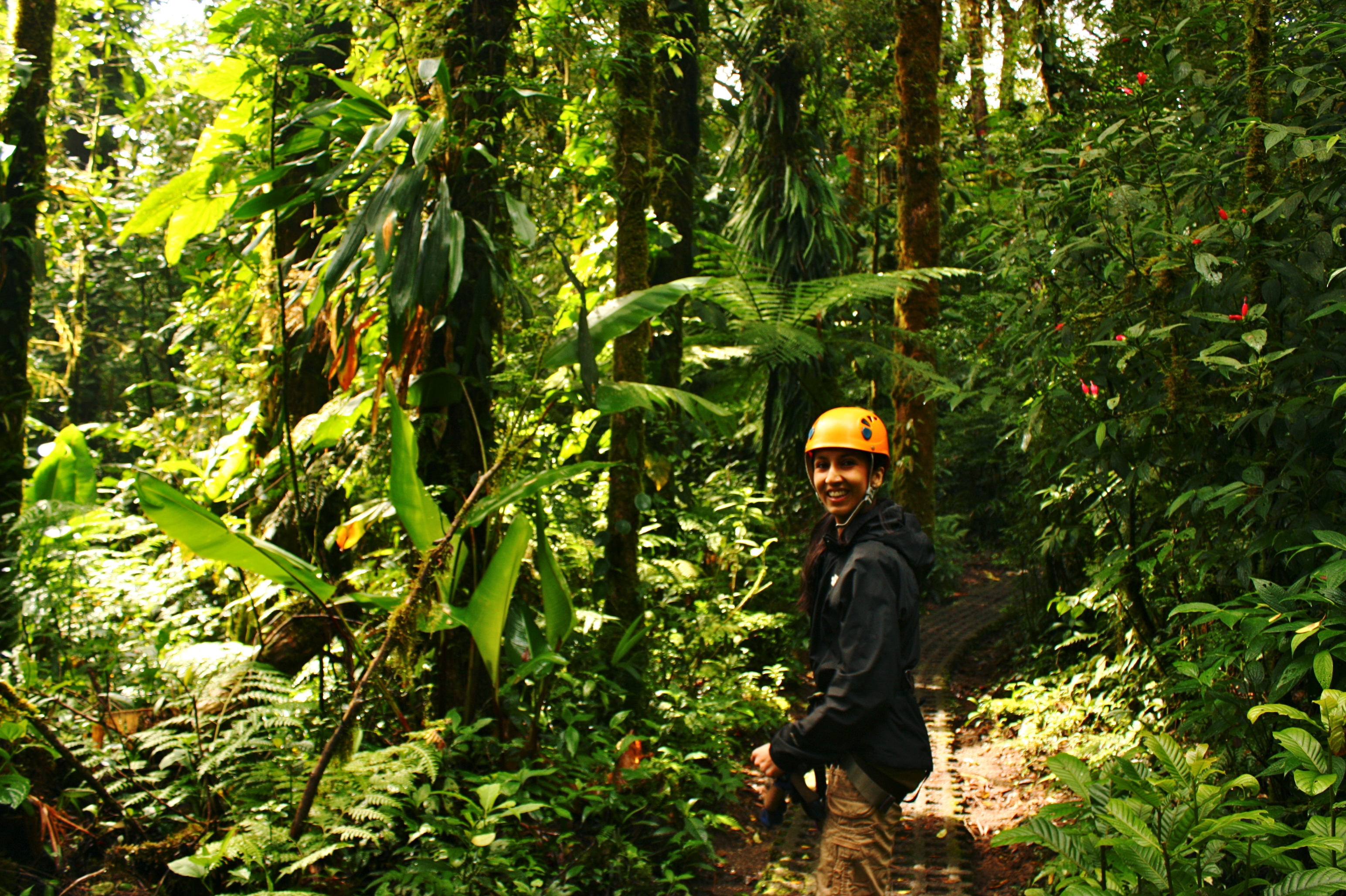
I just couldn’t control the smile on my face. It was so, so, so much fun. The moment I reached the other side I couldn’t wait to do it again. We rode 15 different cables in the span of 2 hours, over various lengths and heights – sometimes brushing past leaves and branches in the thick of forest, sometimes a kilometer above the canopy, stretching green till the horizon. On the two longest cables (650 and 700 meters), they sent you in pairs, so me and Z rode together, whooping at the top of our lungs the whole way!
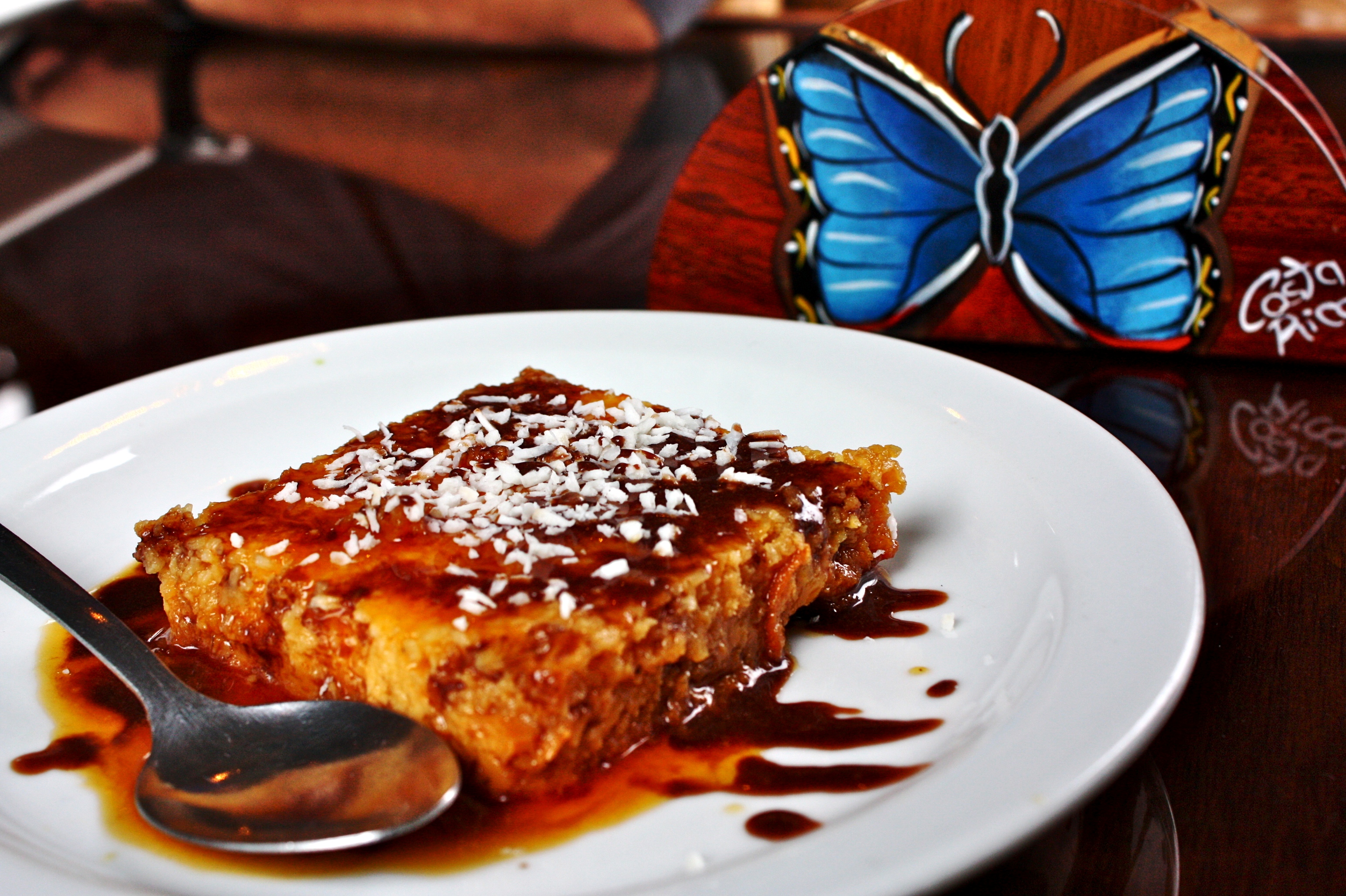
Back in Santa Elena town, we were famished (as usual), and made our way to a red-painted soda called Maravilla, recommended to us by the hostel-keeper Ronny. We ordered a typical Costa Rican lunch, casado, which consisted of the basic Latin American fare of rice and beans, with a portion of meat-in-gravy, fried plantains and salad. I polished down my casado con pollo with a tumbler of fresh Tamarindo – imli juice! – and followed it up with dessert at the beautiful Morphos restaurant.


After lunch, we said goodbye to Ronny and family, checked out of Sleepers Sleep Cheaper, and made the journey back to La Fortuna, where we had other activities planned over the next two days. We’d made reservations online at a local hostel, and the jeep was going to drop us there directly.
But as the jeep trundled past La Fortuna’s cheerful downtown and twisted into a pot-holed back alley, and colourful facades turned into tin-roofed shanties, I said to Z with some foreboding, “I have a bad feeling about this place!”
Before we knew it, the jeep was gone, leaving us in the pouring rain at the porch of a dingy grey house with a sputtering tube-light and an emaciated, bulgy-eyed, 5ft-high man at the reception. “Bienvenido,” he rasped with a crooked grin, “Plees check een hee-yre”. I watched with horror as Z lifted the pen and wrote down his name in an empty register.
The little man then took us around to our “room”, opening a creaky door to a prison cell from Alcatraz – damp and windowless, with paint peeling off the grey walls and a spindly bunk bed covered in grey sheets that looked like they were last washed in 1968.
I stared at Z. “No – way. Nooo way!” He gave me a helpless look. “I know this isn’t very pleasant. But what can we do? We’ve already checked in!”
“It doesn’t matter!” I pressed. “Just make up some story, tell him we have friends at another place, and want to stay with them.” I was conveniently excused from the dirty work because I didn’t speak Spanish and Z did :P
Z came back five minutes later. “I told him. He wasn’t very happy, but I have a feeling this has happened to them before!”
Laughing with relief, we strapped on our packs and set off in the rain towards downtown La Fortuna, to hunt for a decent place to pass the next two nights.
There wasn’t a lack of choice – the main street was strewn with them. We first walked into a beautifully designed, leafy, woody, two-storeyed hostel, comfortable, clean and cheap rolled into one – perfect, really, except for the manic old American hippie who ran it . “But what don’t you like about this place? What? What?” he pleaded when we told him we wanted to look around a little more. “But why would you want to do that? Why? Why?” he almost shrieked.
I looked at Z again – another one of those “looks” – and, finding some excuse or other, we extricated ourselves from the desperate old fogey and ventured on.
A few blocks down, we passed by a place called Hotel La Amistad, where a rotund, smiley-faced man signaled us in through the glass door. “You looking for a place to stay? Won’t find a better deal!” He introduced himself as Salim from Nicaragua, the proprietor of Hotel La Amistad. “You can look around all you want, my friends, but I bet you’ll come right back here!” he winked.
And Mr. Salim – named after an Arab friend of his father’s – was absolutely right. I don’t know if it was his exuberance or the open, inviting look of the hotel, a courtyard surrounded by rooms with hammocks and easy chairs outside every door, but we did’t even bother looking anymore. We were sold!

After a light dinner at the Lava Lounge restaurant across the street, we turned in – and was I glad to be sleeping in the airy room and freshly-laundered white sheets of La Amistad instead of on the bug-infested coffin-shrouds in Alcatraz two streets away ;)
Next week, Day 4: Cano Negro River Safari!
Costa Rica Day 2: Monteverde Horseback Ride & Coffee Tour
September 4th, 2011
Santa Elena / Monteverde, Costa Rica
A Turismo van picked us up from the Arenal Observatory Lodge at 7a.m. and deposited us at the shore of the Arenal Lake for the first leg of our journey to Monteverde – by boat!
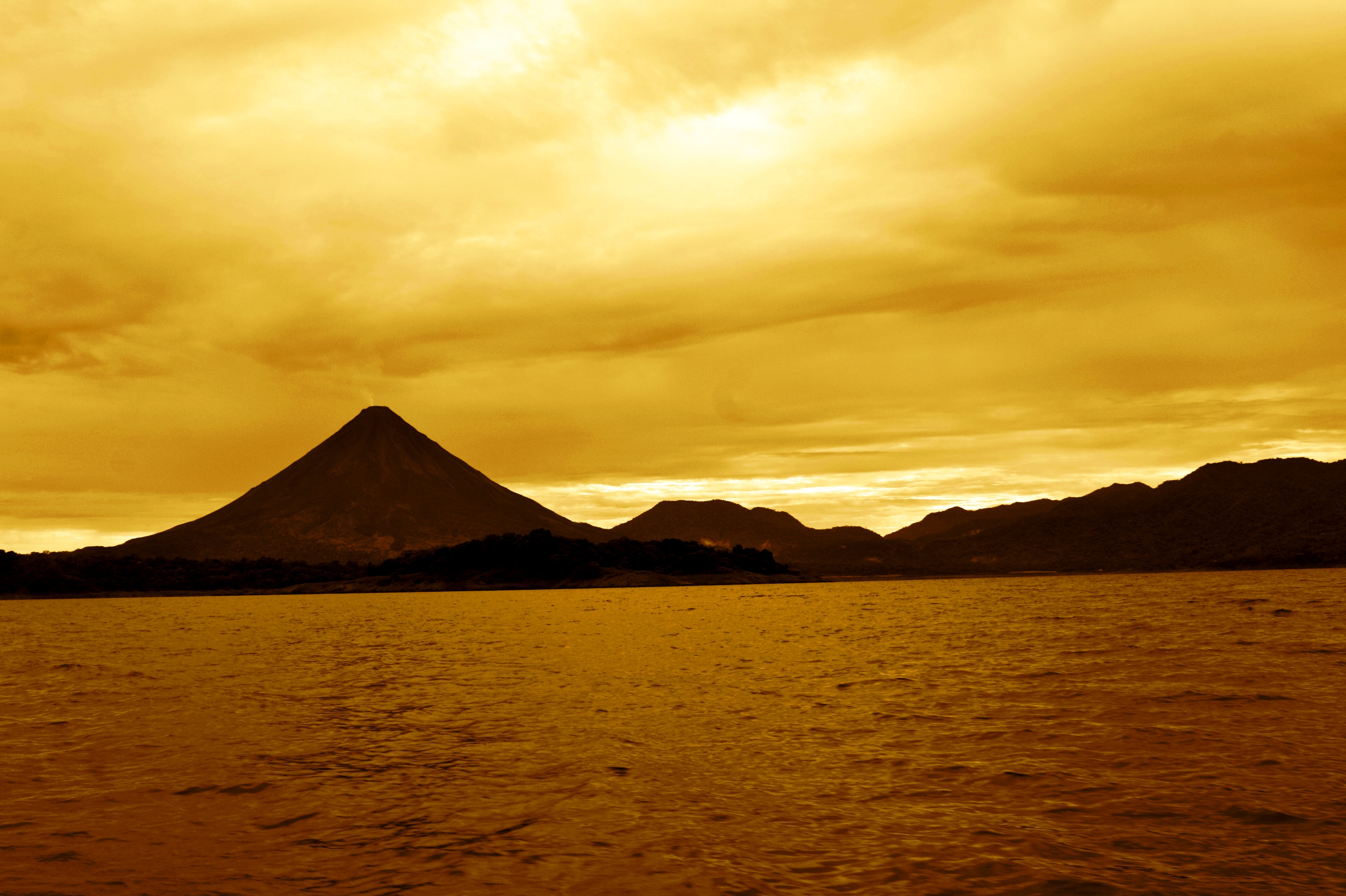
After a pleasant 20-minute ride across the warm blue lake, chatting with the nice young couple from Texas who were on the tour with us, we reached a forested edge where our next, much anticipated, four-legged rides awaited.
I adore horses. I always have, taking lessons with 5-year olds at the Lahore Polo Club to forking out 60 bucks an hour at Kensington Stables, just so I could be close to the creatures.
I also have a theory – tried and tested, believe me – that if I don’t find my horse attractive, we just won’t get along, and the ride will be a miserable experience for both of us. So, quickly scanning my four options, I spotted a favourite – a strong, slender chestnut mare – and hurried to bag it, lest one of the Texans got to her first.
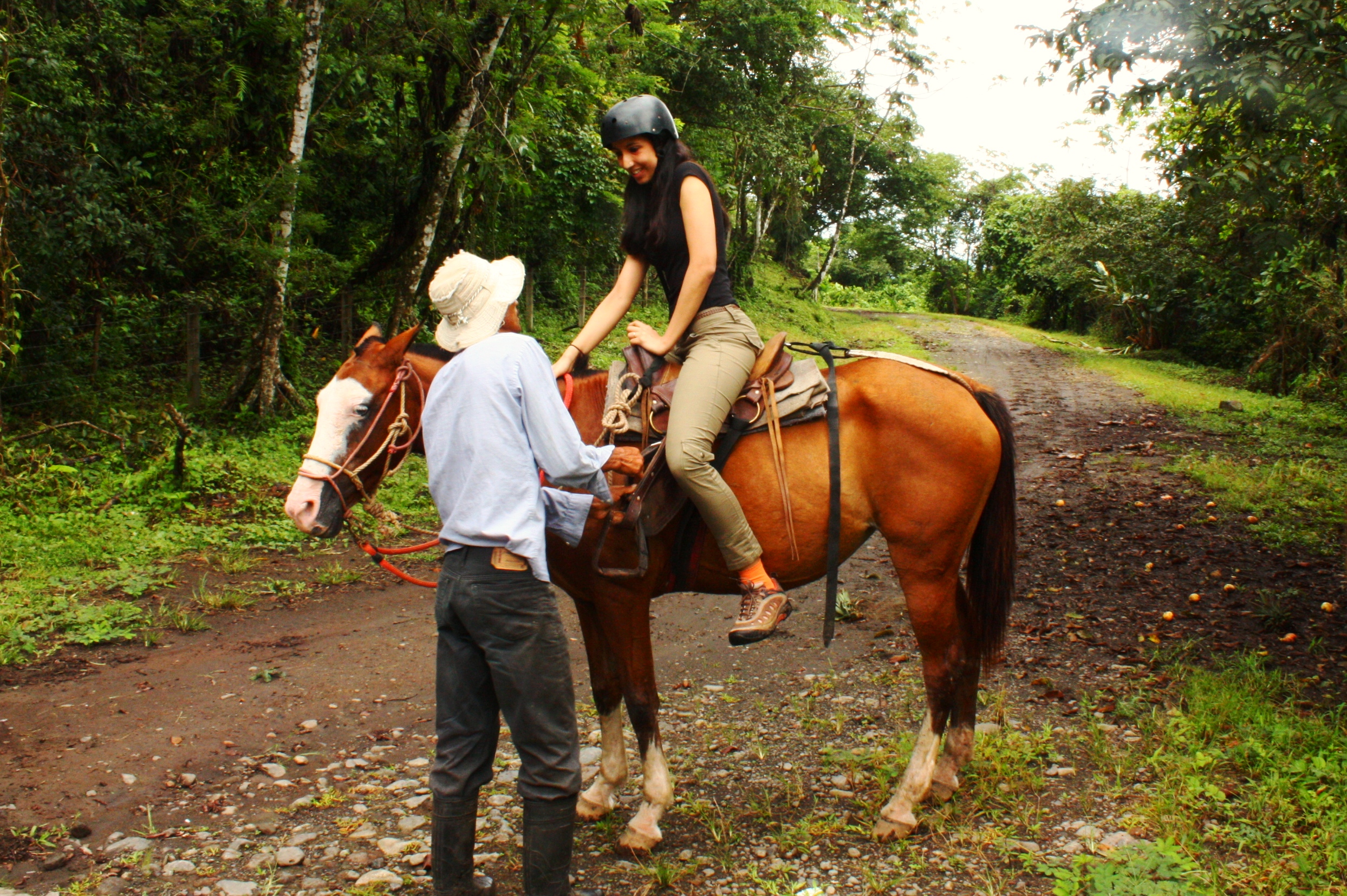

I didn’t regret my choice. Mariposa just flew – through woods and dales, over brooks and hills – neck and neck with the lead guide Mariano, effortlessly carrying me behind her. The others in the group, including Z, were left far behind, and for 2 hours it was just me and the spry, sun-wizened Mariano, communicating with gestures and my broken Spanish, a permanent smile on my face. “Cómo se llama esto? Esto? Esto?” I pointed to birds, fruits, flowers that grew in tangled bunches along the way, and Mariano would smile and silently respond by offering me a ripe guava from a tree, or a fragrant white orchid that I happily tucked behind my ear.

I was sad when the ride came to an end (and a little alarmed, when I got off Mariposa and realized my thighs felt like two immovable planks of wood!) After a brief stop at a roadside Minisuper for some fresh pineapple, we were whisked away into a jeep for the last leg of the journey to Monteverde.
There were other tourists in the jeep, including two British girls in their mid-20s, who revealed to us that they were currently in the 10th month of a year-long around-the-world trip. “One day, we decided we hated our jobs and where our lives were going. So we quit, gathered up all our savings, and bought a round-the-world air ticket, from London and back.” There were gasps of disbelief and wows of admiration. “We’ve covered 20 countries so far,” they continued, “from South East Asia to South and Central America, on our way to the States…” I told them they’d better write a book about this when they were done. “Yes, that’s the plan!”

Soon, we reached Santa Elena, the charming, cobble-paved little pueblo closest to the Monteverde Cloud Forest, where most budget travelers stayed. The jeep dropped us off at our hostel, Sleepers Sleep Cheaper, where we checked in with the jolly proprietor Ronny, showered, changed, stuffed our faces with bread and cheese from the nearest Supermercado – we hadn’t eaten a bite since breakfast save the piña! – while another one of those ubiquitous Turismo vans arrived to take us to the coffee tour at Don Juan.
The Don Juan Coffee Plantation was established some 60-odd years ago by a now ancient Don Juan, who greeted our group of 6 with a sweet toothless smile at the reception. Our guide, Elizabeth – a chubby, exuberant Costa Rican woman – proceeded to show us around, demonstrating each step of the traditional coffee-making process, from planting and picking to drying, cleaning and roasting, while throwing in interesting facts about coffee (Did you know that the coffee plant originated in Ethiopia, that there are 40 different varieties, that only 2 are drinkable, that it’s the most traded commodity in the world after oil?)
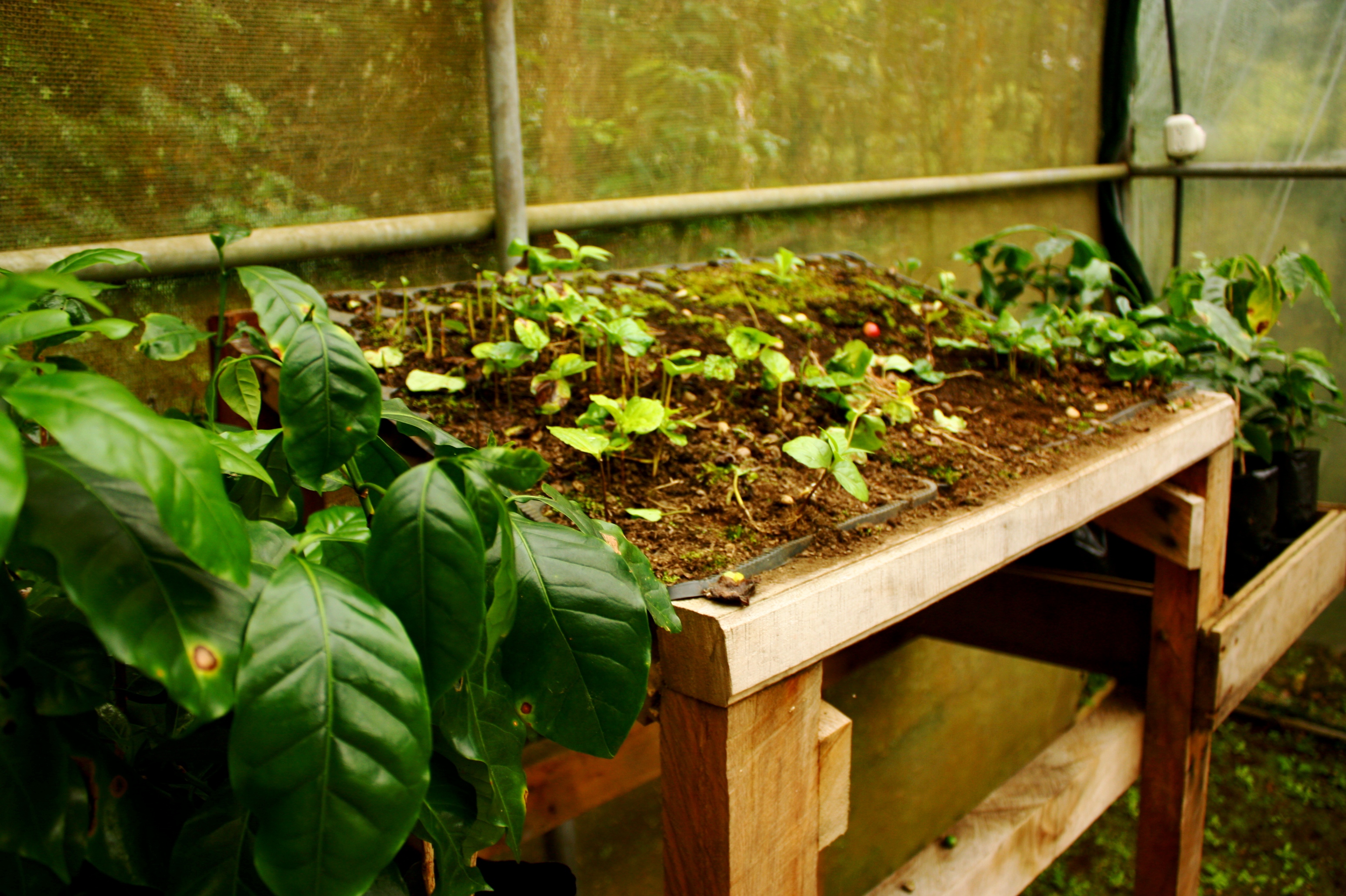


By the end of the tour, damp from the persistent drizzle, we were desperate for the pure Arabica coffee that awaited us in hot thermoses at the reception. I tasted all three roasts – light, dark and “farmer’s” – before downing 3 cups of the one I liked best (farmer’s, smooth and subtly sharp), accompanied by sweet corn bread and chocolate candy. Z, on the other hand, a religious caffeine-abstinent, decided to go for a shot of the bitter dark roast, sans milk and sugar. “If I’m going to do this once in my life,” he reasoned, “I might as well go all the way!”
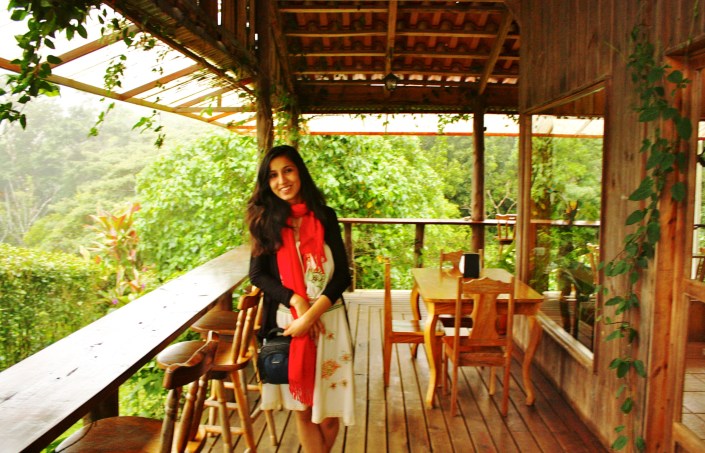
That evening, we roamed around Santa Elena – a cluster of souvenir shops and picture-perfect restaurants,populated almost entirely by tourists – and had a fantastic dinner at a place called the Tree House Cafe.


It was barely 9p.m., but sleep was warm and welcome back in our cute, woody little room at the hostel – replete with excellent comida and toasty coffee, blissfully aching from the horseback ride, watching fireflies dance at the misty, lace-curtained window.
Next week, Day 3: Ziplining in the Cloud Forest
- ← Previous
- 1
- 2
- 3
- Next →
 Windswept Words