The Legend of Saif-ul-Malook Part IV
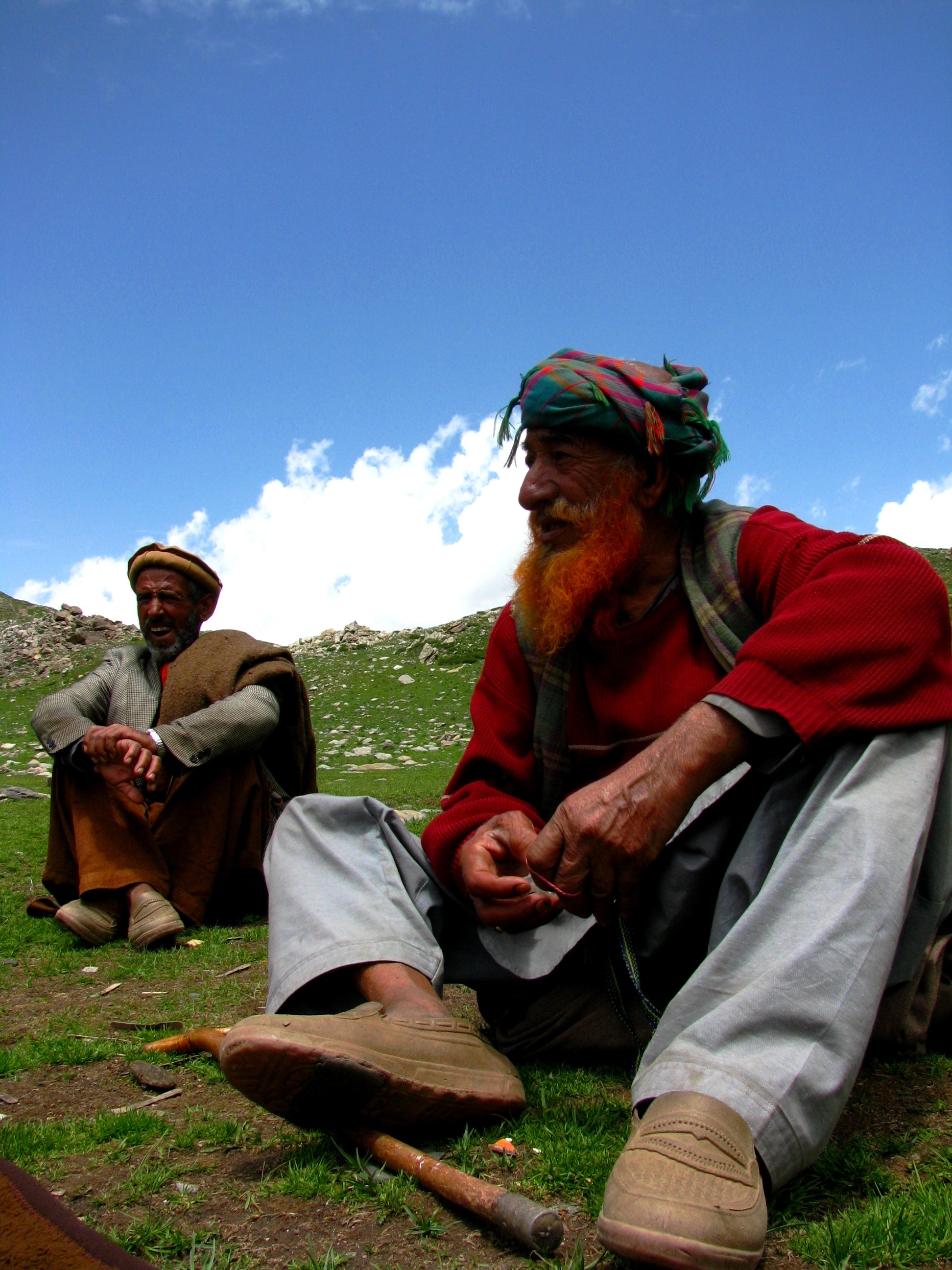
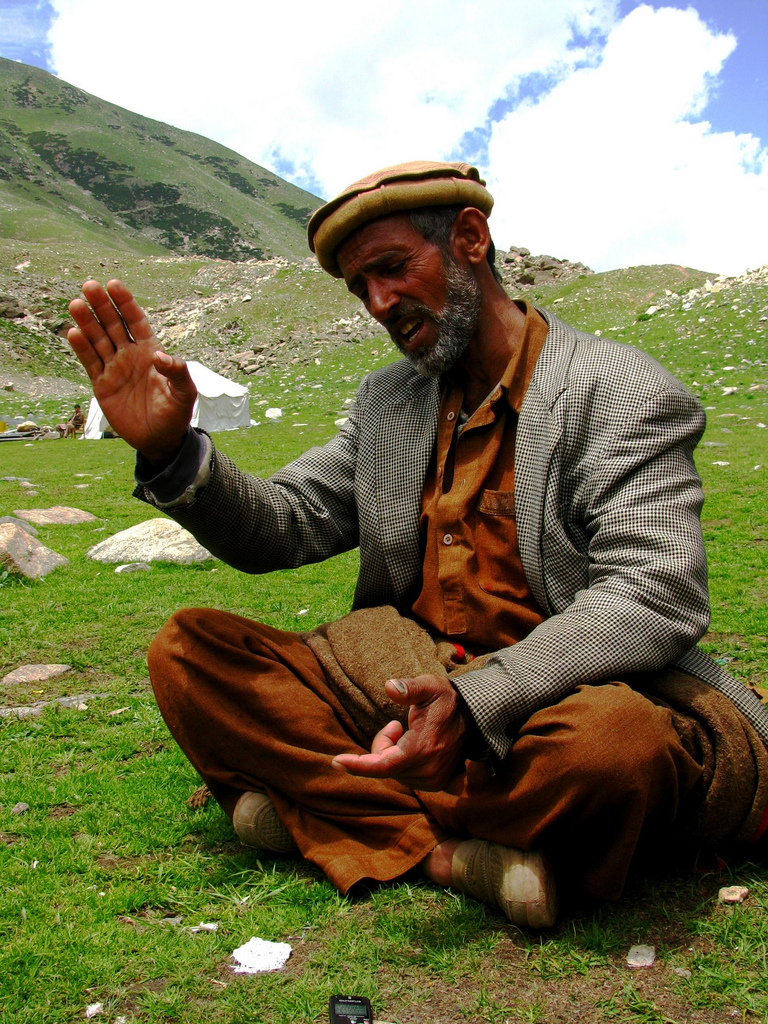
Lake Saif-ul-Malook, situated at a height 10, 600 feet at the northern tip of the Kaghan Valley in Pakistan’s Himalayas, is one of the most beautiful places on earth. I have been there twice, the first time as a 12-year old and then in 2009, when I determined to capture some of its magic on camera and on paper, in the words of two local storytellers who relate the legend of the Lake to visitors.
It is the story of a prince and a fairy, Saif-ul-Malook and Badr-ul-Jamal – a story of love, adventure, faith, magic, suffering and betrayal – a story of the multitude of human passions.
Many different versions exist, but below is a reproduction of what the storytellers told us, with some writer’s liberties. I hope you enjoy it!
Read Part I, Part II and Part III of the story
When Deo Safed reached the Lake, there was no one in sight. “Badr, Badr!” he roared. “Badr, Badr, Badr…” the mountains mocked his terrible cries.
Malika Parbat, the loftiest peak in the Kaghan Valley, towered silently above, her white slopes gleaming in the cold moonlight. “She’s gone, Deo Safed, she’s gone”, the Queen of the Mountains seemed to say to him. “Tonight you receive your just deserts.”

Deo Safed became desperate. Could it be? Was Badr Jamal truly lost? Did the Lake consume her, then, sucking her into its bottomless belly like a jealous monster, like he himself had done so many years ago?
There was only one way to find out.
Deo Safed struck one gigantic foot on the southwestern shore of the Lake. There was a dull moan, somewhere deep in the bowels of the earth, and, like a beast awakening, the ground heaved, shuddered, and ripped open where the ogre had stamped his foot.
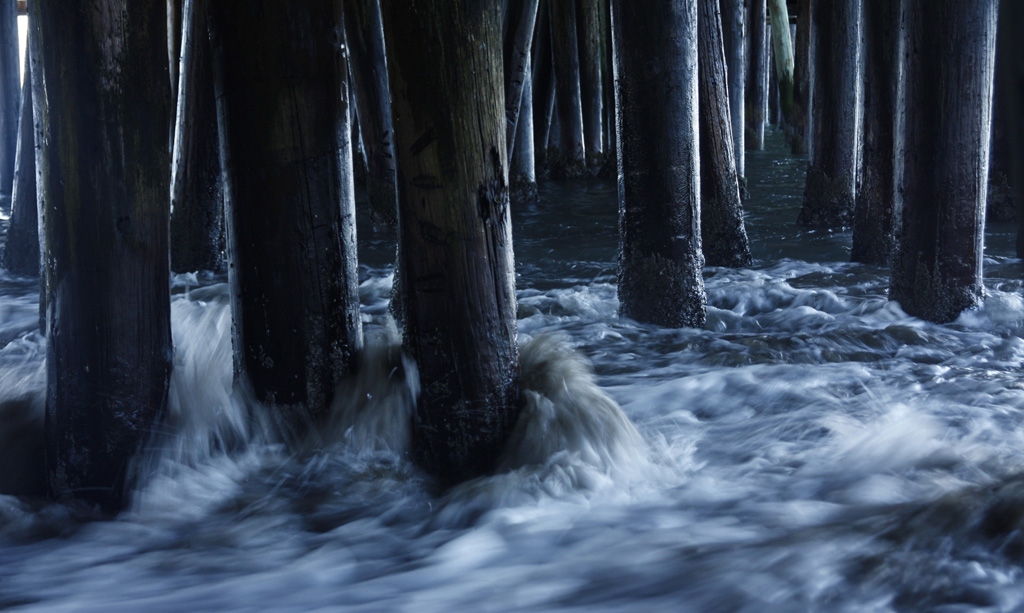
The serene waters of the Lake began to churn and froth, tumbling out from the crevice in torrents of emerald and blue. Deo Safed had released the Spirit of the Lake.
As the waves went crashing down to the Valley below, Deo Safed stood, in the eye of the storm, rocks and trees and water hurtling over him. “I’ll find her! Even if she is dead, a corpse at the bottom of this accursed bottomless lake, I will find her!”
The water did not stop. It was the first great Flood of Kaghan.
Meanwhile, in the little cemetery on the outskirts of Naran town, Prince Saif and Badr Jamal had just fallen asleep under the shelter of a beautiful old deodar tree, when a tremendous thundering reached their ears, mingled with a hideous, inhuman wailing.
“He’s here!” Badr Jamal gasped, jolting out of her slumber. Her face was blanched.
For ten long years, the full bloom of her youth and beauty, Badr Jamal had been a slave, a prisoner of this monster, Deo Safed. For ten long years, she had not known family, or friendship, or love – only fear, and whispers, and unspoken dreams, the charade of loving a creature whom she reviled from the depths of her heart. He had tried to win her love, the ogre, using all manner of stratagems – fine clothes and jewelry, delicious, exotic foods, marvelous animals of all colors and shapes and sizes, a host of young fairies to attend upon her every wish.
But Badr Jamal was not free. And there was no pleasure in anything, not priceless jewels or the choicest morsel of food, if she was not free.
Now, this moment, was the closest chance she had had of escape, a real escape. And yet, anything could happen. She held close to Saif. They then saw, in the distance, coming from the direction of Malika Parbat above, the Flood.
It was rushing towards them with lightening speed, tearing out trees, submerging sleeping villages, annihilating every thing and creature that lay in its wake. In a matter of seconds, it would reach the cemetery. And that would be the end.
Saif looked at Badr Jamal, and said, shouting over the deafening roar, “This is it, my love. Tonight, we die, or we live. All we can do now is pray. So pray with me!”
Badr nodded, her face resolute, surrendering finally to whatever Fate had in store. And standing there beneath the sacred cedar, in the shadowy graveyard, on that clear, starlit night, they clasped hands, shut their eyes, and prayed.

“So this is what death feels like,” thought Saif. “Not as painful as I’d imagined, at least.”Saif prayed to God, and Badr to her gods, each with equal soul and passion. The roar of the flood was getting closer, and closer, until suddenly it seemed like it was over their heads, then below them, then all around.
But he wasn’t dead. He could still feel Badr’s warm hand clasped tightly around his. He opened his eyes.
Saif and Badr were standing in a cave, dry as leaves. At Saif’s feet lay the Suleimani cap, which he thought he had forgotten at the Lake and despaired of ever finding. “How?….” Saif’s voice trailed off as he stared at Badr, then at the cap, then around him at the cave. “Where are we?” Badr looked around in amazement. “How did we get here?” The cave was wide and airy, with a deceptively low mouth, so that they had to crawl to get out. Once outside, they saw that they were on a mountain high above the cemetery, which was by now completely inundated. Tombstones, rocks and fallen trees floated around in grim silence. The Flood had passed. They were alive. They were safe. God, and the gods, had listened.
But what about Deo Safed? Where was he, the great White Ogre whose fury had precipitated a Flood?
He wasn’t at the Lake anymore. He wasn’t even in Kaghan Valley. No, he was well on his way to his final resting place – to Deosai, Land of the Giants, in Baltistan, where all giants were born, and where each one of them went to die.
For Deo Safed had lost the will to live. Badr Jamal hadn’t drowned in the Lake. She had run away. Run away, from him. All these years, he had believed, he had convinced himself that she loved him. That she returned, to some degree, his ardent adoration for her. The truth was, he couldn’t live without her; nor could he live with the knowledge that she had betrayed him. He had lost. He was defeated, broken.
In Deosai there was peace. There, at the confluence of two of the greatest mountain ranges in the world, the Himalayas and the Karakoram, in the vast, unending plains of his birth, he went, and lay down, and died. His massive body crumbled, killed by unhappiness, till there was nothing left but a mound of earth, and slowly, nothing at all. He wept the whole way there, and his large, heavy teardrops trickled down the slopes in sad streams, accumulating at a meadow in Kaghan Valley to form Ansoo Lake – “Tear Drop Lake” – a lasting memorial to his undying love for Badr Jamal.

Back in Naran, Prince Saif and Badr Jamal were in ecstasies. They couldn’t believe that the struggle was over, that they had survived, that Saif’s quest was complete, that Badr was free, that they were together. Taking the beautiful fairy’s hand, Saif looked into her luminous, moonlike face, and smiled, “Let’s go home, my Queen”.
He summoned his trusty friend, the jinn of the Suleimani cap, and in the twinkling of an eye, the couple was 2, 500 miles away, at the gates of Prince Saif’s palace in Egypt.
The news of the Prince’s return after almost seven years, and that too, with a bride, was the cause of much celebration throughout the kingdom. The King and Queen, Prince Saif’s parents, were beside themselves with joy, and wedding preparations were underway immediately. Soon, the couple was married, in a spectacular, sumptuous ceremony, and the feasting and festivities lasted for many days.
One could end the story here, with “And then they lived happily ever after”… but that didn’t happen. Not just yet!
The Legend of Saif-ul-Malook Part III
Lake Saif-ul-Malook, situated at a height 10,600 ft at the northern tip of the Kaghan Valley in Pakistan’s Himalayas, is one of the most beautiful places on earth. I have been there twice, the first time as a 12-year old and then in 2009, when I determined to capture some of its magic on camera and on paper, in the words of two local storytellers who relate the legend of the Lake to visitors.
It is the story of a prince and a fairy, Saif-ul-Malook and Badr-ul-Jamal, a story of love, adventure, faith, magic, suffering and betrayal – a story of the multitude of human passions.
Many different versions exist, but below is a reproduction of what the storytellers told us, with some writer’s liberties. I hope you enjoy it!
Read Part I & Part II of the story
______________________________________________________________________________________________________________________________
![Badr emerges from the water [Artwork by Liza Lambertini]](https://windsweptwords.com/wp-content/uploads/2012/09/badr-fullmoon.png?w=705)
Suddenly, Prince Saif noticed that the fairies had begun to emerge from the water, and were one by one donning their wings. They were getting ready to leave!
Panicking, he summoned the jinn of the Suleimani cap. “Friend, what shall I do?” he beseeched the jinn. “If I confront Badr Jamal now, she and her cohorts will be sure to take off in fright, ruining my chances forever. How do I stop her from leaving?”
The jinn nodded his head sympathetically, and said in reassuring tones, “Worry not, master. Leave it to me.”
With that, he vanished into the air whence he had come. Unseen to Prince Saif and the Fairies, the jinn stealthily crept up to the shore of the Lake where the Fairies had placed their folded wings and whisked away the largest, most iridescent pair of them all – Badr Jamal’s.
Soon, Badr Jamal arose from the depths, the last of the group, to prepare herself for the return journey. “Has anyone seen my wings?” she asked after a few moments, looking around anxiously.
“You put them right here, next to mine,” said one of her friends, pointing to a large rock by the shore.
Badr Jamal was in utter distress. “They’re gone! My wings are gone!” She dashed about like a frightened animal. “Oh, what will I do? How will I fly back to Koh Kaaf? What will he say?”
Her friends were dressed and ready to leave. What would he say indeed! It was past midnight, and they were already late. He would be in a foul mood, heavily pacing the corridors of the castle, a scowl on his gigantic face, thundering like a black cloud – their master Deo Safed, the White Ogre. They had to go back, now.
Glancing at each other nervously, the Fairies whispered. “There’s some mischief afoot here, surely. Some magic, some trap. We best be on our way, lest we are all ensnared.” And while Badr was still frantically searching for her wings, her back towards them, the Fairies abruptly took flight, and in one unanimous flutter, they were gone.

“My friends, don’t leave me here alone!” Badr Jamal cried, her hands imploring the sky. But there was nothing there. All was silent, except for the gentle lapping of the water against the shore. She was alone.
The Fairy Queen sunk down to the ground, face buried in her hands. How cold she felt, suddenly! How enormous the sky seemed, and her favorite lake so menacing, so suspicious.
All at once, she heard a sound – a shuffling of feet. She looked up, alert.
It was Prince Saif. Standing right before her.
“You…” she said slowly, staring at him with her wide golden eyes. “You…”
“Please, don’t be afraid,” he spoke hurriedly, gently advancing towards her. “I’m not going to hurt you. It was I who stole your wings, but please, let me explain…”
And the whole story came tumbling out – the dream, the old buzurg, his father the King, the Suleimani topi, the six year-long quest that brought him from Egypt to the Himalayas… he didn’t dare look at Badr Jamal in the face, for he was weak from his penance, the chilla, and would not be able to stand the splendor of her beauty.
She was still staring at him, a look of disbelief on her lovely face. Finally, she spoke: “Prince Saif, you were not the only one who dreamt a dream.”
Saif glanced up in astonishment, and their eyes met for the first time. Badr Jamal smiled. “I never thought I’d see you. I didn’t think you were real…”
He couldn’t believe his ears!

A moment Badr was in his arms, and words cannot describe the joy and the peace that flooded over them as they embraced each other. “My sweet love, after all these years…” Saif whispered as he stroked Badr Jamal’s hair, holding her tightly. “We can finally be together!”
Badr Jamal suddenly drew back, as if she had just remembered something. “What’s the matter, my love?” Saif asked with concern.
She looked at him with a certain decisiveness, a certain resignation. “No. I can’t stay here. I must go. I love you, Prince Saif, but I must go. Please return me my wings. I will try to come back. But right now, I must return to Koh Kaaf.”
“Let you go?” Prince Saif repeated, his voice hollow. He grabbed her wrist. “You think I would do that? After begging, searching, praying, struggling for so many years? That I would give you up?” With a strange, violent laugh, he shouted to the sky, “Never!”
“But you don’t understand!” Badr Jamal fell to her knees, distraught. “He’ll kill us, he’ll kill us both! My master, Deo Safed. When my friends return and he finds me missing, he will come looking for me. He’s very powerful! And when he sees us together, he will kill us both. Instantly.” She looked up at him imploringly, her eyes brimming with tears. “So you see, you have to let me go.”
Prince Saif took Badr by the shoulders. “Let him come,” he said passionately. “I am not afraid of him. Let him do what he dare. I am never parting with you.” He held her close, his face resolute, his heart beating with terror at what was to follow.
Covering Badr Jamal in his cloak, Prince Saif fled with her down to the Valley. There, in a graveyard at the edge of the town of Naran, among shadows and secrets and silent tombstones, the couple hid for the night.
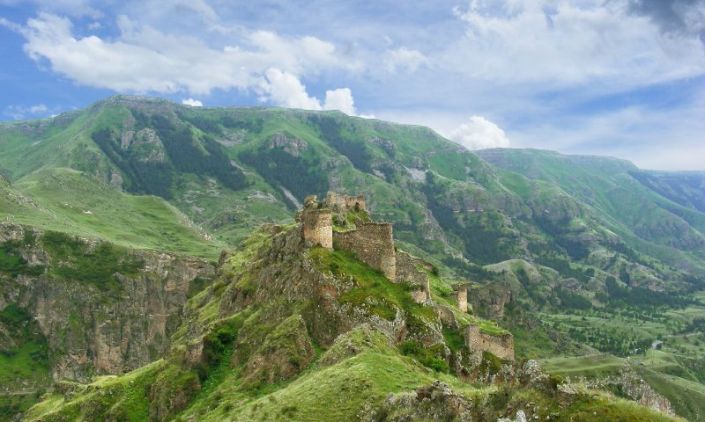
Meanwhile, 1, 600 miles away, in his castle in the Caucasus Mountains of present-day Turkey, Deo Safed was in a rage.
“Where is Badr Jamal?” he bellowed. “Where is she?” The walls shook, the glass windows rattled, and the six fairies huddled together in fear.
“We don’t know, master,” one of them ventured, her voice trembling. “When we came out of the water from our bath, she wasn’t there.”
“Perhaps she drowned…” another suggested tremulously. They could not tell him they had left her there, unprotected, vulnerable. He would kill them for it. He was a frightful creature, Deo Safed, tall as a mountain, white all over like snow, and the earth shuddered when he walked.
“Well, we’ll soon find out!” He stormed out of the palace, club in hand, heading east to the Himalayas.
Deo Safed adored Badr Jamal. He didn’t care about the others, the sniveling lot of them – she was special. He couldn’t forget, how he’d fallen madly in love with her ten years ago, when she was just a child, playing happily in the woods of Paristan, the Land of the Fairies; how he had kidnapped her and brought her to his lair, this vast stone fortress in Koh Kaaf, which was protected by such powerful magic, such fearsome beasts, that even her father, the King of Paristan, had been unable to penetrate it.
He would never have let her out of his sight if he had had his way; but how could he refuse her the simple pleasure of bathing with her friends at her favorite lake twice a month? How could he deny her this one, sweet request? Oh Badr, my moon, my joy, how could you abandon me so? How could you? How dare you…he gnashed his teeth, seething with anger, and with enormous bounding steps hurtled over the mountains towards Kaghan Valley.

Kalash Valley, Pakistan

In May 2012, I was lucky enough to take what was truly a once-in-a-lifetime trip, to a remote corner of the Hindukush mountains in northwest Pakistan. Near the town of Chitral (at an elevation of 3, 700 ft), and a 26-hour drive from my hometown in the plains, Lahore, the Kalash Valley is home to a small but unique tribe of people, the Kalash, “the wearers of the black robe”, Indo-Aryans who settled among these rugged peaks thousands of years ago, and have held on to their ancient beliefs, language and customs since then, while the rest of Central Asia assimilated to Muslim culture.
We visited the Kalash village of Bumburait at the time of their annual Spring Festival, “Chilum Josh“, and got the chance to see the iconic Kalash in all their pomp and glory. Their population, which was once fast declining due to forced conversions, is now on the rise; protection by the Pakistani government and growing local tourism has helped them maintain cultural independence.
Let this album take you on a photographic journey, from the windswept highways of Khyber Pakhtunkhwa province to the bustling streets of Chitral town, to the vibrant, beautiful faces of Kalash women and the windy, shadowy alleys of their hamlets on the hill.
Many thanks to the brilliant folks at Adventure Travel Pakistan for organizing the trip!
Thoughts on Moving Back to Pakistan

Published in the Express Tribune Blog, May 21st 2012
When my husband and I moved to the U.S., we knew that it wasn’t for good. Contrary to everybody’s assumptions, we knew that we were going to return to Pakistan, at some point in the meandering, distant future.
But we never imagined that it would be now, so suddenly, so unexpectedly, and under such sad circumstances.
As I sit here in the study of my in-laws house in Lahore this sunny April afternoon, looking out on a sumptuous garden decked with purple petunias, crimson lilies, snow-white roses and bright bougainvillea, listening to the chipper of birds and the low chatter of servants in the kitchen, New York seems like another planet – another time, another dimension, a past life that may or may not have even happened.
So many times we discussed this, our move back to Pakistan, my husband and I. Living in America had unalterably changed us; there, in our little 1-bedroom apartment complete with leaky faucets, mousey kitchens and batty landlords, independent for the first time, we realized how unnecessarily indulgent and painfully isolated our lives in Pakistan had been. While Occupy Wall Street was raging on in New York, we used to joke with each other about being the “covert Pakistani 1%” in the enthusiastic, indignant ranks of the “American 99%”.
“But I don’t think I could go back to living like the 1% or 5% in Pakistan, the way we grew up,” I used to say. “I hate the idea of being waited on by a troop of servants when I know I’m perfectly capable of doing their chores myself. I hate the idea of living in a 2-story, 4-bedroom mansion while a whole family sleeps, eats, dresses in a single cramped ‘quarter’, dusting and sweeping a dozen rooms that nobody uses. I just could not live in such a disparate situation.”
It wasn’t just upper-class guilt and a stubborn sense of egalitarianism rearing its head. There was also something else – the beauty and indelible satisfaction of doing things yourself, of building your physical world with your own hands. Of chopping the garlic, peeling the onion, painting the wall, scrubbing the bathtub, carrying a nice heavy bag of groceries upstairs to your apartment.
Sure, I complained about it sometimes, but I was secretly proud of it too. For somebody who had never even fried an egg by herself, let alone stand in long, sweaty queues at the Post Office or trudge a mile to do laundry, the daily struggle was a revelation. It was something you shared with the people around you. You felt a camaraderie with the strangers on the subway, the families who shopped at your neighborhood grocery store, the cab drivers, the receptionists, the waiters at your favourite restaurant. No matter who they were, where they came from or what work they did, you had something more meaningful in common with them than just the colour of your passport. Call it class blindness or class ignorance, I loved the feeling.
And, naively, I believed we could replicate that sense of camaraderie and egalitarianism with the ‘common man’, in Pakistan. That we could forge an alternative, healthier, more connected way of living, different from that of our class and our our parents; we could live in a smaller house or apartment, for starters. We could learn to take public buses, and walk to the bazaar instead of taking the car or sending a servant. We were young – we didn’t need servants obsequiously lingering about all day to feed our lethargy. If we had money to spare, we could put a poor man or woman through school instead, or a training course for a skill he or she had always wanted. We could live comfortably, but simply, with less material things, less “luxuries”, fewer TVs and cars and expensive dinner sets. It was possible, I insisted. We could reinvent ourselves in Lahore too!
My husband was skeptical, realistic. “We are who we are in Pakistan – the privileged. And it’s pointless to try to be anything else, because that can’t change. We just have to do the best we can in the roles we’ve been given.”
I didn’t agree. I believed every person had the power to change their situation, even if in a very small way.
But now that we’re actually back in Pakistan, all that seems like selfish banter, a pipe dream, wholly insignificant in the larger picture. Suddenly, we find ourselves thrown into roles, situations and relationships that we never envisioned, never planned, never wanted. We find ourselves perpetuating the status quo, the class consciousness we wanted to break. I feel the Lahore lethargy seeping into my life, my mind, slowly sapping the vigour and determination I felt before. I don’t want to walk to Al Fatah anymore, people will stare. I don’t want to take the public bus, it’ll be hot and uncomfortable. I don’t want to iron my own clothes, because I’d rather sit at the computer or read a book or take a nap; besides, that’s what the maid is there for…right?
I often wish I was immune, the way people are, to the unpalatable realities we live with in Pakistan. I wish I could authoritatively give orders to the servants like they’re used to, shoo away that pesky beggar like she’s used to, tip the Al Fatah boy with a crumpled 20 rupee note because you have to give something, gloat over the few hundred rupees you “saved” from the cloth merchant because you always get a bargain – I wish I could occupy the upper-class woman’s “role” with ease and flair, but if after 22+ years of living in Pakistan I’m still not able to do it without extreme discomfort , will I ever be?
That’s not me. And I don’t want to be that person. I don’t want that “power”, that patronizing, suffocating power, and the guilt that comes with it.
Perhaps it’s impossible after all, to create that kind of life in Pakistan – the kind of life we had in America. For all its problems and its flaws, life there taught us not to take even the basics for granted. It taught us the value of hard work and instilled in us a sense of equality and humanity we had never experienced in Pakistan – a kind of class blindness. We could live in any sort of neighbourhood we chose, make friends with anyone we wanted, eat and shop where we liked, do any kind of job; and there was no judgment, no binding social norms and family legacies to contend with.
It’s true that there will always be someone who is less privileged than you. But the divide need not be so wide, so unjust, so tragic it makes you want to cry, if you only think for a moment about the difference between you and the man who cooks for you in the heat of the kitchen all day. I would rather be the 99% than the 1%, any day, in Pakistan or any other place – if only I had the choice.
The Legend of Saif-ul-Malook Part II
Lake Saif-ul-Malook, situated at a height 10, 600 feet at the northern tip of the Kaghan Valley in Pakistan’s Himalayas, is one of the most beautiful places on earth. I have been there twice, the first time as a 12-year old and then in 2009, when I determined to capture some of its magic on camera and on paper, in the words of two local storytellers who relate the legend of the Lake to visitors.
It is the story of a prince and a fairy, Saif-ul-Malook and Badr-ul-Jamal – a story of love, adventure, faith, magic, suffering and betrayal – a story of the multitude of human passions.
Many different versions exist, but below is a reproduction of what the storytellers told us, with ample writer’s liberties. I hope you enjoy it!
______________________________________________________________________________________________________________________________
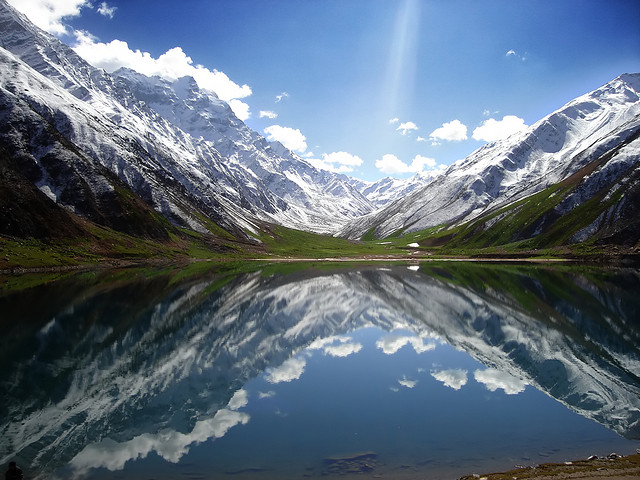
It was the Lake – emerald-green, calm as a mirror, ringed by rugged snow-capped peaks – the very one from his dream.
Saif’s joy was uncontrollable. “I shall find her, I shall find her here!” he cried, jumping up and down like a child. “My suffering is finally over!”
In his excitement, he forgot about how he had been transported to the Lake in the first place – courtesy the jinn of Solomon’s cap, who was at this moment standing behind him in human form.
The jinn cleared his throat. “Ahem, Prince Saif…there is one thing.” Saif turned around with a start. “What…?” he said slowly, peering at the jinn.
“You will not be able to see the Fairy Queen Badr Jamal. She is, like us, naari, borne of fire, hence invisible to the human eye in her true form.”
“So, what must I do to see her?” Saif asked impatiently.
“You may pray,” the jinn replied. “Pray for forty consecutive days – the chilla – without food, drink or sleep, without moving from the circle wherein you sit. Then, and only then, will you be able to see the Fairy Badr Jamal.”
With these somber words, the jinn vanished.
It sounded impossible. Only saints and prophets like Jesus and Moses, and later on Baba Farid Ganj Shakkar and Hafiz of Shiraz, had been known to perform a chilla to completion – others either died or lost their senses in the attempt.

But Saif was not about to be thwarted from his objective so close to the end. “I’ve looked for her for six years, wandering the streets of Egypt with nothing but a kashkol, a begging bowl. Surely I can endure another forty days?”
So, drawing a circle of pebbles on the southern shore of the Lake, he seated himself inside, closed his eyes, and began to pray. He prayed, and prayed, and prayed, and as the suns went down and the moons came up, Saif grew a little weaker, his face thinner, his pain stronger, his yearning deeper. He lost count of the days, and awaited each night with the hope – “Perhaps I will see her tonight?”
But Badr Jamal did not appear.
One night, as the sun cast its dying amber rays on the Himalayan slopes, and twilight crept into the sky with the daub of a divine paintbrush, Prince Saif sat in his circle wondering if he would live to see another day. Physically exhausted, his body was about to give up the struggle, but his mind had never felt sharper, calmer.
It was also a chowdveen ki raat – the 14th of the lunar month, or night of a full moon – and the sight of that perfect silver orb, glowing in the star-studded indigo sky, enveloping the Lake, the mountains and himself in its ethereal light, filled Prince Saif’s heart with peace. “If I were to die here tonight, if my soul were to leave my body tonight, I would be happy man.”
Suddenly, a sound reached his ears – like the fluttering of a great flock of birds, far away at first, then closer – intermingled with a delicate tinkling, like the chime of a thousand tiny bells. Saif looked up; a great white cloud was moving from the west towards the Lake.

“Perhaps it’s the Angels of Death, come to take me home!”, Saif thought.
But they were not Angels, because Prince Saif-ul-Malook was not destined to die that night. That chowdveen ki raat, Saif became one of the handful of human beings to ever complete a chilla, and one of the rarer still to set eyes on the mythical Fairies of Koh Kaaf, the Caucasus Mountains, that magical land that lay at the border of Asia and the savage West. The Fairies flew to the Lake every full moon to bathe, and their Queen was Badr-ul-Jamal.
The white cloud slowly descended at the shore of the Lake, and seven forms emerged – seven beatific creatures, fair-limbed, dark-haired, golden-eyed, with large gossamer wings on their backs that glittered in the moonlight.
Saif was dumbstruck. An invisible force propelled him to his feet and he ran behind some large boulders, from where he could see without being seen. His mouth agape with wonder, he watched as the seven Fairies laughingly doffed their wings, folded them neatly on ground, and dived into the deep, shimmering waters of the Lake.
And then he saw her – Badr Jamal. She was the last to enter the Lake, effortlessly gliding through the water with her long black hair spread out behind her, her face radiant as the full moon, eyes twinkling like a child’s. She was the most beautiful creature he had ever set eyes on.
Prince Saif felt like he would faint from rapture. The object of his quest, of six years and forty days of tortuous struggle, was right there in plain sight; a living, breathing, palpable creature!
My favourite things to do on a blustery winter day
Last Saturday’s aberrant snowstorm notwithstanding, I love winter. I think it’s because of my predisposition to piping hot sweets and cuddly sweaters – no sooner does the air get that dash of crispness, and the first faded leaf twitters to the ground, that I wake up with a craving for warm apple pie and an urge to order ten new turtle-necks from the Land’s End catalogue.
Here are some of my favourite things to do during a freak snowstorm, or on a particularly chilly winter day, best enjoyed from your apartment window with a steaming mug of tea or coffee, watching the flakes drift down and gather at the pane, like little Kay in the The Snow Queen. What are some of yours?
- Knitting
My goal is to be at least half as good a knitter as Naani, my maternal grandmother was, from whom I learnt my first slip-knot at age 8, and my other grandma, Aunty Z, who re-introduced me to this meditative woolly pleasure at age 25. They were true maestras, these women, with every little sweater knitted for a grandchild a timeless work of art. I’m just a beginner, at the oh-no-I-dropped-a-stitch scarf-mode, but hopefully I’ll get somewhere near them one day!


- Baking / Desserts
I’ve always liked making desserts, and I like to eat them even more. Since coming to America, though, I’ve been spoiled by Keebler pie crusts and Pillsbury and Trader Joe’s baking mixes. But sometimes, you just need to sink your teeth into a crispy, flaky, butter-glazed, hand-kneaded pie crust.

You can’t do the short-cut with halvas. The penultimate Pakistani dessert, rich, velvety, sinfully sweet, synonymous with winter in my hometown Lahore – I can just smell the ghee and milk, the brown sugar, the cardamoms, saffron, almonds, carrots, semolina or chickpeas, depending on what kind of halva my mum was making that day, simmering for hours on the stove…I’ve yet to muster the courage to cook one of these on my own!

- Reading
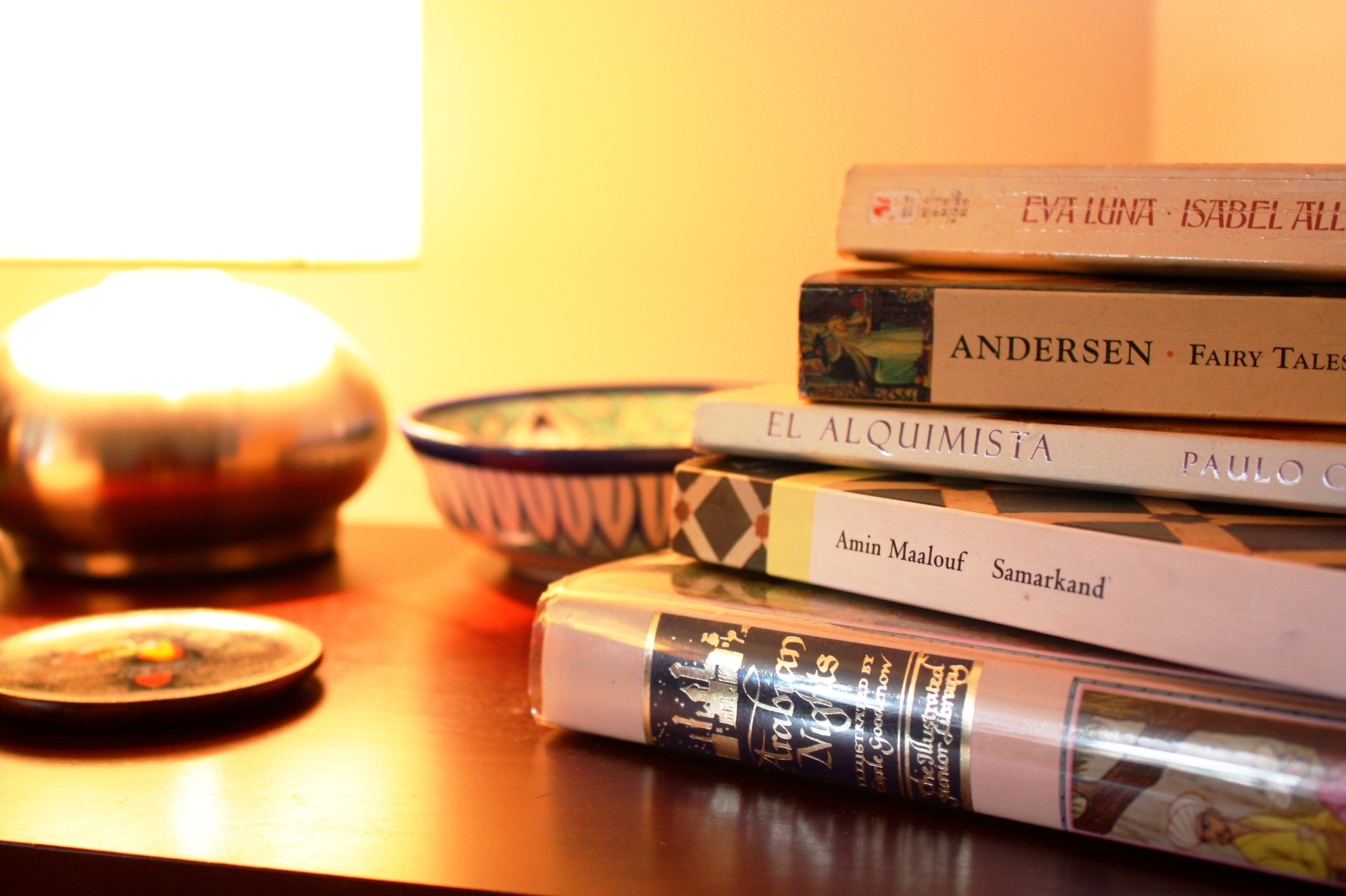
This is, of course, one of the most enjoyable activities ever at any time of the day, any day of the year, but even more so on a day when you just want to wrap yourself up in a soft hand-me-down blanket and not move. Not move, not think, just lose yourself in some fantastic world, centuries away, meandering and mysterious, rife with kings, queens, heroes, romance, magic…The Arabian Nights, The Lord of the Rings, The Alchemist, and fairytales of any kind rank high on my list. Current favourite is Samarkand by Amin Maalouf, a plum of cocoon-reading if there ever was one!

- Origami
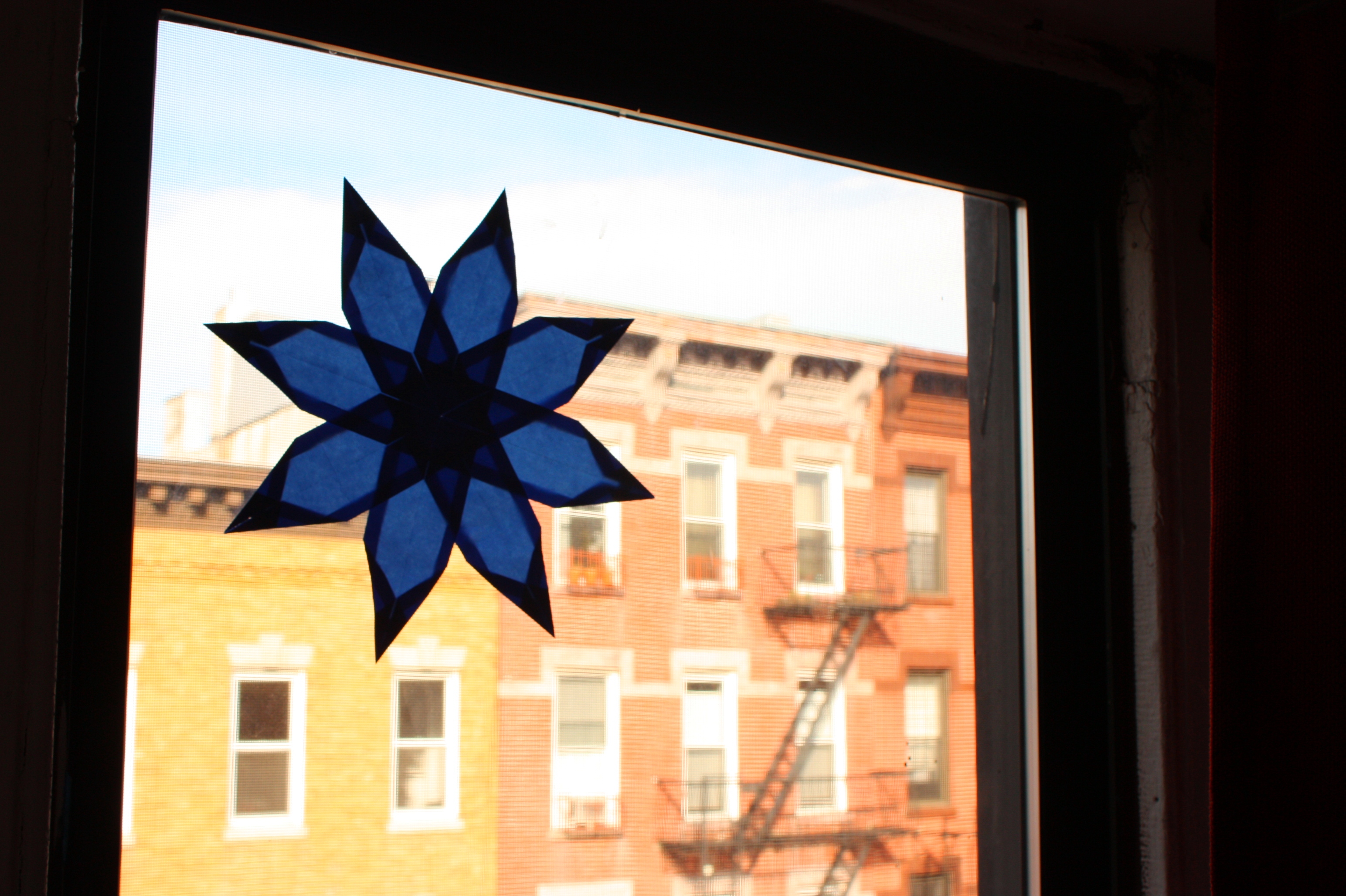
I bought an Origami Suncatchers Kit from Barnes & Noble on an impulse, and spent the next one week bent over a coffee table strewn with colourful glazed paper, glue and fishing string. Z would find me in the exact same position every time he came home from work – the house fell into a state of neglect, dinner was reduced to pita and hummus, episodes of the Colbert Report backed up…and voila! The prettiest things to have come out of a thoroughly home-bound day :)



- Board Games
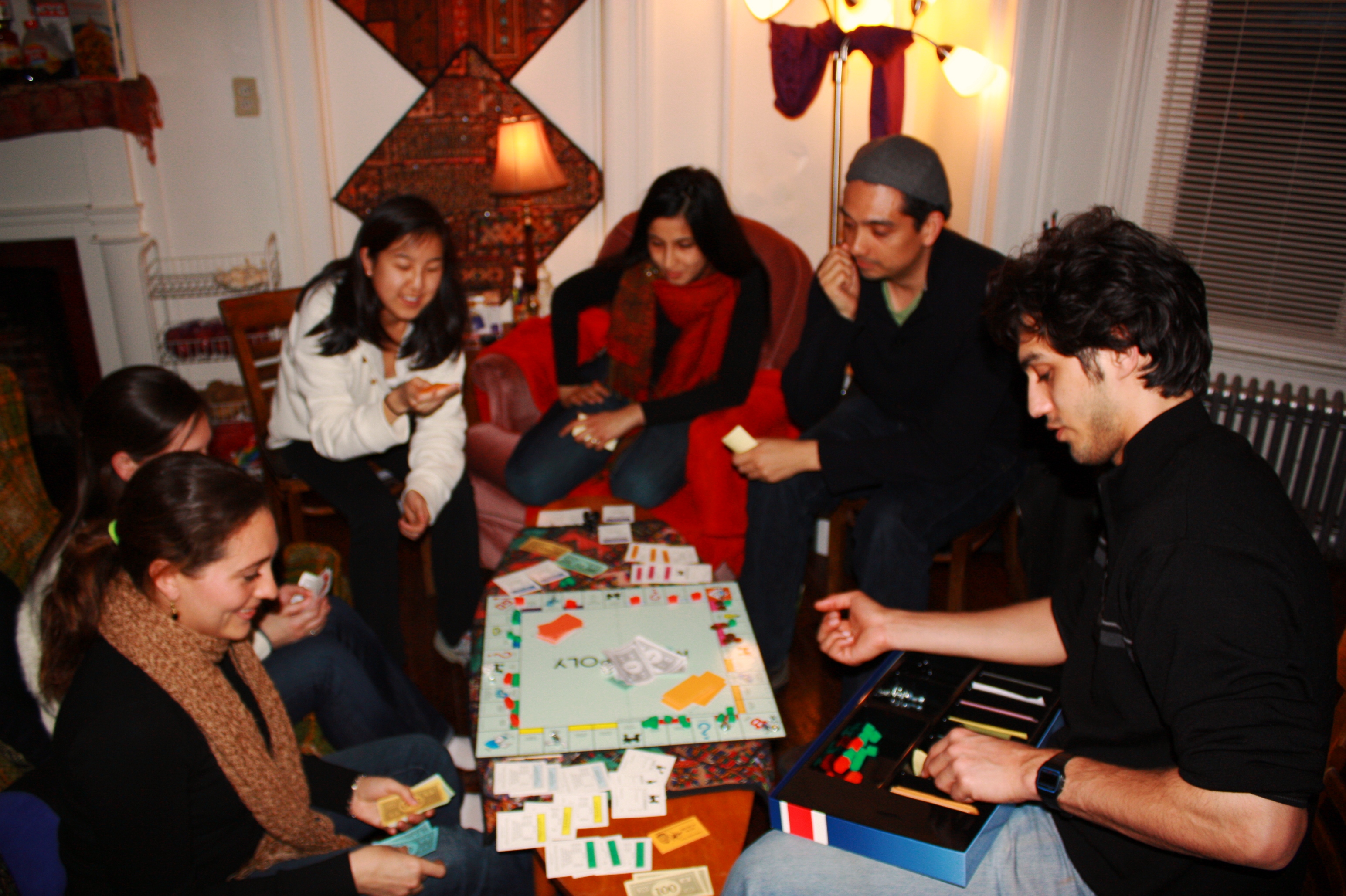
Maybe my 25+ friends think I’m geeky for still obsessing about board games, but I don’t care! It’s my dream to have a whole store of them one day, and host extravagant board game bashes every weekend. Can there be a better way to pass time with people on a blustery winter day? The blizzard would long be over before someone declared victory in Monopoly or Catan, and you’d look out of the window and say, “Hey, when did it stop snowing?” Such is the beauty of board games.

That’s one thing I miss about living in a dorm – willing game players were never in short supply. And what I miss even more are those nippy evenings in Lahore, when the whole troop of cousins would gather in front of a gas heater at our grandparent’s or eldest aunt’s house every Sunday for a religious contest of Ludo, Carom, Cluedo, PayDay, and as we got older, Pictionary, Tabboo, Cranium…
Well, stay warm, and enjoy your winter, folks! :)
Costa Rica Day 3: Ziplining in a Cloudforest, and a Hostel Hunt!
September 5th, 2010
Santa Elena / La Fortuna, Costa Rica
We woke up to the sound of sizzling eggs and childish chatter in Spanish. I rubbed my eyes and looked at the forest-green walls, the lacy white curtain spilling light, the gigantic tiger-print fleece blanket on the bed. “Where am I?”
At a hostel in Santa Elena, of course, hours away from one of the most thrilling activities Costa Rica had to offer, in one of the most pristine cloudforests in the world!

We hurried down to the kitchen, where the hostel-keeper Ronny’s wife was cooking us up a hearty breakfast, while her two adorable children Daniel and Jasmine capered about in their sky-blue school uniforms. Soon, a Turismo van arrived to take us to the Selvatura Adventure Park for our canopy tour.


Selvatura Park is located on 1, 200 acres of virgin cloudforest in the heart of the misty Monteverde Reserve, founded in 1951 by a group of American Quakers. There are no walking or hiking trails traversing the forest, so the only way to see it is through a network of hanging bridges, or on horizontal cable-trolleys called ziplines. Ziplines have been used as a method of transport in remote mountainous regions (including northern Pakistan and India) for over a century , but the modern canopy tour was developed by naturalists in the 1970s as an eco-friendly way of exploring rainforest.
As our guides geared us up with harnesses, gloves and helmets and hammered out instructions, I had that familiar fluttery feeling in my stomach – What if I get stuck mid-way on the cable? What if I lose my balance and topple upside-down? What if I scrape my hand on the steel and it starts to bleed?
“Really, you’re the last person who has the right to be scared, you’ve jumped out of an airplane!” my husband Z scolded me. I think I was only pretending to be scared though – just so I’d be mentally prepared in case something did go wrong.
But once we were up there in the treetops, on the first platform, and with one push I was sent zooming along the cable, comfortably seated in my harness, lush forest below and sunny skies above, there wasn’t a happier person than me in Monteverde.

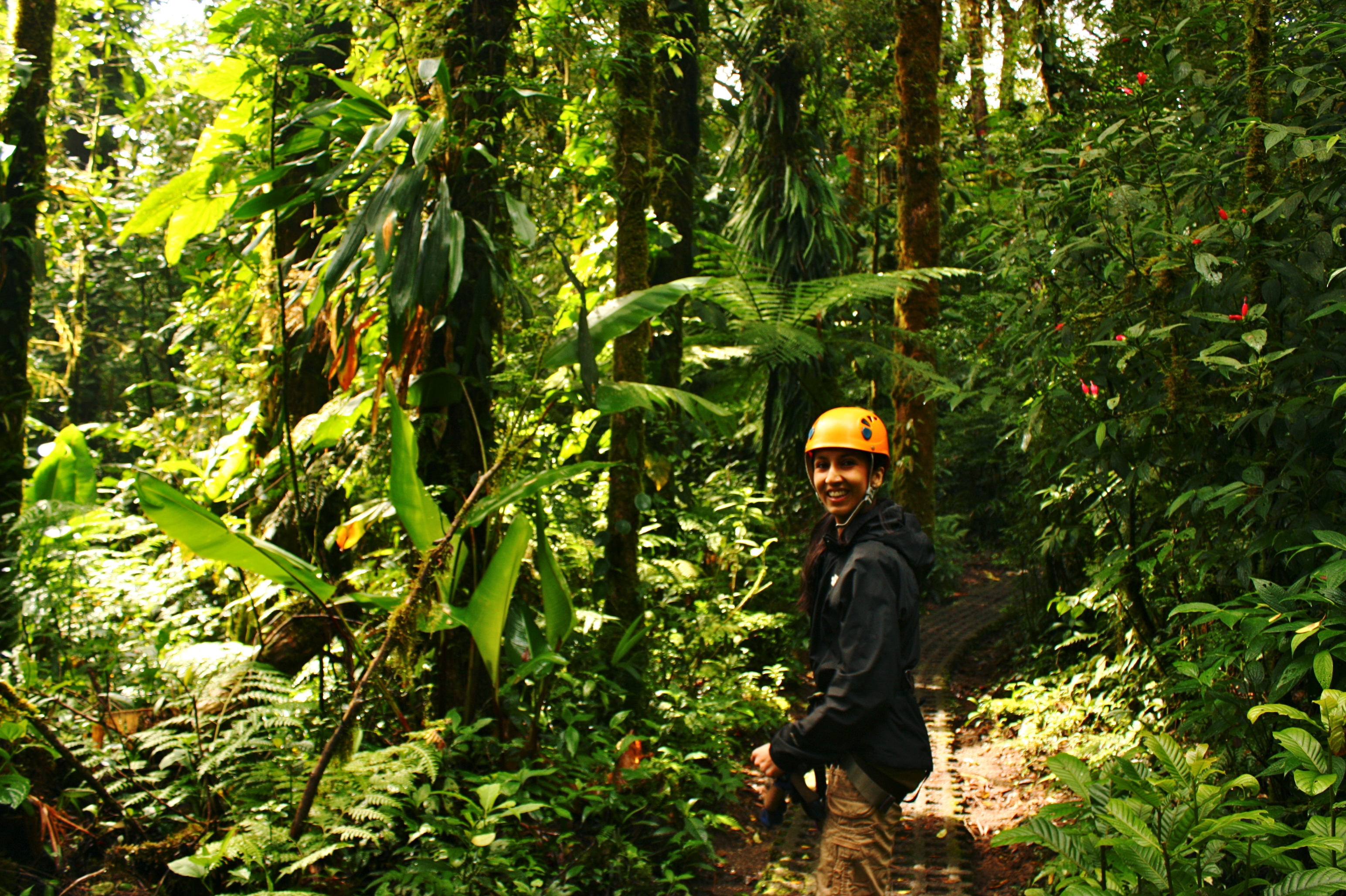
I just couldn’t control the smile on my face. It was so, so, so much fun. The moment I reached the other side I couldn’t wait to do it again. We rode 15 different cables in the span of 2 hours, over various lengths and heights – sometimes brushing past leaves and branches in the thick of forest, sometimes a kilometer above the canopy, stretching green till the horizon. On the two longest cables (650 and 700 meters), they sent you in pairs, so me and Z rode together, whooping at the top of our lungs the whole way!
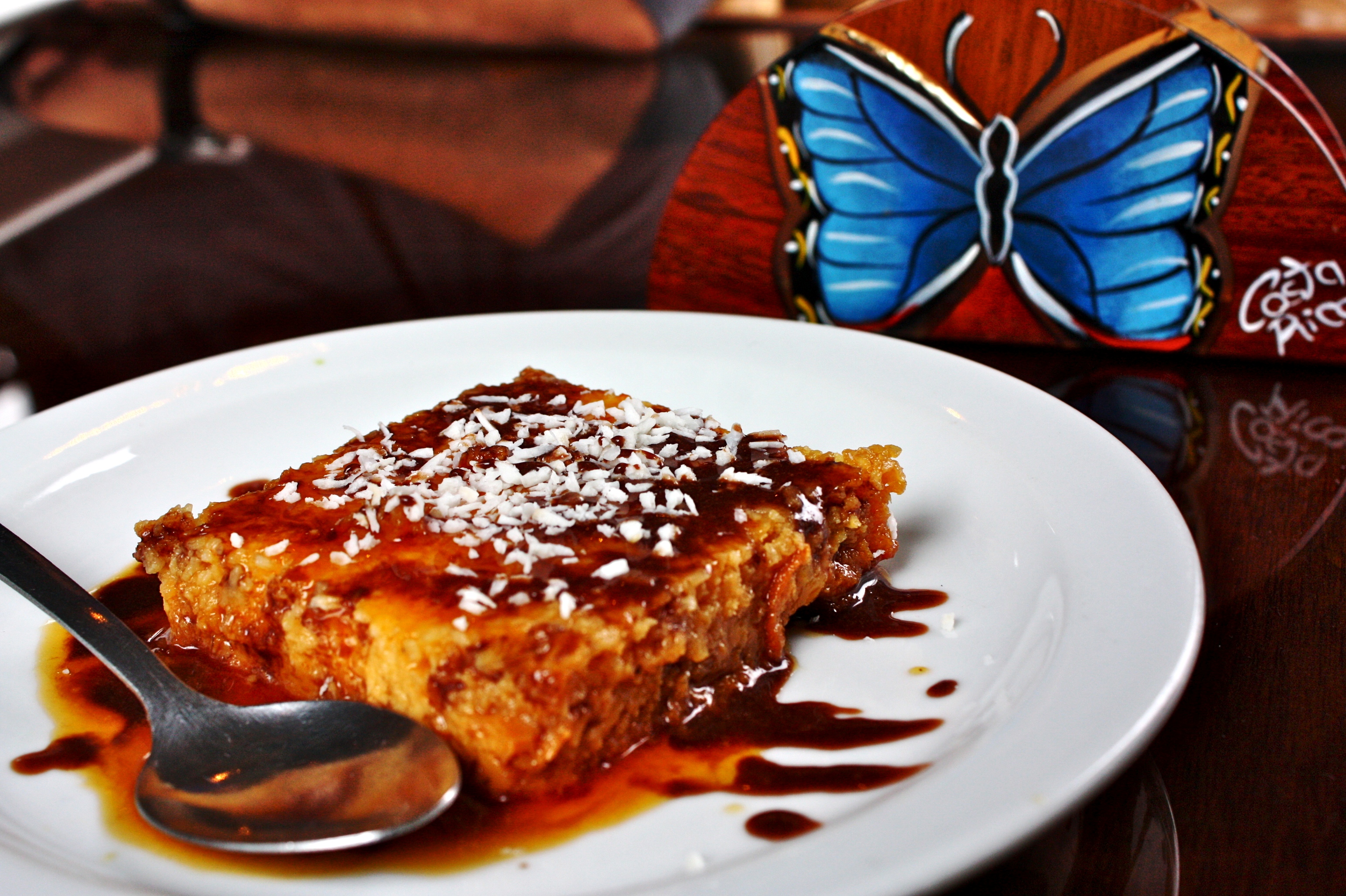
Back in Santa Elena town, we were famished (as usual), and made our way to a red-painted soda called Maravilla, recommended to us by the hostel-keeper Ronny. We ordered a typical Costa Rican lunch, casado, which consisted of the basic Latin American fare of rice and beans, with a portion of meat-in-gravy, fried plantains and salad. I polished down my casado con pollo with a tumbler of fresh Tamarindo – imli juice! – and followed it up with dessert at the beautiful Morphos restaurant.


After lunch, we said goodbye to Ronny and family, checked out of Sleepers Sleep Cheaper, and made the journey back to La Fortuna, where we had other activities planned over the next two days. We’d made reservations online at a local hostel, and the jeep was going to drop us there directly.
But as the jeep trundled past La Fortuna’s cheerful downtown and twisted into a pot-holed back alley, and colourful facades turned into tin-roofed shanties, I said to Z with some foreboding, “I have a bad feeling about this place!”
Before we knew it, the jeep was gone, leaving us in the pouring rain at the porch of a dingy grey house with a sputtering tube-light and an emaciated, bulgy-eyed, 5ft-high man at the reception. “Bienvenido,” he rasped with a crooked grin, “Plees check een hee-yre”. I watched with horror as Z lifted the pen and wrote down his name in an empty register.
The little man then took us around to our “room”, opening a creaky door to a prison cell from Alcatraz – damp and windowless, with paint peeling off the grey walls and a spindly bunk bed covered in grey sheets that looked like they were last washed in 1968.
I stared at Z. “No – way. Nooo way!” He gave me a helpless look. “I know this isn’t very pleasant. But what can we do? We’ve already checked in!”
“It doesn’t matter!” I pressed. “Just make up some story, tell him we have friends at another place, and want to stay with them.” I was conveniently excused from the dirty work because I didn’t speak Spanish and Z did :P
Z came back five minutes later. “I told him. He wasn’t very happy, but I have a feeling this has happened to them before!”
Laughing with relief, we strapped on our packs and set off in the rain towards downtown La Fortuna, to hunt for a decent place to pass the next two nights.
There wasn’t a lack of choice – the main street was strewn with them. We first walked into a beautifully designed, leafy, woody, two-storeyed hostel, comfortable, clean and cheap rolled into one – perfect, really, except for the manic old American hippie who ran it . “But what don’t you like about this place? What? What?” he pleaded when we told him we wanted to look around a little more. “But why would you want to do that? Why? Why?” he almost shrieked.
I looked at Z again – another one of those “looks” – and, finding some excuse or other, we extricated ourselves from the desperate old fogey and ventured on.
A few blocks down, we passed by a place called Hotel La Amistad, where a rotund, smiley-faced man signaled us in through the glass door. “You looking for a place to stay? Won’t find a better deal!” He introduced himself as Salim from Nicaragua, the proprietor of Hotel La Amistad. “You can look around all you want, my friends, but I bet you’ll come right back here!” he winked.
And Mr. Salim – named after an Arab friend of his father’s – was absolutely right. I don’t know if it was his exuberance or the open, inviting look of the hotel, a courtyard surrounded by rooms with hammocks and easy chairs outside every door, but we did’t even bother looking anymore. We were sold!

After a light dinner at the Lava Lounge restaurant across the street, we turned in – and was I glad to be sleeping in the airy room and freshly-laundered white sheets of La Amistad instead of on the bug-infested coffin-shrouds in Alcatraz two streets away ;)
Next week, Day 4: Cano Negro River Safari!
Costa Rica Day 2: Monteverde Horseback Ride & Coffee Tour
September 4th, 2011
Santa Elena / Monteverde, Costa Rica
A Turismo van picked us up from the Arenal Observatory Lodge at 7a.m. and deposited us at the shore of the Arenal Lake for the first leg of our journey to Monteverde – by boat!
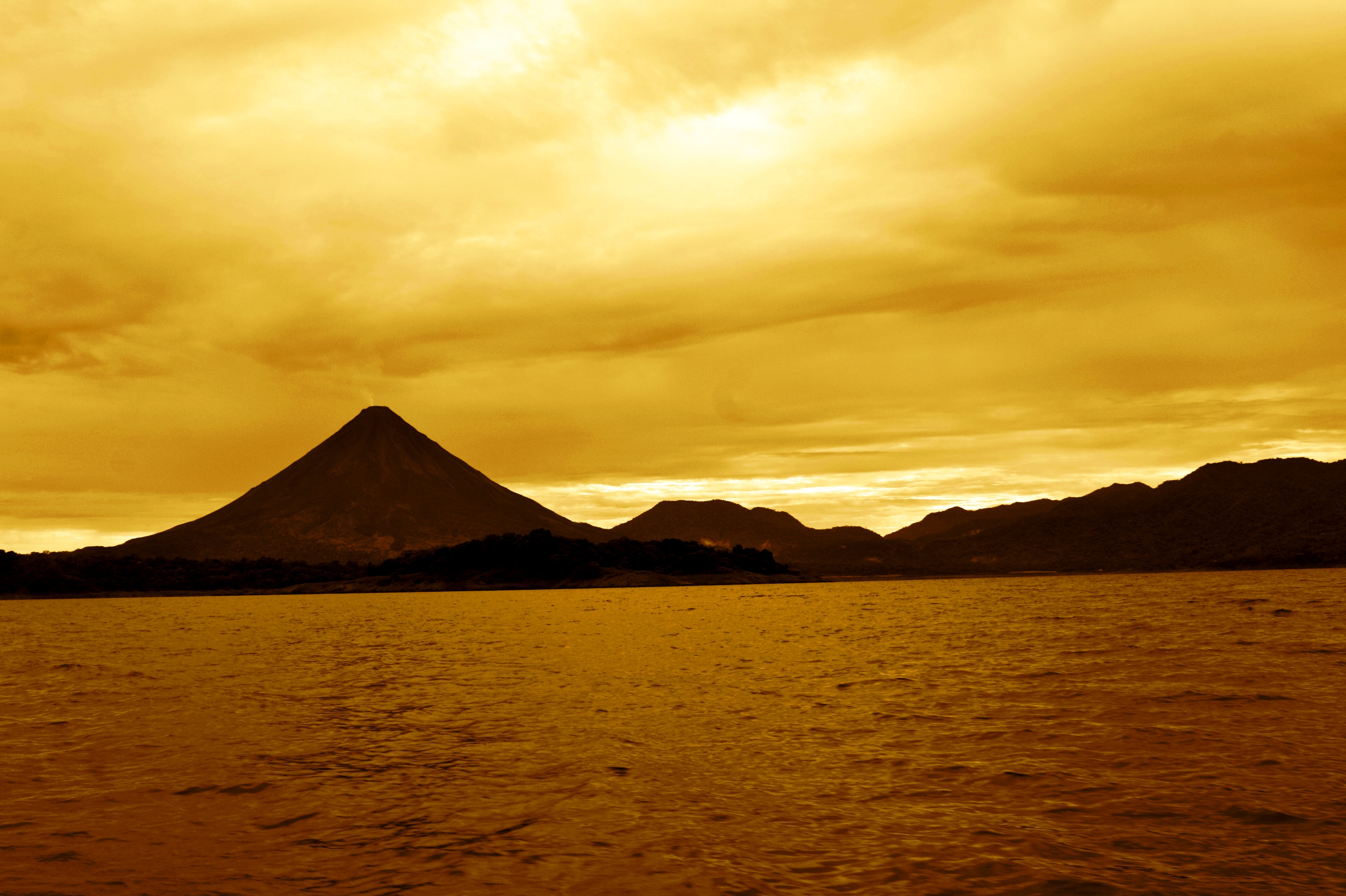
After a pleasant 20-minute ride across the warm blue lake, chatting with the nice young couple from Texas who were on the tour with us, we reached a forested edge where our next, much anticipated, four-legged rides awaited.
I adore horses. I always have, taking lessons with 5-year olds at the Lahore Polo Club to forking out 60 bucks an hour at Kensington Stables, just so I could be close to the creatures.
I also have a theory – tried and tested, believe me – that if I don’t find my horse attractive, we just won’t get along, and the ride will be a miserable experience for both of us. So, quickly scanning my four options, I spotted a favourite – a strong, slender chestnut mare – and hurried to bag it, lest one of the Texans got to her first.
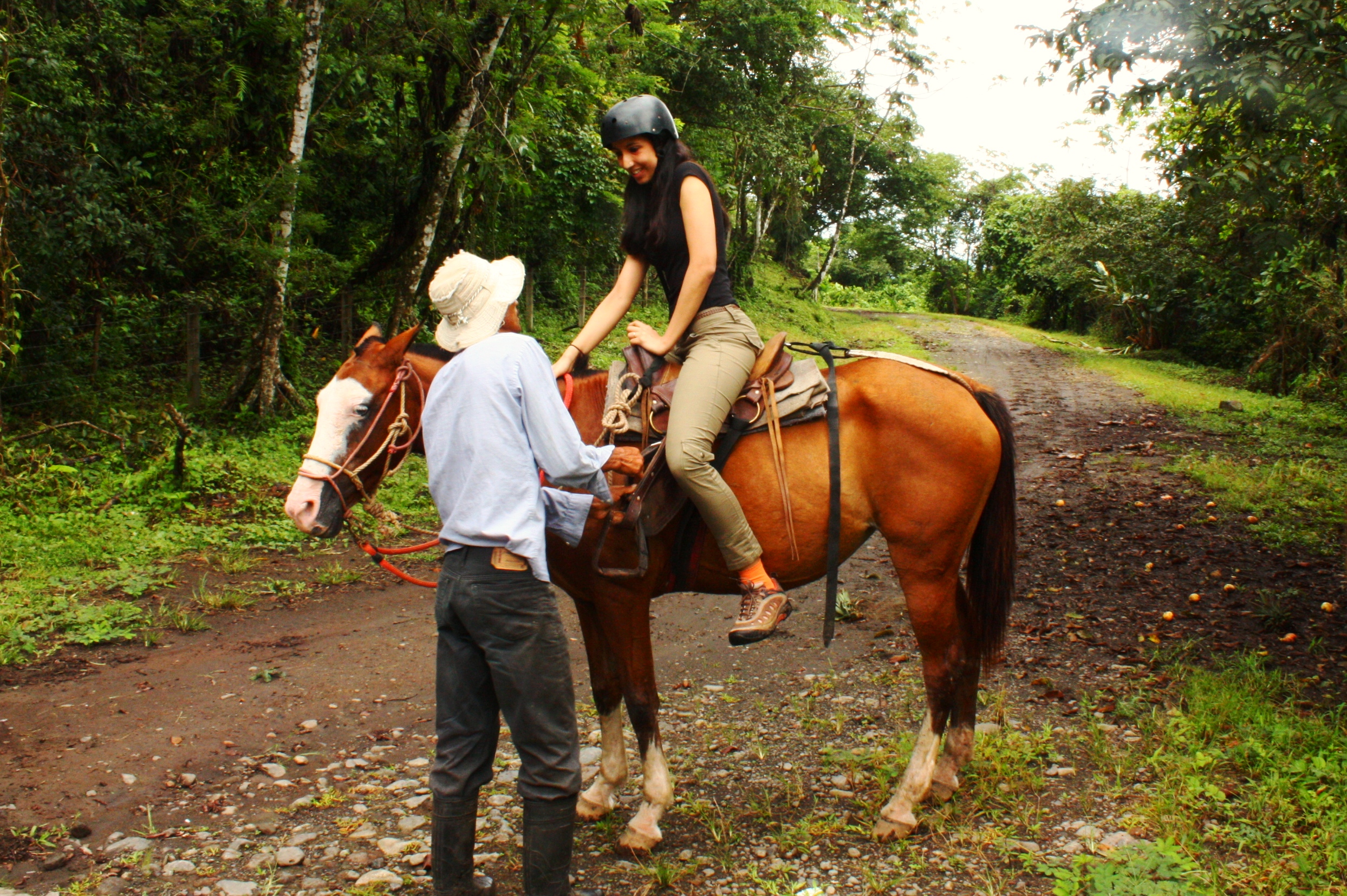

I didn’t regret my choice. Mariposa just flew – through woods and dales, over brooks and hills – neck and neck with the lead guide Mariano, effortlessly carrying me behind her. The others in the group, including Z, were left far behind, and for 2 hours it was just me and the spry, sun-wizened Mariano, communicating with gestures and my broken Spanish, a permanent smile on my face. “Cómo se llama esto? Esto? Esto?” I pointed to birds, fruits, flowers that grew in tangled bunches along the way, and Mariano would smile and silently respond by offering me a ripe guava from a tree, or a fragrant white orchid that I happily tucked behind my ear.

I was sad when the ride came to an end (and a little alarmed, when I got off Mariposa and realized my thighs felt like two immovable planks of wood!) After a brief stop at a roadside Minisuper for some fresh pineapple, we were whisked away into a jeep for the last leg of the journey to Monteverde.
There were other tourists in the jeep, including two British girls in their mid-20s, who revealed to us that they were currently in the 10th month of a year-long around-the-world trip. “One day, we decided we hated our jobs and where our lives were going. So we quit, gathered up all our savings, and bought a round-the-world air ticket, from London and back.” There were gasps of disbelief and wows of admiration. “We’ve covered 20 countries so far,” they continued, “from South East Asia to South and Central America, on our way to the States…” I told them they’d better write a book about this when they were done. “Yes, that’s the plan!”

Soon, we reached Santa Elena, the charming, cobble-paved little pueblo closest to the Monteverde Cloud Forest, where most budget travelers stayed. The jeep dropped us off at our hostel, Sleepers Sleep Cheaper, where we checked in with the jolly proprietor Ronny, showered, changed, stuffed our faces with bread and cheese from the nearest Supermercado – we hadn’t eaten a bite since breakfast save the piña! – while another one of those ubiquitous Turismo vans arrived to take us to the coffee tour at Don Juan.
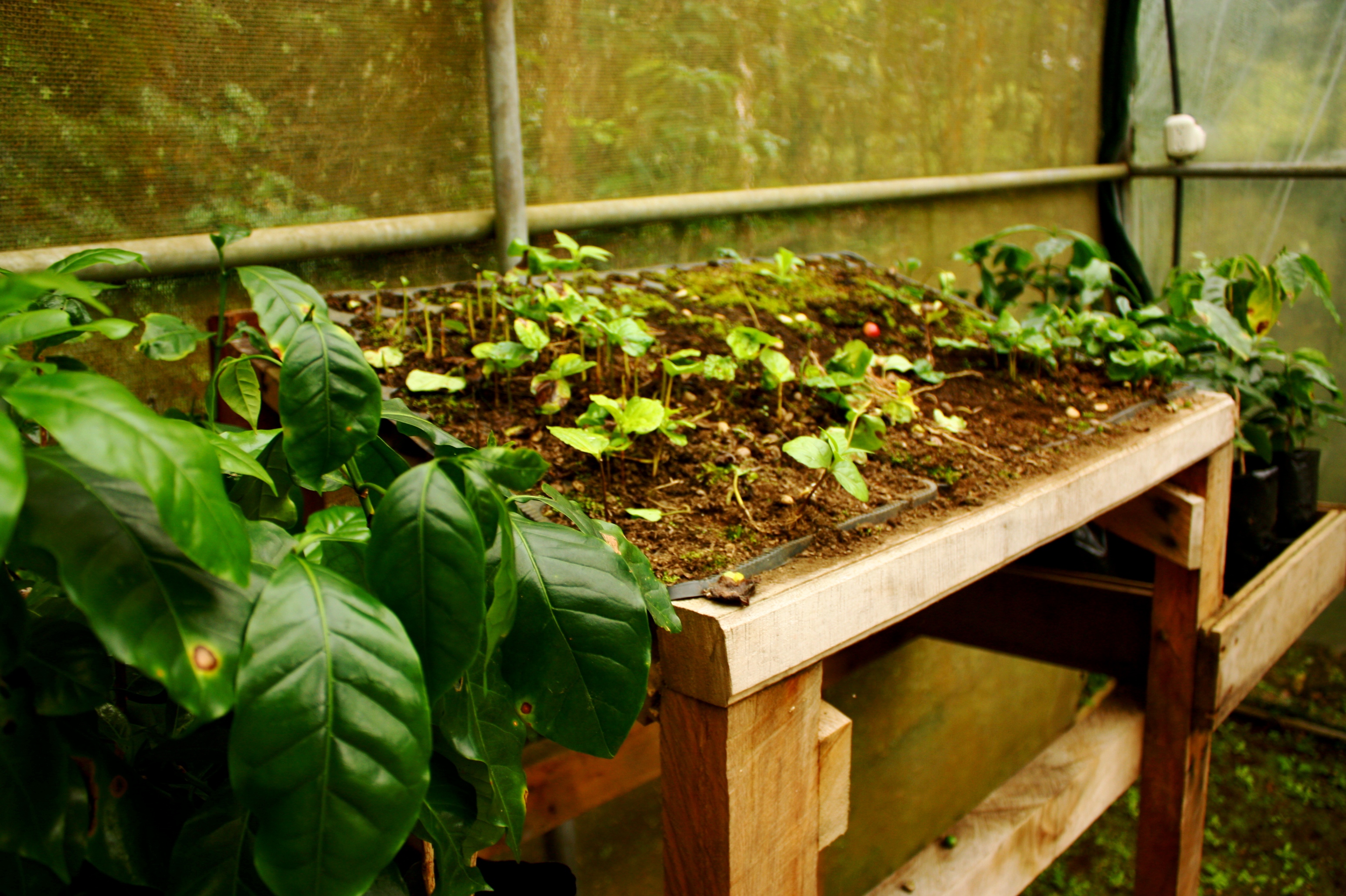
The Don Juan Coffee Plantation was established some 60-odd years ago by a now ancient Don Juan, who greeted our group of 6 with a sweet toothless smile at the reception. Our guide, Elizabeth – a chubby, exuberant Costa Rican woman – proceeded to show us around, demonstrating each step of the traditional coffee-making process, from planting and picking to drying, cleaning and roasting, while throwing in interesting facts about coffee (Did you know that the coffee plant originated in Ethiopia, that there are 40 different varieties, that only 2 are drinkable, that it’s the most traded commodity in the world after oil?)


By the end of the tour, damp from the persistent drizzle, we were desperate for the pure Arabica coffee that awaited us in hot thermoses at the reception. I tasted all three roasts – light, dark and “farmer’s” – before downing 3 cups of the one I liked best (farmer’s, smooth and subtly sharp), accompanied by sweet corn bread and chocolate candy. Z, on the other hand, a religious caffeine-abstinent, decided to go for a shot of the bitter dark roast, sans milk and sugar. “If I’m going to do this once in my life,” he reasoned, “I might as well go all the way!”
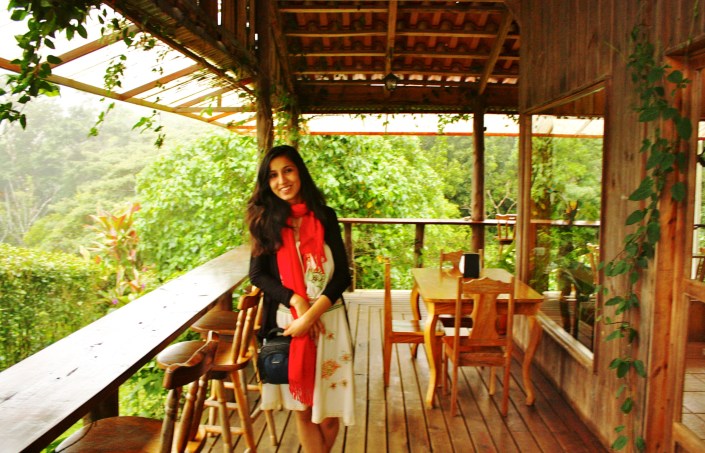
That evening, we roamed around Santa Elena – a cluster of souvenir shops and picture-perfect restaurants,populated almost entirely by tourists – and had a fantastic dinner at a place called the Tree House Cafe.


It was barely 9p.m., but sleep was warm and welcome back in our cute, woody little room at the hostel – replete with excellent comida and toasty coffee, blissfully aching from the horseback ride, watching fireflies dance at the misty, lace-curtained window.
Next week, Day 3: Ziplining in the Cloud Forest
Occupy Wall Street

I loved going to protests as a student. Be it a rally of solidarity with Palestine, a march against the U.S. invasion of Iraq or Emergency Law in Pakistan, or a demonstration to close down Guantanamo, I was there, banner in hand, a chant on my lips. It was important, I thought, for people to express their concern, their outrage, at an injustice committed to them, in their name, or perhaps not directly affecting them at all – because if you couldn’t do anything about it, you could at least say something. That was a moral obligation, even if it made no difference to the powers-that-be, even if it did not stop the wars or the drone attacks or the repression and brutality. As the famous African-American writer and former slave Frederick Douglass said, “Power concedes nothing without a demand. It never did and it never will.”
So why aren’t I out there at Liberty Plaza for Occupy Wall Street? It’s been 5 weeks since the encampment started, and I’ve only visited twice. When we talk about it at work, I try to avoid mentioning this embarrassing fact. Why is it, as the largest and most dynamic protest movement in America since the Civil Rights and Anti-War resistance of the 1960s, the closest thing to an “American” Spring, unfolds right here in New York City, that I have no interest in being there, in participating in history?
I’ve puzzled over this question myself many times. I mean, I understand what they’re protesting – economic and social inequality, and a government that is beholden to corporations rather than people. That, and everything else that’s wrong with the American system, from healthcare to unemployment to the illegal wars. And I agree with them.
But where is my fervor? Where is my passion, my “earnest desire to save the world“?

Last weekend, we were at a tea party at a friend’s place, talking to a fellow Pakistani, a little older than us, who had been living in New York for the past 6 years. He was telling us about a recent trip to Lahore to see his ailing father.
“And you know what’s the hardest thing for us first-generation expatriates? Not being there for our parents in their old age…”
I nodded sympathetically, though in fact I had stopped listening to him when he said “us first-generation expatriates”. “What?” I thought to myself, “I’m not a first-generation expatriate, nor do I intend to be one! I’m going to go back to Pakistan!”
And I think that’s when I got my answer, the explanation for my lack of motivation for participating in Occupy Wall Street. As much as I support the movement, in spirit and letter, I do not feel it’s my struggle. I do not feel it’s my part in history to play. Simply because, I’m not American, and I don’t plan on becoming American.
I know other Pakistanis and foreign-born New Yorkers who are thrilled about the movement, spending days at Liberty Plaza with the other protesters, marching alongside the students, teachers, workers and citizens of all classes and color at their various demonstrations. But they are like the guy we met at the tea party, those who have accepted their immigrant status and the fact that they are here to stay. They’ve left their native countries, shed their old accents, looking for homes to buy. They belong to America now. This is where their children will grow up. And so, they have a cause, they have a reason – they are part of that 99%. They can chant at the marches, they can sing along with Tom Morello when he performed “This Land is Your Land” at the encampment this afternoon, they can hold signs that say “We want our country back!” and mean it.

Not so for me. I feel like a traveler, merely in passage – observing the goings-on of this great, crazy city, appreciating the good and the bad, the beautiful and the ugly, and moving on – curious but detached. I live here, but I don’t belong here.
Does that somehow absolve me from being an active member of the community? I don’t know. Have I become less idealistic than I used to be, a little more practical, self-interested, or just plain lazy? I hope not.
Do I need to be 17 again to feel the same fervor, the same passion, the same desire to change the world? Maybe, maybe not.
But Occupy Wall Street is not my moment, my history. It’s America’s moment. And, no matter what happens tomorrow, a week from now, a month from now, even if society is ostensibly as unequal as it was on September 17th – at least you spoke out against it. At least you demanded. That can never be in vain.
Costa Rica Day 1: Cerro Chato Hike & Baldi Hot Springs
September 3rd, 2011
La Fortuna / Arenal, Costa Rica
After 10 hours of traveling the day before – 5 on the flight from JFK to San Jose, 5 on the bus from San Jose to Arenal – I had planned to laze in bed or hang out by the breakfast buffet for the better part of the morning. But the foot of an active volcano is no place to sit and relax. Before we knew it, a bright sun was streaming through the window of our room at the Arenal Observatory Lodge – it must have been about 5:30am? – and our stomachs were rumbling for adventure.
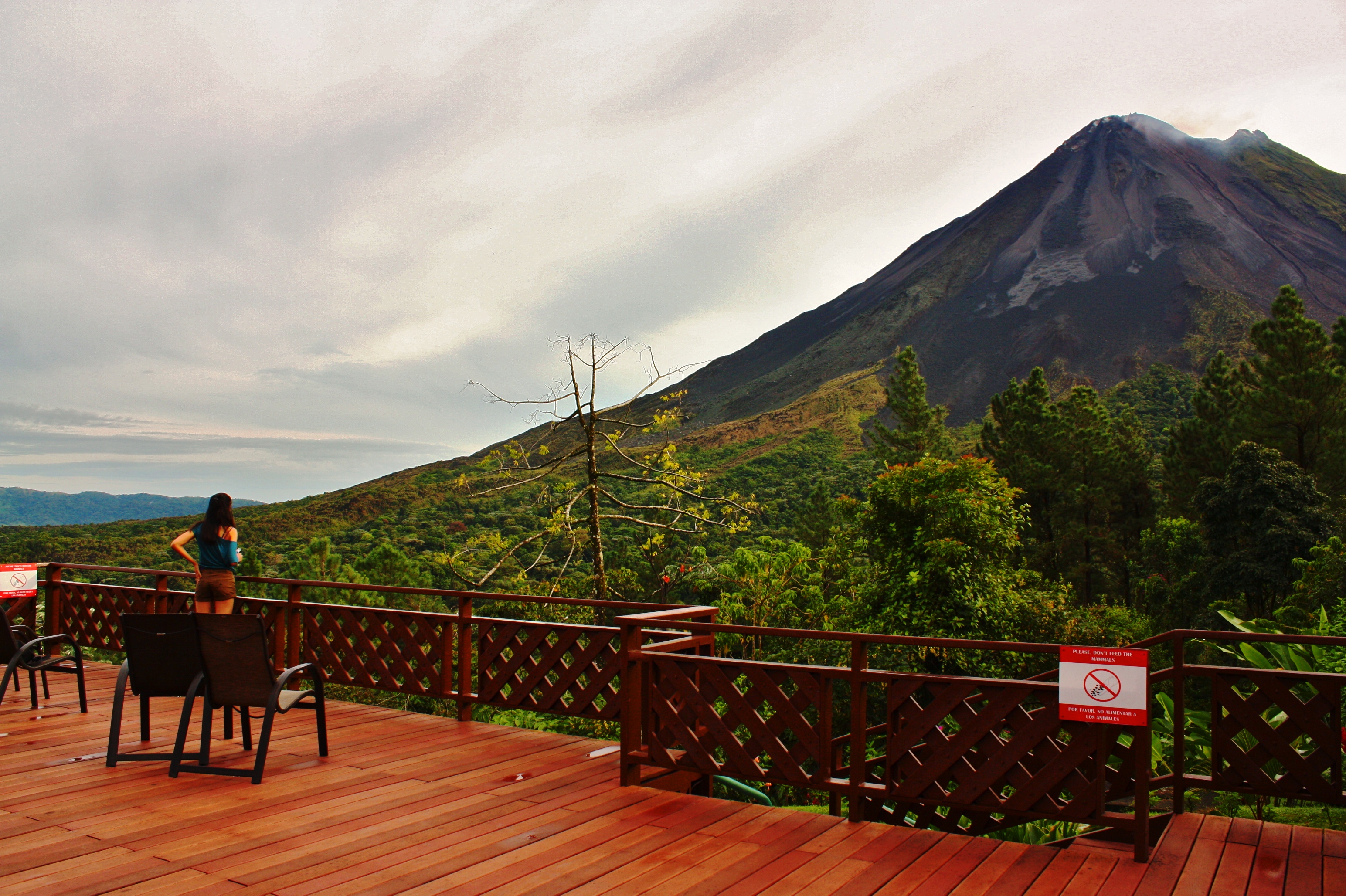

After a hearty breakfast of scrambled eggs with toast, hash browns, pancakes, fried plantains, Costa Rican cheese, and as much watermelon, papaya, pineapple and fresh blackberry juice I could possibly devour, we set out to explore the surrounding forest. Butterflies and hummingbirds kept us company on the way, as thick, misty jungle meandered into meadows full of ruminant cows, a smoky-grey Arenal looming in the background.

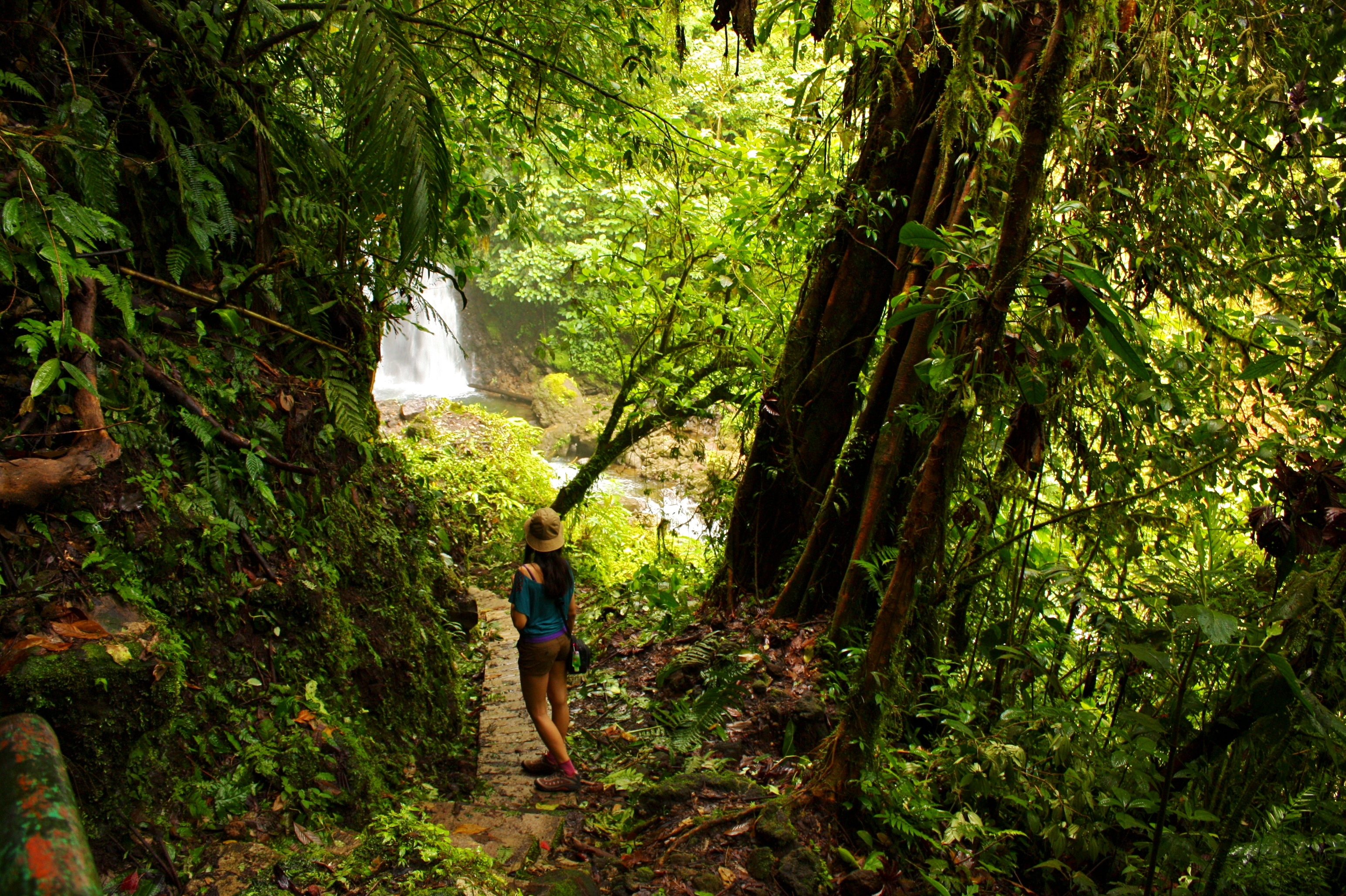
Soon, we made it to the head of the Cerro Chato trail. Cerro Chato is a 3,740 ft-high dormant volcano next to Arenal. They told us there was a gorgeous blue-green lake at the crater that we simply had to see. The hike up was 4km – we thought we could get to the top, check out the lake, and be back at the Lodge in about 4 hours, before sundown.
That delusion was soon dispelled.
Half an hour into the hike, the “trail” disappeared, replaced by fallen tree trunks, giant boulders and thorn-filled bushes. Cerro Chato seemed to be saying to us, “So you two New Yorkers thought this was going to be easy? Ha!”

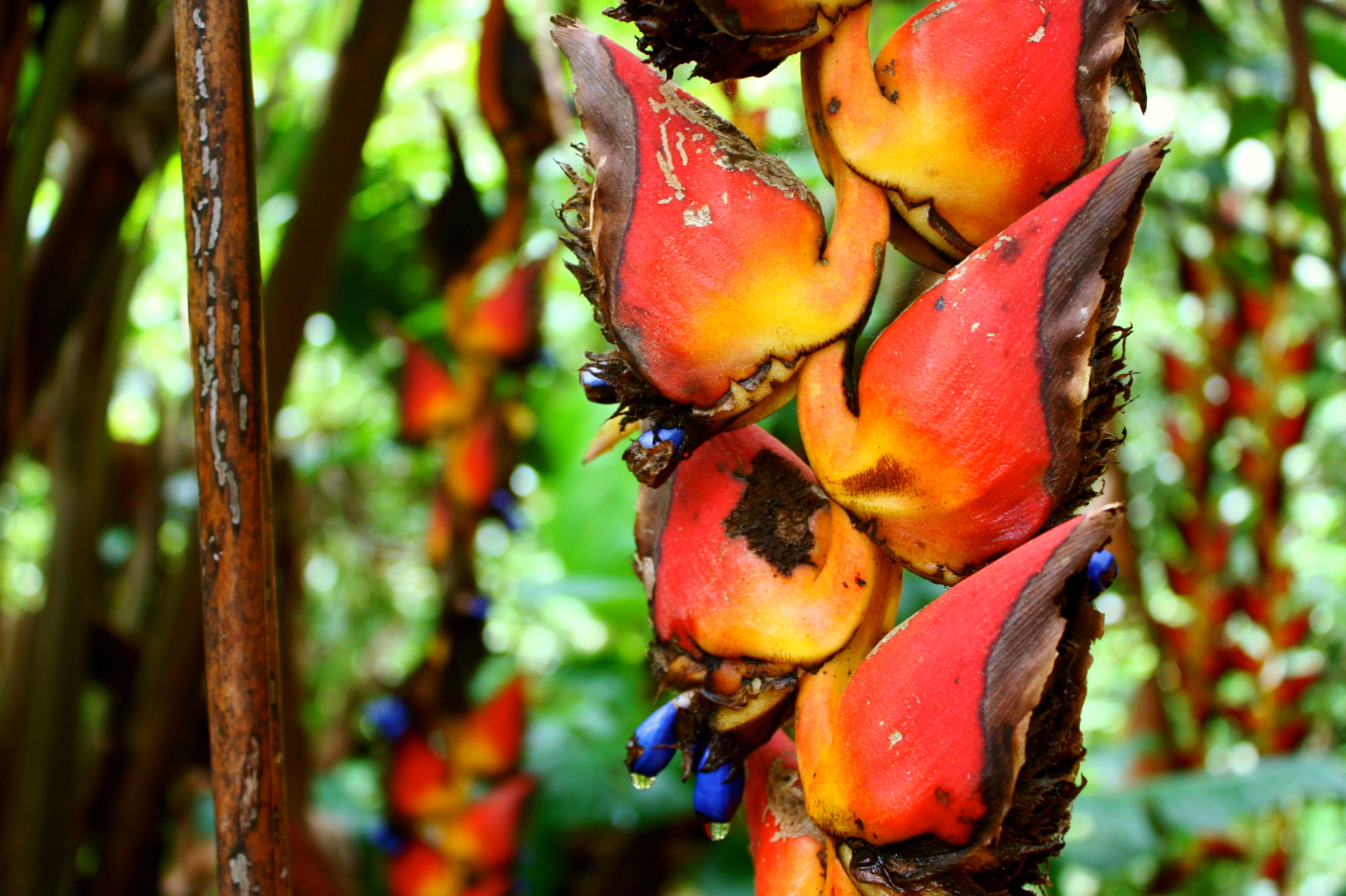
I think I must have whined to Z a hundred times, “Let’s turn back, let’s turn backkkk, I can’t go on!” But the other part of me was grimly determined to see this expedition through – “Don’t be crazy, you can’t give up now!”
3 hours later, we made it to the top. I was grumpy, to say the least, but the sight of the lake and the yummy chicken sandwiches our nice waiter Michael had packed for us back at the Lodge made me feel a little better.
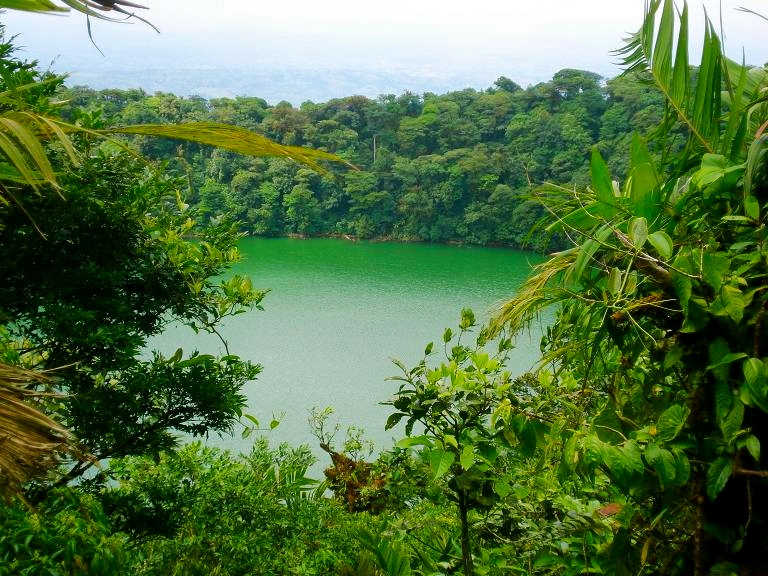
There was still one thing, however – we had to get back down! “I have a bad feeling about this, Z,” I intoned as we were getting up to leave. “I’m telling you, going downhill on such a steep slope is no joke. I’m going to fall, trip, break something…” And just when I thought the situation could not get more difficult, a roar of thunder ripped through the sky. I looked at Z, aghast. “Noooo!” As the rain began to fall, Cerro Chato turned into a gigantic mudslide, taking rocks, twigs, creepy-crawlies and two ambitious hikers down the slope with it.
Another 3 hours later, we made it back to the Lodge – muddy, blistered, scratched, sopping, and giddy at the seemingly impossible feat we had accomplished.


We were duly rewarded for our pains. Not only did we spend 2 hours soaking up in uber-relaxing thermal baths at Baldi Hot Springs (with an all-you-can-eat buffet dinner included!), we also saw a whole troop of Spider monkeys crossing the treetops from our hotel balcony. It was around sunset, so I assume they were making their way home (or going out to party?). They were some climbers, those monkeys, using not just their limbs but their tails to swing from branch to branch. One fellow attempting a super-vault didn’t quite make it, and went tumbling down the tree instead. But with those kind of limbs for support, I’m pretty sure he was OK!


With the day’s fatigue dissolved in the hot mineral waters of Baldi, I cannot tell you how well we slept that night. We have a saying in Urdu, ghoray haathi baich ke – roughly translated as the comatose kind of sleep you’d have if you sold elephants and horses for a living. Probably dates back to Mughal times…must have have been one tough job! :D
Next week, Day 2: Horseback ride to Monteverde and a Coffee Tour!……
 Windswept Words