Pakistan
The Freedom To Be
Published in the Express Tribune Blog, October 4th 2011

A friend from Lahore recently asked me, “What would you miss most about New York if you were to move back to Pakistan right now?”
I thought about it for a few minutes. Unlike many Pakistanis living in the U.S. I knew, I wasn’t particularly attached to this country, or to New York.
To me, it was just another city – a hard city, a cacophonous city, where bright lights and gleaming skyscrapers belied the darkness, the sadness, the grime and the poverty in the corners; where glamour, spectacle, a veneer of ethnic diversity thinly concealed the underlying greed and racism.
I had no great love for New York; my heart still belonged to Lahore, and it was Lahore that I forever looked for, in every street sign, in every face, in every smell and neighbourhood.
But there was one thing.
“Freedom”, I replied to my friend. “That’s what I would miss.”
It wasn’t the freedom to wear a tank top or mini-skirt in public, to dance at a nightclub or get a tattoo; it wasn’t the freedom to hop on a train or bus at any hour of the day and go where you wanted, come home when you pleased; the freedom to attend any kind of rally, concert or film screening that suited your fancy, to make friends with any colour or class of people you chose, to walk out on the street at 2.a.m. for some ice-cream from the 24-hour deli, to nap under a tree in Washington Square Park.
No, these were superficial freedoms. It was something deeper than that.
It was the freedom to be.
Growing up in Lahore, I didn’t ever ask myself – Why are all the women I know teachers and doctors, the other half housewives? Why don’t I know any women engineers, scientists, actresses, novelists, athletes, dancers, photographers, lawyers?
I never asked myself – Why do I have to wait for the driver or one of my parents to drop me to school or to a friend’s house? Why can’t I take the bus, a taxi or rickshaw?
Why must I send the cook to fetch that tub of ice-cream from the shop across the street for my slumber party? Why can’t I go myself?
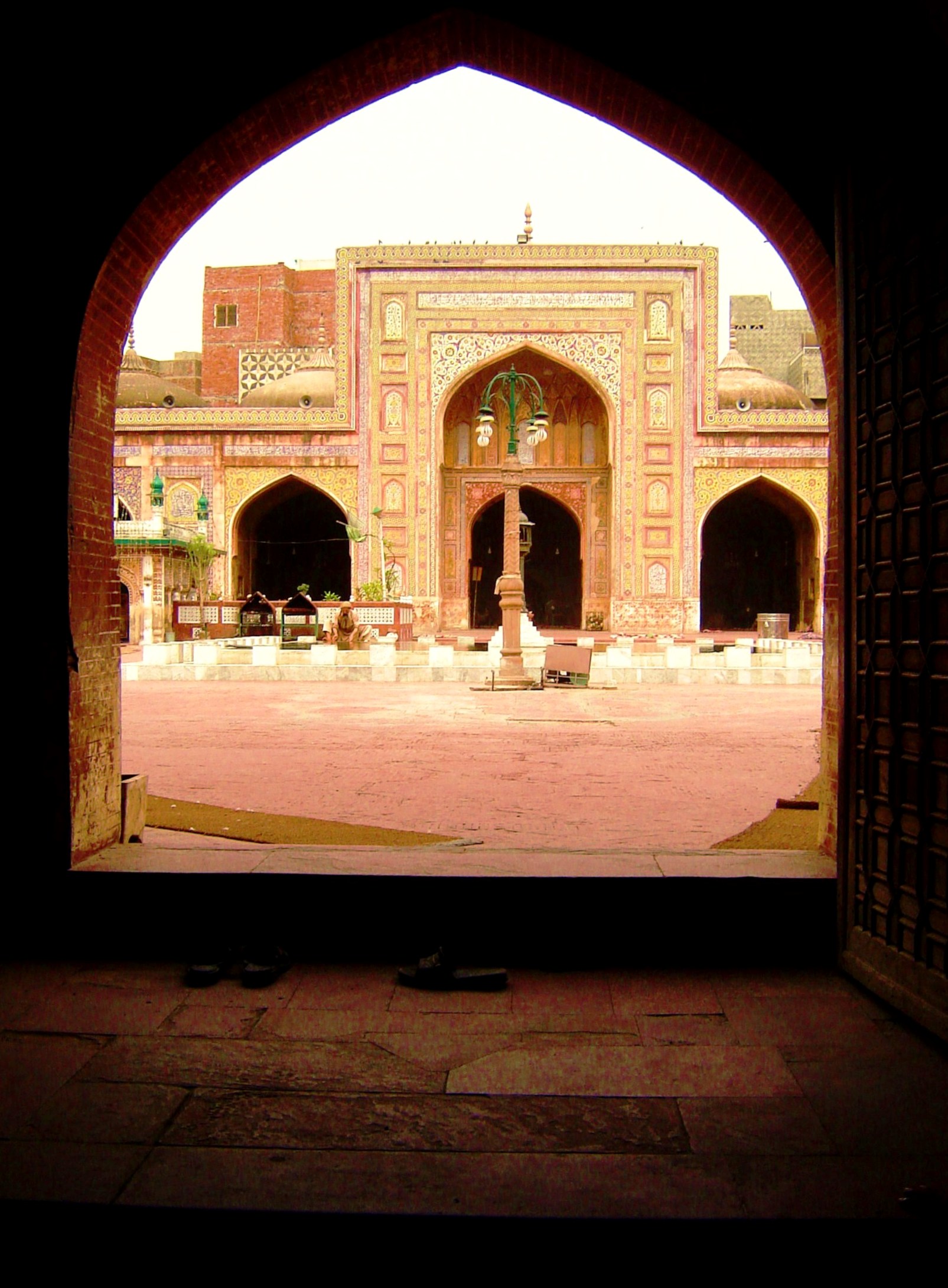 Why can’t I say my prayers at the beautiful neighborhood mosque? Why must I pray in the musty, uninspiring ante-chamber, or in the confines of my house?
Why can’t I play cricket in the park? Why can’t I wear jeans to Liberty Market? Why do I need a male friend to accompany me on my field visits to the shehr?
Why must I get married by the age of 24 and have at least one child by 26?
Why? Because that’s how things were.
I never questioned it, or if I did have questions, they were momentary. The main explanation, of course, was that I was a girl.
That was good enough. It was reasonable, it was appropriate. You never asked why your brother could do things you couldn’t, why there was one set of rules for the boys and another for the girls. To question that would seem presumptuous, daftly unrealistic, “Amreekan” – this is was Pakistan, this was how society functioned, and women were completely A-OK with it.
There were exceptions to the rule, of course, a handful of courageous women who dared to break into non-traditional roles and spaces – but these women, although publicly lauded, were implicitly looked down upon by middle- and upper-class morality. They were arrogant, promiscuous, “unfeminine”, or, they were supremely-gifted rarities that happened once in a generation, and while you admired them, you couldn’t possibly aspire to be like them.
And while life did go on, and the women of my class “progressed” day by day, from classrooms to TV screens to charity fundraisers – the socially acceptable, the superficially liberal – the greatest inhibitions remained.
What if I wanted to be a political activist, campaigning door-to-door and chanting slogans at rallies shoulder-to-shoulder with men? What if I wanted to be a social worker, visiting slums and prisons and acid-burn victims in teeming public hospitals? What if I wanted to be a professional musician, performing at cafés, parks, theaters, outside the protective walls of my school or college? What if I wanted to go for a stroll at midnight, sit at a roadside khokha chewing paan, live in a 3rd story flat in Anarkali, ride my bike to work?
What if I wanted to marry for love to a man “below” my class, to a foreigner, to a gora?
What if I wanted to do all of this, not to make any statements, not to be provocative, not be seen or talked about, but just because that’s who I was, who I wanted to be, and doing something contrary would be oppressive, inhibiting.
In New York, all the inhibitions inculcuated in you since childhood slowly chipped away. You could see yourself for who you were, and you could actually be that person. Nobody judged, nobody cared. People treated you as a human being, without the gender labels and cultural baggage. No one stared at you, no one harassed you. No one noticed you for being a woman, for being different. You were anonymous – and while that could sometimes feel lonely, it was also very liberating.

What it comes down to is choice. You coud choose to pursue your passion, and, married, divorced or single, childbearing or childless, rich or poor, be the happiest woman in the world for having done so – or you could be be like the neighbouring mother-of-4, whom society praises for raising such well-behaved children, for keeping such a tidy, efficient household, for having such an amicable relationship with her in-laws, for being so equable with the servants, and yet be lifeless inside, burdened with regret.
For no matter how noble the mission of wifehood and motherhood, no matter how sacred our notions of femininity, I do not believe that any woman can enjoy seeing her ambitions crushed. I do not believe that every aunty I know did not nurture a secret wish in her heart that she was not able to fulfill. And that was a loss not just for herself, but for everybody around her, for society, for the country – because one woman who lives life to her potential, who is brave and follows her heart, is far more inspiring than any number of daughters, wives and mothers imprisoned to their homes and kitchens and children and a job or husband they do not love.
So, yes, what would I miss about New York if I were to move back? The freedom to be. The choice to be. No double-standards. The same rules for men and for women. The same benchmarks for your daughters and your sons. And though I miss Lahore with all my heart, I do not miss its self-righteous upper-class morality.
Obviously, there will never be a day when you wake up in the morning and the men of Lahore cease to ogle, the aunties cease to matchmake, the uncles cease to lecture, and society ceases to preach one thing or other. It’s up to us to make that happen. It’ll take courage, but that’s the only way to live, the only way to free yourself from the invisible cages your mothers were trapped in, the only way to ensure that your children aren’t trapped the same way.
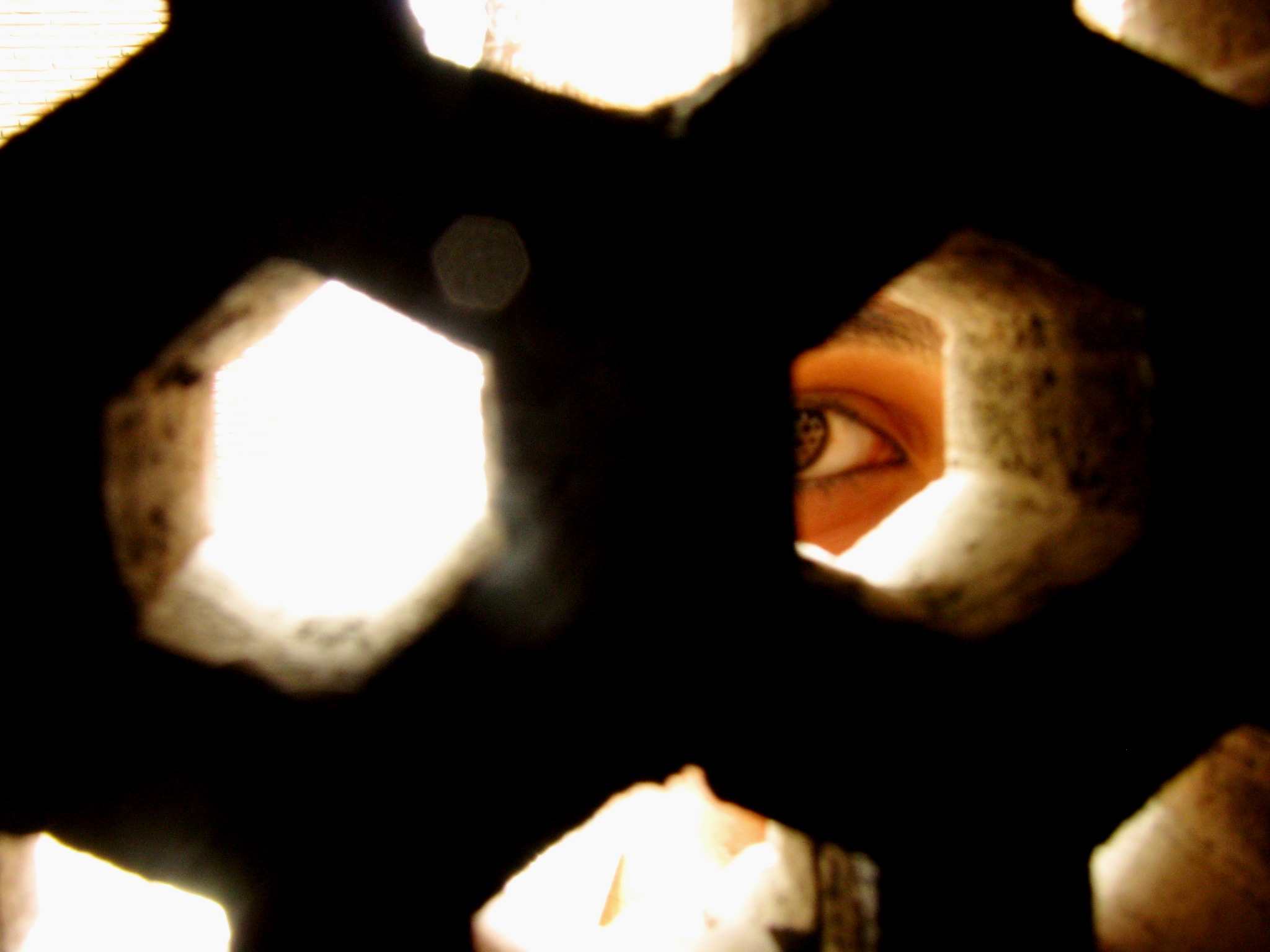
I’ll leave you with a request to read Ismat Chughtai, the brilliant grande dame of 20th-century Urdu literature, whose work inspired me to write this post. She wasn’t just a gifted writer – she was a keen social commentator, whose stories revealed the deepest of deep-rooted hypocrisies in middle-class Indo-Muslim society. She saw things for what they were, she saw herself for who she was, and she was not afraid to be that person, no matter how much people gasped and censured. Though times have changed and women are “freer” than they were in the 1960s, when Chughtai wrote “The Heart Breaks Free”, one of my all-time favourite stories, her observations are just as pertinent today, and we can learn much from them. I couldn’t find the story online, so I’d encourage you to go to a store, buy it and read it, in Urdu or in English. Enjoy!
Lingering Fragrance

She needed some green in her apartment.
Before she bought furniture, she was at the flower shop – a subconscious evocation of a fecund childhood, romping in gardens, rolling in lawns, clambering mango trees, picking flowers in the morning for the breakfast table…
“Philodendrons, lilies, ferns, azaleas, bonsai…”
Hmm. She spends long minutes gazing at each plant, fingering the leaves, feeling the texture, inhaling its aroma.
“I’m sorry, I just can’t decide!” she smiles apologetically at the Chinese lady behind the counter. “Everything is lovely, but…” What do I want?
Then, among the flowering pots, in a tangle of pink, yellow, purple, red, blue, she spies a familiar star-shaped white…
She blinks, startled. Is it? It can’t be…bending forward, she buries her face in the modest little shrub bearing the two pale-faced flowers and takes a deep breath…
Suddenly, she’s not in Brooklyn.
She’s in a garden in Lahore on a warm summer’s night. The grass is damp from the afternoon rain. Crickets and other invisible creatures of the dusk trill madly in the bushes, and a velvety breeze rustles in the bougainvillea creepers and Gulmohar above, filling the air with a shower of orange and fuchsia…
It smells sweet, but a subtle kind of sweetness – of budding love, and clasping a dear one’s moist hand, of late-night drives and dewy white bracelets bought from the barefoot little boy on the curbside, of cooing pigeons and clouds of fluttering wings on the rooftop, of twinkling black eyes rimmed with kajal, white blooms wreathed in black hair, and the enveloping scent of flowers in a bride’s bedroom…
“So you want the jasmine, miss?” The Chinese lady grins, her cropped black head nodding vigorously, round black spectacles bouncing on her nose.
Jasmine! Motia…
“Yes, I’ll take the jasmine,” she nods vigorously back.
It sits on a windowsill in her apartment, in a modest little green pot – spreading its delicate, memory-laden perfume over the folds of her new life, a graceful remembrance, a lingering fragrance of the past.
The Legend of Saif-ul-Malook Part I
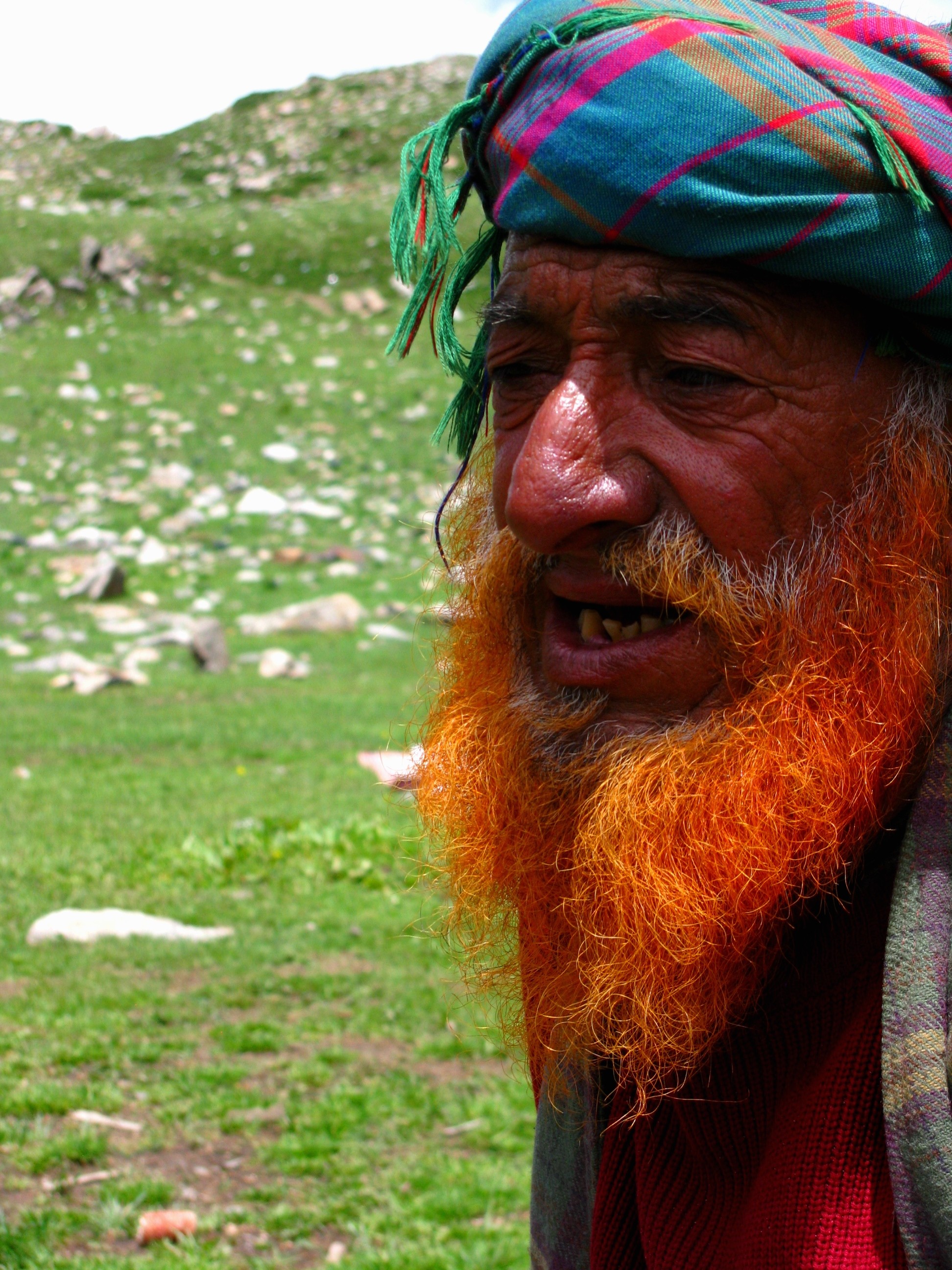
Lake Saif-ul-Malook, situated at a height 10, 600 ft at the northern tip of the Kaghan Valley in Pakistan’s Himalayas, is one of the most beautiful places on earth. I have been there twice, the first time as a 12-year old and then in 2009, when I determined to capture some of its magic on camera and on paper, in the words of two local storytellers who relate the legend of the Lake to visitors.
It is the story of a prince and a fairy, Saif-ul-Malook and Badr-ul-Jamal – a story of love, adventure, faith, magic, suffering and betrayal – a story of the multitude of human passions. Many different versions exist, but below is a reproduction of what the storytellers told us, as faithful to their words and mood as possible, with some writer’s liberties. I hope you enjoy it!
______________________________________________________________________________________________________________________________
“Now listen to me,” he said, and he began.
“I have not seen the Fairy, but I have seen the glory of God.
Every month, on the chowdveen, the 14th night of the lunar month, the Lake is like a mirror – cradling the mountains, the sky, the innumerable twinkling stars, the glowing orb of the moon – so still, so clear, you can scarcely tell between reality and reflection. It is a sight to behold.
Many a night I have also seen lights, floating lights, a thousand floating lights, here on the slope where we sit, and watched them disappear under the rocks.
I have not seen the Fairy Badr-ul-Jamal, but I have witnessed the glory of God.”
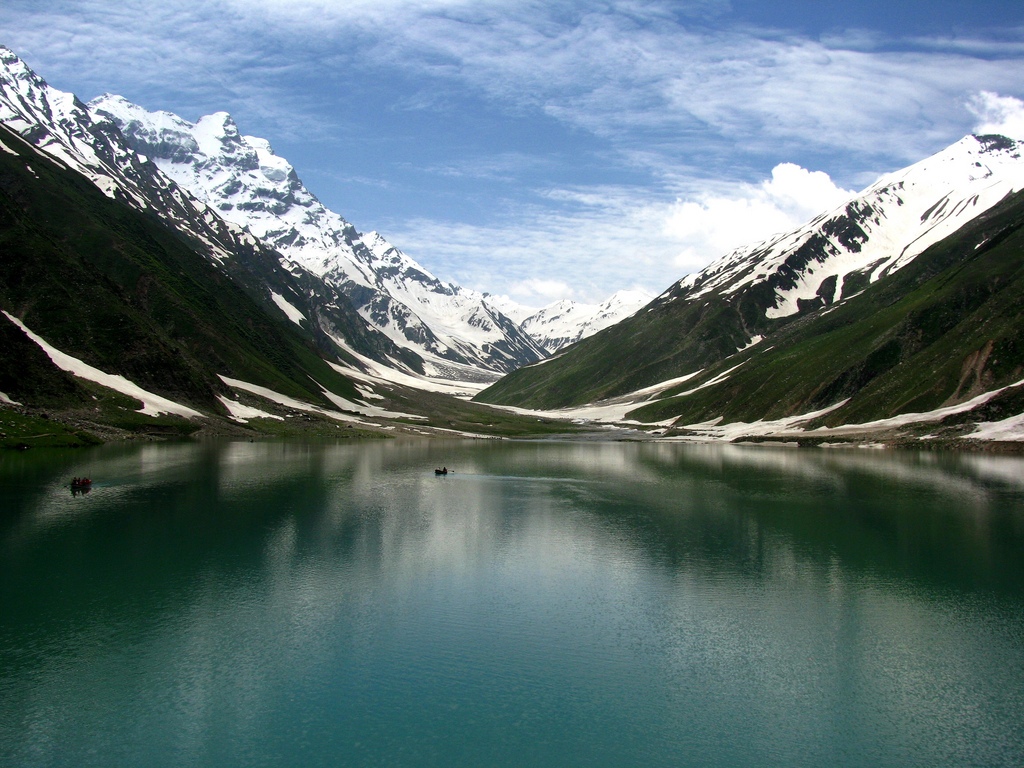
Once upon a time, there lived in Egypt a prince called Saif-ul-Malook. They say that Saif was the handsomest man to walk the earth since Joseph himself – tall and lean, with skin the color of gleaming copper, a clear, noble brow, deep-set dark eyes and black hair that fell in waves to his shoulders. He was brave, a skilled hunter, rider and swordsman, true to his Arabic name – “Sword of the Kings”. Born to riches, Prince Saif had never wanted for anything in his life; there was not a stone, river, man or woman in the kingdom that he could not claim.
Until one night, he had a dream.
A dream that changed the course of his life, and robbed him of his peace of mind forever.
He dreamt of a lake, a lake he had never seen before, surrounded by mountains that seemed to touch the sky and water that shimmered emerald-green in the moonlight. In the lake seven fairies were bathing – ethereal creatures, slim as gazelles, with creamy skins, wide, golden eyes, and hair like rippling ebony – but the seventh among them eclipsed them all in beauty. Her face was as radiant as the full moon, badr, but it was when she laughed, skipping on the water without a care in the world – it was when she laughed that Saif was seized by a joy and a sadness so intense, so inexpressible, that he awoke from his sleep with tears in his eyes. Badr-ul-Jamal…he had never seen anything more beautiful.
The next morning, Saif was visibly troubled.
“Why so crestfallen, son?” asked the king, his father, at breakfast.
“Father,” the young man confided. “I think I am in love.”
The king was overjoyed. “What happy news, son! This calls for a wedding! Who is the favored princess?”
“No princess, father,” Saif replied grimly; then, with a sudden burst of elation: “She is a Queen…A Queen among fairies!”
The king’s face furrowed into a frown as he considered his son’s words. “Saif, you do realize what you are saying? A fairy! She is a bird, a creature cast of fire, naari. So how can a human being, an earthbound mortal like you, ever hope to possess her?” He shook his head vehemently. “It is impossible. Abandon the idea at once. It will bring you nothing but misery,” he foresaw.
But it was no use. It was too late for discussion, for persuasion and advice. Saif’s heart was already on fire. He begged his father’s permission to set out and look for that magical lake where the fairies bathed, in the hopes of finding their Queen. With a heavy heart, the king consented, blessed him on his quest, and watched his only son ride away into the desert.
For six long years Prince Saif searched, roaming every corner of Egypt, from Alexandria to Sinai. Begging on the streets, his hair in his eyes, his shoes in tatters, consumed by love, people no longer recognized him.”There he goes, the madman!” they cried. “There goes the madman, the majnun, who looks for a lake the color of emeralds and mountains of pure white! Who ever heard of such a place?” And they laughed and pushed him out of town.

One day, as he wandered about the outskirts of Cairo, Saif saw a holy man, a buzurg, sitting under the shade of a lone olive tree. “Perhaps this holy man can help me,” Saif thought. As he approached him, the old man looked up expectantly.
“Ah, there you are,” the old man said, a smile playing on his lips. “I’ve been waiting for you, Prince Saif.”
Prince! No one had addressed him thus in years. But before Saif had the chance to express his surprise or explain his predicament, the buzurg dug a hand into the bountiful folds of his cloak and produced an old, battered round sheepskin cap, frayed and thinned with what seemed like centuries of use. Placing it in Saif’s hands, the holy man said, looking at him with keen eyes, “You have been through a lot, my son. But the important thing is that you don’t give up – nothing valuable is won without a struggle.”
Saif toyed with the cap in his hands. “Thank you,” he said hesitatingly. “But what am I supposed to do with this?”
The old man chuckled. “Why, what do you think? Put it on!”
Puzzled, Prince Saif gingerly placed the old cap on his head.
What happened next cannot be described, only experienced by the wearer of a Suleimani topi, Solomon’s fabled magic cap, which has the power to transport its wearer to any place he or she desires in a matter of seconds. There was a gust of wind, and Saif felt the earth give away under his feet. Suddenly, he was shooting through the sky in a fantastic whirlwind of faces, places, colors and memories; a deafening rumble filled his ears; and then, just as suddenly, his feet were firmly planted again on the earth. When he opened his eyes, this is what he saw.
Of New York Spring And Other Things
Published in the Express Tribune Blog, May 24th 2011
Growing up in Lahore, the monsoon was my favourite season – those muggy, motionless afternoons when the air suddenly exploded into a river of orange rumbling down from the sky, leaving jungles in its wake. In the Bay Area, every balmy day of the year was beautiful, except for the miserable characterless spluttering they called “rain”.
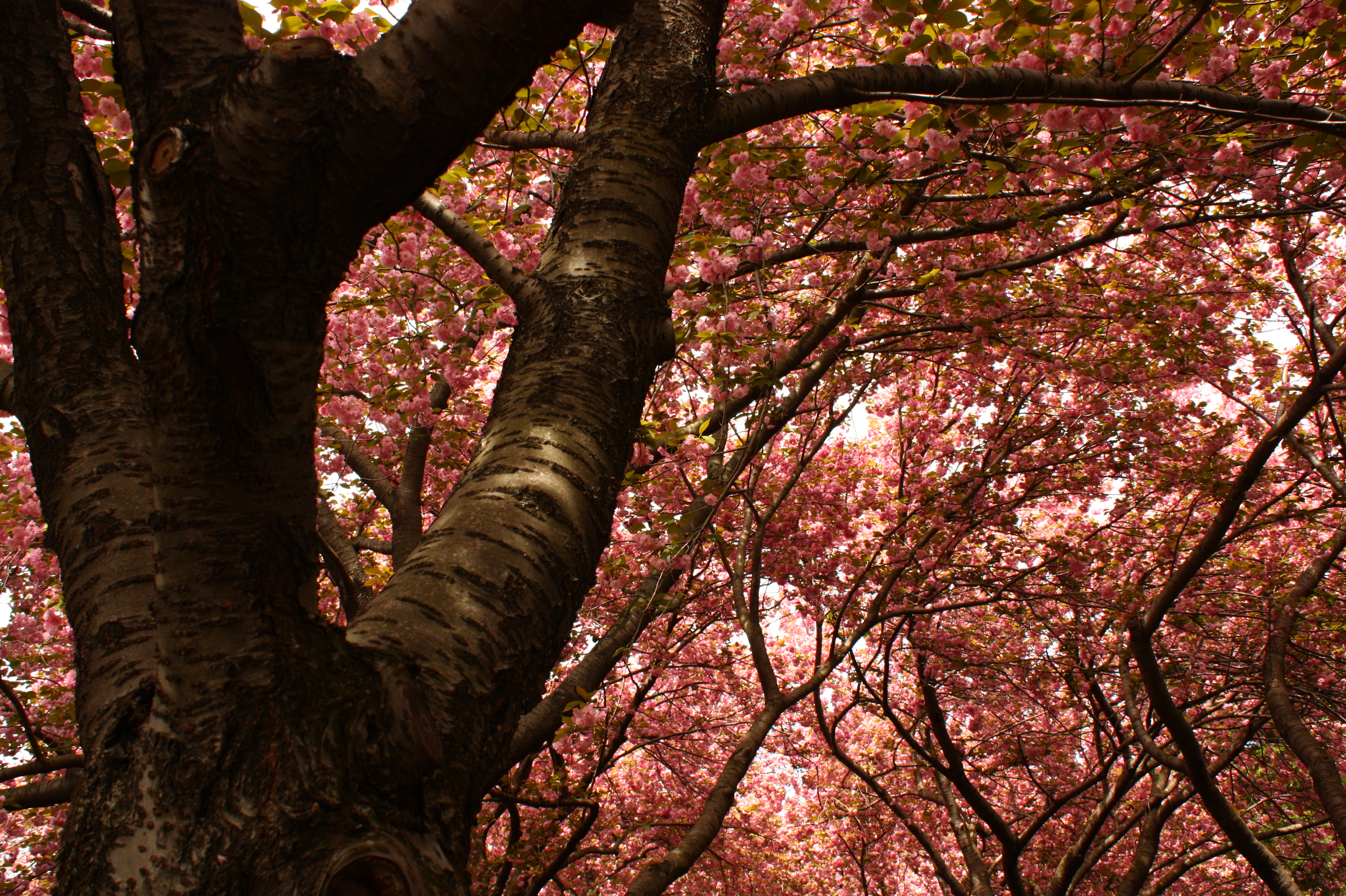
In Ithaca, my favorite season was Autumn – a firedance in the sky, bold and blazing, curling flames at your feet – and in New York, it has to be spring, the teenage of nature, blooming poetry from every stem, every lilting branch, a breathtaking ballet of pink and white to melt the numbest of hearts.
On such a blossomy New York morning last week, my colleague Ryan and I were at Ground Zero, jostling through hundreds of New Yorkers and out-of-towners to catch a glimspe of President Obama as he arrived to lay a wreath at the September 11th Memorial Site, giving symbolic “closure” to the victims and families of the 9/11 attacks following Osama bin Laden’s death.
We didn’t see him, not even a fluttering hand through a darkened car window. But Obama became irrelevant once we actually started talking to people and recording their reactions to the news.
Reactions were predictable: One African-American woman beamed with pride that Obama had been in office “to do this urgent and important duty”. A man who had lost four friends in 9/11 said he felt a sense of “relief” and “joy” beyond words; a young Latino-American who had recently joined the New York National Guard said that Osama’s death was a source of “unity” for the people of New York, that it showed “how Americans come, in all shapes and forms, whatever nationality you are, whatever colour you, you come as one.”
But what was unpredictable was these people’s, these ordinary, middle-class, tax-paying people’s calm acceptance of the fact that yes, this “war” was “not going to end with the death of one person”, and, more disturbingly, that it needed to go on, that it should go on. In the words of one 67-year old ex-Marine, “We have to be there in all of these countries to assist…so we can crush these people when they come in to try and hurt us. It’s not over.”
While Ryan asked the questions and I filmed behind the camera, I thought about the questions I would have liked to asked these people: “But do you know the real victims of your country’s fallacious war? Do you know who actually pays the price? What do you have to say to the families of the tens of thousands of innocent men, women and children killed in Afghanistan, in Iraq, in Pakistan because of this war? Were their lives less valuable than the 3,000 Americans who died here 10 years ago? Do you not see that what you’re calling ‘patriotism’ and ‘duty’ is decimating entire societies, entire nations as we speak?”
I said nothing of the sort. I was a journalist, and Pakistani on top of that, and the last thing I wanted to in that sort of crowd was get into an argument.
Turns out, somebody else was there to do it for me – a lanky, bespectacled and very articulate white dude by the name of Sander Hicks, founder of the “Truth Party”, a grassroots political group that believes in exposing, among other things, that 9/11 was a hoax. Wearing a black T-shirt with the words “9/11 Is A F****** Lie!” emblazoned on the front, Hicks shouted maniacally but fearlessly to the crowd, “Why am I here? Am I here to celebrate and validate a murder? Without a trial, without due process? Or am I here to think about what is really happening in our country? Do we justify war and torture based on 10 years of lies? I say no! And I don’t care if there’s a million people here saying I’m an a**hole, just for standing up for peace and truth!”
I’m still surprised that he got away with saying that, and a lot more, without even a scratch, though there were several jingos in the crowd who would’ve liked nothing better than give the provocative Hicks a square punch in the jaw. But shouting back “A** hole!” is about as far as they let their anger go.
Then, in the middle of the fray, a red-faced, white-mustachioed little man broke in. Wearing a black leather jacket covered in Vietnam insignia, he cried in a thick Texan drawl: “You know what I would’ve done if I were President when 9/11 happened? I would’ve nuked the entire Middle East, starting with Mecca!”
So far that day, I had been watching and listening to everybody almost in the third person, a perfectly neutral body. But at those words, I felt my heart plummet like it would at a vertical drop on a Seven Flags rollercoaster, and a row of goosebumps shot up my spine as if I were suddenly caught in an Arctic gale wearing a T-shirt. I looked up from the camera. My eyes stung; I thought I was going to cry.
It was pure reflex. Something essential and sacrosanct, seeded deep in my soul, had been momentarily convulsed, and at that moment I could’ve clawed out the old geezer’s eyes.
There was a collective gasp from the crowd, and people were quick to admonish, “No, no, that’s crazy!”, “Not all Muslims are bad!”. Clearly, the guy was a loony, and it would’ve been stupid to take anything he said seriously. But his words stayed with me long after his black leather jacket disappeared into New York’s hubbub of loonies, and I thought, “So this is how it feels – to be on the ‘other side’ of extremism?”
We’ve had plenty loonies from our part of the world dispense similar tirades about the West, about the U.S., Europe or Israel – and God knows I’m not a fan of those parts of the world or their foreign policies. But to an ordinary citizen, who has as little control over what their government does as we do over ours, how would it feel, to be so sweepingly abused, to hear people talk about obliterating our very existence, burning flags and defacing temples as if it would have no consequences, as if it would offend or incite nobody; even for someone like me, deeply suspect of nationalism and all other -isms in general, I admit that it would hurt – that it does hurt.
It’s complicated. It’s complicated when imperialism is involved, when capitalism and neo-colonialism is involved, when there is a legitimate anger and resentment and struggle for justice, like in Palestine, or Iraq, Afghanistan and Pakistan. It’s difficult to talk without the invective, without the bitterness, when you have been truly wronged; but all I can say is, let’s let humanity win.
That’s all we have, to keep us alive and save us from total catastrophe. At the end of the day, it’s the ordinary citizen’s sympathies and consicence that we can appeal to, we can touch; it’s their ordinary humanity that we can depend on, not any politician’s or government’s. Let’s not sacrifice that, no matter which ‘side’ we come from.

Not Being
If home is where the heart is, my heart is forever moving, a gypsy
If a piece of cloth and a stadium slogan is the basis of nationalism, I have no nation
If piety is measured in prayers, in a ledger in a language I don’t understand, I am a heathen
If speech is an adequate expression of sentiment, I have no words
If living by somebody else’s rules is sociability, I am a misanthrope
If white is black and black is white, then I don’t exist.
Egypt

Without prognosticating, analyzing, rationalizing – irrespective of what happens next week, the next day, or the next hour – I think what’s happening in Egypt right now is beautiful.
It’s one of those moments, those rare historical moments that you read about in your classroom within the pages of a textbook, and it all seems so distant, almost fictional, and as you memorize the facts for tomorrow’s quiz you believe quite firmly in your heart that nothing like that will happen in your lifetime. Because you were born too late, because such grand, moving events just don’t happen anymore…
When rank and class and position, the neighbourhood you live in, the clothes you wear, the work you do, the dialect you speak, everything that separates you from your fellow countryman or woman on any ordinary day suddenly melts away; when, for once, a system that is based on divisions and duties and somebody else’s rules breaks down, and people speak with one voice – not hundreds, not thousands, but millions. Then, there is no power, no number of tyrants, tanks or tear gas in the world that can silence them.

I’m not there in Tahrir Square in Cairo, but I can feel the thrill, the exhilaration that something momentous is unfolding before my very eyes.
It feels a little like the time when Obama became President in 2008. Irrespective of what came after, the broken promises, the disillusionment, that moment itself was pure magic; when a joy and a hope stronger than anything else swept over us at the I-house in Berkeley, and people from every corner of the world cried and cheered and celebrated in a unison that couldn’t be explained, only experienced.
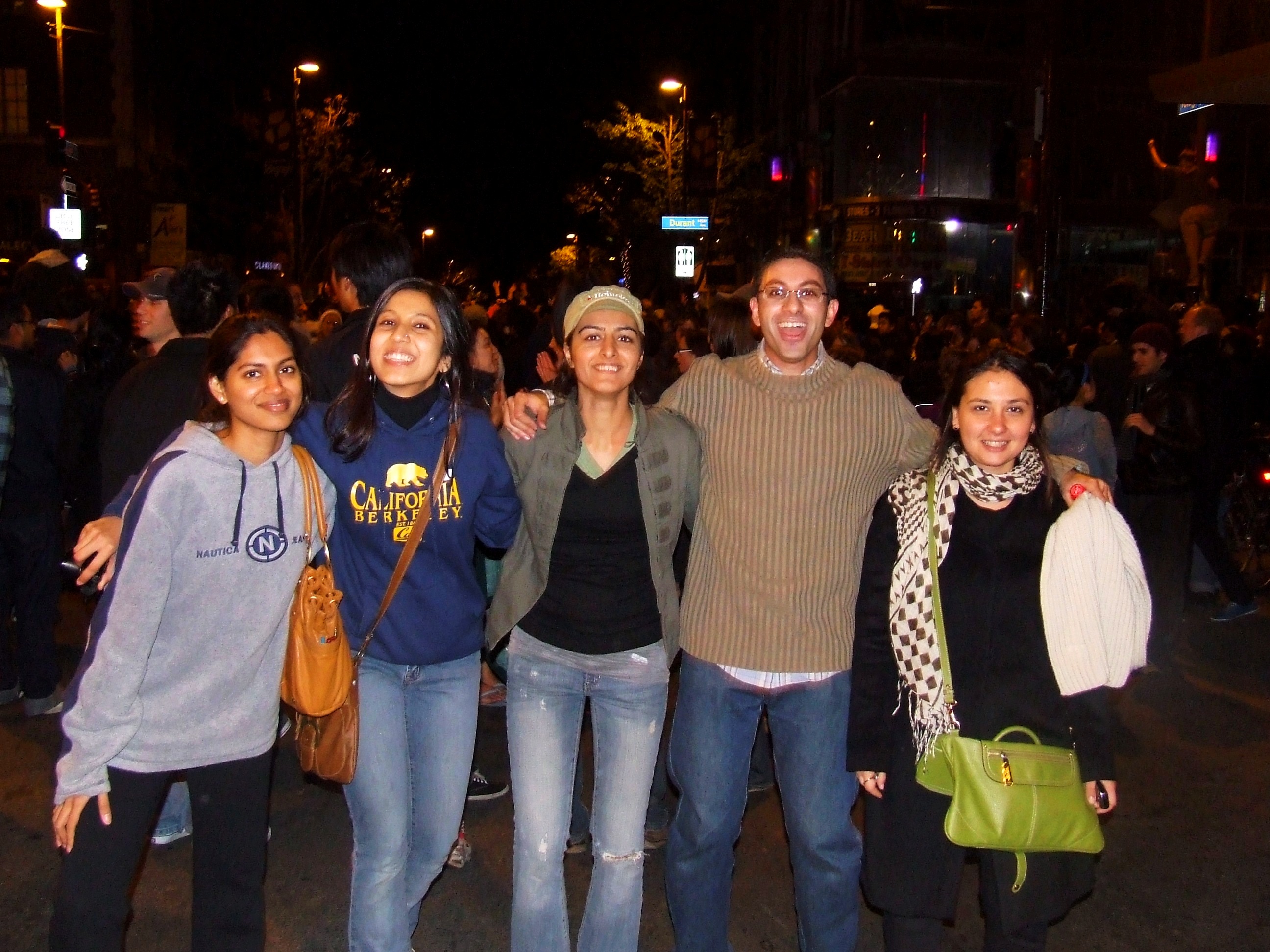
Or the time when Pakistani students rose up against General Musharraf’s martial law in November 2007, abandoning their books and taking to the streets with a passion that nobody knew existed, and young people in Pakistan felt – even if only for those dramatic few weeks – that we actually had the power to change the society we lived in, for the better.

What ensues from such extraordinary moments isn’t always better, or different from before. But isn’t life more about the moments than the monotonous spaces between them? The birthdays, the marriages, the revolutions and revelations, those precious fleeting moments of unadulerated emotion that you savor and look back to forever?
Egypt has had its moment. Egypt will never be the same. The Arab world will never be the same.
And Egyptians aren’t thinking, “What if Mubarak doesn’t step down after all? What if the constitution isn’t changed at all? What if another puppet dictator takes over in his place?”
These questions and speculations and eternally encumbering “what-ifs” don’t bother them, shouldn’t bother them. The Egyptian people have spoken. They have shown their courage, their humanity, their unity to the world, and to themselves. That is the power, that is the point. That is what matters.

Is there a Pakistan to go back to?

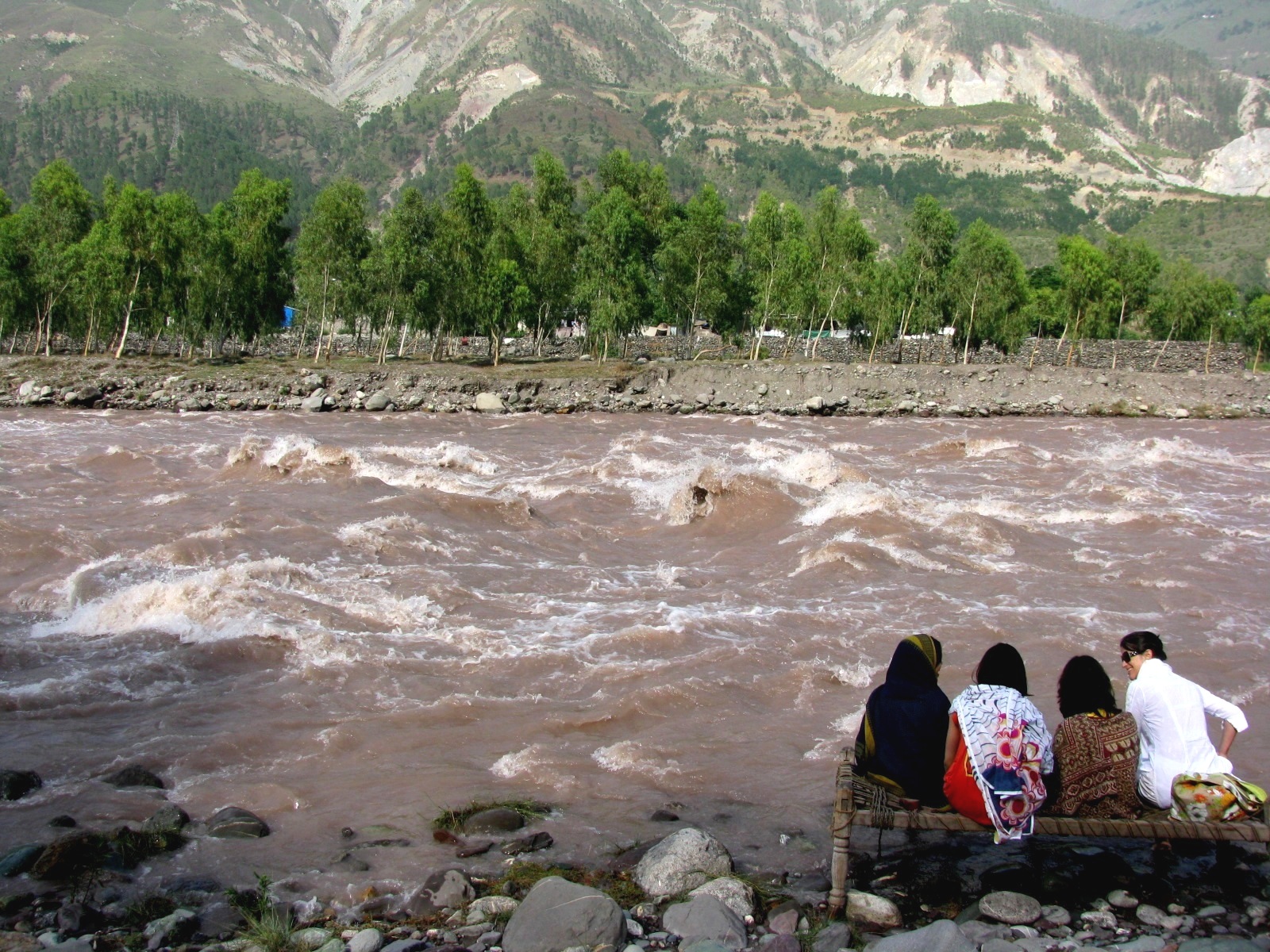
- Resting by the Kunhar River near Balakot, Kaghan
Published in The Express Tribune Blog, January 20th, 2011
Last week, my husband and I finally booked our return tickets to Pakistan. It was a proud moment, a happy moment, not only because we had been saving to buy them for months, but because we had not been home in nearly two years.
Two years! It seemed like a lifetime. We had missed much: babies, engagements, weddings, new additions to the family and the passing of old, new restaurants and cafés, new TV channels, even the opening of Lahore’s first Go-Karting park. I could hardly contain my excitement.
Yet, my excitement was tainted by a very strange and disquieting thought – was there even a Pakistan to go back to?
My family and friends would be there, yes, and the house I grew up in, and my high school, and the neighborhood park, and the grocery store where my mother did the monthly shopping, and our favorite ice cream spot…
But what of the country? And I’m not talking about the poverty, and corruption, and crippling natural disasters – I’m talking about a place more sinister, much more frightening…
A place where two teenage boys can be beaten to death by a mob for a crime they didn’t commit, with passersby recording videos of the horrific scene on their cell phones…
A place where a woman can be sentenced to hang for something as equivocal as “blasphemy”…
A place where a governor can be assassinated because he defended the victim of an unjust law, and his killer hailed as a “hero” by religious extremists and educated lawyers alike…
This is not the Pakistan I know. This is not the Pakistan I grew up loving. This bigoted, bloodthirsty country is just as alien to me as it is to you.
The Pakistan I know was warm, bustling and infectious, like a big hug, a loud laugh – like chutney, bright and pungent, or sweet and tangy, like Anwar Ratol mangoes. It was generous. It was kind. It was the sort of place where a stranger would offer you his bed and himself sleep on the floor if you were a guest at his house; a place where every man, woman or child was assured a spot to rest and a plate of food at the local Sufi shrine. A place where leftovers were never tossed in the garbage, always given away, where tea flowed liked water and where a poor man could be a shoe-shiner one day, a balloon-seller the second, and a windshield-wiper the third, but there was always some work to do, some spontaneous job to be had, and so, he got by.

My Pakistan was a variegated puzzle – it was a middle-aged shopkeeper in shalwar kameez riding to work on his bicycle, a 10-year old boy selling roses at the curbside, a high-heeled woman with a transparent pink dupatta over her head tip-tapping to college, with a lanky, slick-haired, lovelorn teenager trailing behind her.
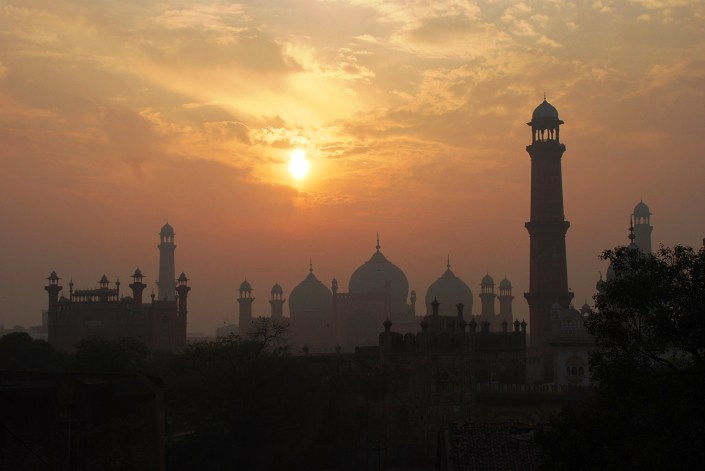
A Michael Jackson-lookalike doing pelvic thrusts at the traffic signals for five rupees, a drag queen chasing a group of truant schoolboys in khaki pants and white button-down shirts. Dimpled women with bangled arms and bulging handbags haggling with cloth vendors, jean-clad girls smoking sheesha at a sidewalk café, and serene old men in white prayer caps emerging from the neighborhood mosque, falling in step with the endless crowd as the minarets gleamed above with the last rays of the sun in the dusty orange Lahore sky.
My parents were practicing Muslims, and religion was always an important part of my life. Like most Pakistani children, my sister and I learnt our obligatory Arabic prayers at the age of 7; I kept my first Ramadan fast when I was 10, bolting out of bed before dawn for a sublime sehri of parathas, spicy omelettes, and jalebi soaked in milk. By the time I was 13, I had read the Holy Qur’an twice over in Arabic, with Marmduke Pickthall’s beautifully gilded English translation.
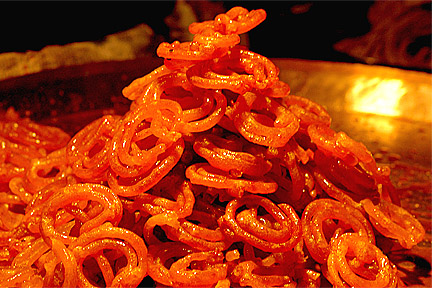
But beyond that – beyond and before the ritual, or maddhab, as they say in Sufism, came the deen, the heart, the spirit of religion, which my parents instilled in us almost vehemently, and which to me was the true message of Islam – compassion, honesty, dignity and respect for our fellow human beings, and for every living creature on the planet.
So, while we as Pakistanis had our differences, and practiced our faith with varying tenor – some were more “conservative” than others, some more “liberal”, some women did hijab while others didn’t, some never touched alcohol while others were “social drinkers” – we were all Muslim, and nobody had the right or authority to judge the other, no red-bearded cleric or ranting mullah. There were no Taliban or mullahs back then; if they existed, we never saw them. Not on TV, not in the newspapers, not on the streets, in posters or banners or fearsome processions.
It wasn’t a perfect society – far from it. Inequality and abuses were rampant, and daily life for a poor person could be unbearable. But they were the kind of problems that every young, developing, post-colonial nation faced, and the worst thing that could happen to you when you stepped out of the house was a petty mugging or a road accident, not a suicide blast. It was chaotic, but it was sane.
Then 9/11 happened, and society as my generation knew it began to unravel.
It started as a reaction to the U.S.-led invasions of Afghanistan and Iraq, and the “clandestine” war in Pakistan – a reaction shared by Pakistanis across the social spectrum. But somewhere along the way, the anger and grief mutated into a suicidal monster of hatred, robed in religion and rooted in General Zia’s pseudo-Islamic dictatorship of the 1980’s and the U.S.-funded Afghan jihad. Pakistan was engulfed by a frenzy, an unspeakable frustration, not only at the neighboring war that had expanded into its heartland, but at everything that was wrong with the country itself. And, like the hysteria that fueled the Crusades or the 17th-cenutry Salem witch-hunt, religion was the most convenient metaphor.
I don’t claim to understand it all, or be able to explain it. But what I do know is that, alongside the two purported targets of the “War on Terror”, there is no greater victim of 9/11 than America’s indispensable, ever-“loyal” ally and doormat, Pakistan itself.
Maybe I’m romanticizing a little. Maybe I’m being over-nostalgic about the past, and the Pakistan of my childhood. But that’s the only way I can retain some affection for my country, the only way I can sustain the desire to go back and live there – if I know and remember in my heart, that it has been better. That it was not always like this. That it was once rich, multifaceted, beautiful, tolerant, sane – and can be again.
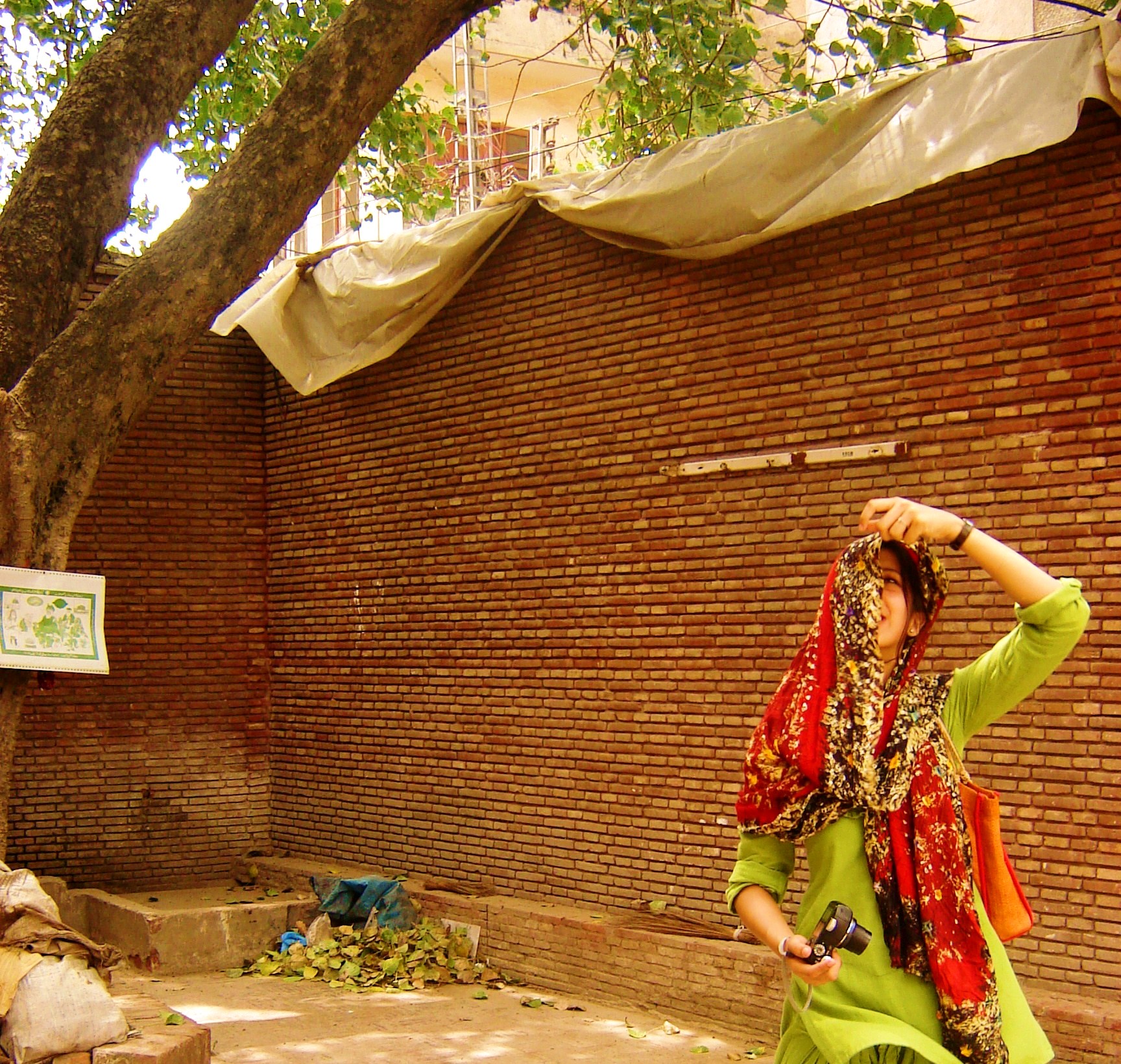
Published in Sanctum!
A story I wrote as a senior at LUMS for a class on Islamic Spirituality was just published in the Fall 2010 issue of Columbia University’s bi-annual Journal of Religion, Sanctum. The story, titled “The Scholar, The Philosopher & The Soldier“, is set in the Golden Age of Islamic civilization, sometime during the Abbasid Caliphate (between the 9th and 12th centuries), and is a parable for three different approaches to Allah, The Divine Being, in classical Islamic tradition.
It is a simple story; but it illustrates a large part of what I took away from that class (taught by Columbia alumnus Shaykh Kamaluddin Ahmed). Click here to read the story, and here to read the “sequel”, titled “Salar & The Sufi“.
Warmly Winter
Published in Pakistan’s “Women’s Own” Magazine, December 2010
It’s finally happened.
The knock on the door, and an outstretched palm containing a steaming plate of food.
Chicken-and-veggie rice casserole or Palestinian maqluba, to be specific, on a plastic white flower patterned plate.
Yes, Mama Jama the landlady brought us dinner!
And it couldn’t have been at a more opportune time. In my missionary zeal for bhoono-fying, I had just burnt the aloo gosht. Mama Jama probably smelt the aroma of charred onions drifting down the staircase and took pity on us.

Of course, it’s not that I was expecting her to. It’s not the reason I’d show up at her doorstep every other week with a lovingly-prepared bowl of kheer, zarda or melt-in-your-mouth gulaab jaaman.
I was just being neighbourly.
And testing out my (extremely novice) Pakistani dessert skills.
And skirting the guilt of single-handedly consuming 2 pounds of sugar in one afternoon – an inevitability if said bowl of kheer or gulaab jaman remained in my apartment, thanks to the relentless sweet tooth inherited from my dad.
Yes, I am an epicure (fancy word for greedy). If it were up to me, I’d either be at home baking apple pies and chewy chocolate brownies before proceeding to do justice to their goodness, or I’d be outside in a café or bakery sinking my teeth into the congenial warmth of freshly-baked cinnamon roll, red velvet cupcake, almond croissant, pumpkin pie, strawberry cheesecake, piping hot apple pie or chewy chocolate brownie, with my nose between an equally delicious New York Public Library book.
Luckily, I have a very active and health-conscious husband, who, a) makes sure that I never find more than 50 cents in my wallet at whatever random moment the sweet tooth calls, rendering me helpless in the face of heavenly-smelling street stalls and petite cafés with bothersome minimum-cash policy; and, b), manages to drag me out somewhat regularly for a bit of exercise.
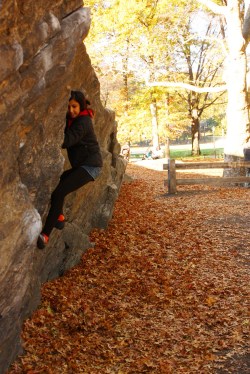
Our current physical activity is rock climbing – on the boulders of Central Park. So, if you ever happen to be strolling near Columbus Circle on a Saturday morning and see two figures attached to a rock – one, strong, athletic, moving swiftly across the rock face like a demo picture from “The Self-Coached Climber”, and the other a ball of play-dough smushed against the wall – you’ll know it’s us.
I have to say though, as much as I was dreading another East Coast winter, there is a charm about it, a crisp-coloured storybook charm.
I don’t know if it’s in my brown BearPaw boots, or the toasty knit cap and woollen mitts that I gleefully don every morning; the feel of a hot Starbucks hazelnut latté between my fingers or the beautiful bareness of Central Park, the crunch of leaves beneath my feet, and the blossoming of Christmas lights on 5th Avenue. Ice skating at Bryant Park, followed by a cup of steaming apple cider and a stroll through the dazzling holiday market, a veritable Santa’s workshop; the pleasant conviviality of huddling with strangers in the 8×8 floor space of Kathi Rolls or Mamoun’s Falafel in the Village, exchanging smiles over a shami kabab roll and shared hearth; or, maybe it’s just the indescribable comfort of home, where you return from the cold with relief and bliss in your heart – given that the heat is working, which you can trust it to be if you’re on food-exchange terms with the landlady.
Of course, slopping through puddles to do your laundry or buy a carton of milk is another matter, as are the thundering hailstorms that sound as if they’ll break straight through your skylight and flood the apartment, the sodden subways and the razor-sharp winds whipping through the labyrinth of high-rises ready to slice off your nose, or having to wear the same inflated down jacket for five months until you are resigned to looking like the Michelin Tyre Man in every photograph.

But no matter how much I complain about it now, winter was always my favourite season in Lahore. I would dream about it the whole year – dream of the day, sometime in November, when the gas heaters were unearthed from the store room and dusted out, when bright chunky sweaters and printed Aurega shawls were unpacked and sunned to get rid of the minty smell of mothballs.

The marvelous halvas my mother would begin to ghot-ofy in the kitchen, gajar, anda, sooji, and my personal weakness, chana daal, the rich smell of ghee and shakkar permeating the entire house in its intoxication; the blood-red pomegranates and succulent oranges we’d eat sitting out on the dewy lawn, the dogs snoozing under the chairs, wrapped up in a brown khaddar shawl that smelt of faded Chanel No. 5.
Even going to LUMS in the morning was fun, dressed in a gigantic sweatshirt and sitting on the sidewalk across the cafeteria after class, watching the steam from the PDC teacup mingle with our cloudy breaths, as the fabled Defence fogs circled in around us from the empty stretches of Phase 5, and we pretended we were in a Sci-Fi movie…
Winter was synonymous with Ramzaan and Eid, with grand tented shaadis, Capri nashtas and apple sheesha at MiniGolf, starry walks, sunny picnics, bonfire dances; lying curled up on a floor cushion in front of the heater in your living room, looking out at the lights of the 600-year old Lahore Fort from the rooftop of Cuckoo’s on your cousin’s December birthday, or blushingly saying “Hello” to your soul mate in the back rows of a Gymkhana concert…life didn’t get any better than a winter in Lahore.
And though I am here now, and New York City beckons with its lights, treats and newfound friends, and I am happy with my new life, I still dream of those magical Lahore winters, old friends, old shawls, ancient forts, and the fresh, pink-cheeked days that hold some of my most precious memories …
And that’s alright. Because time doesn’t flow if you don’t dream.
The Third World Burden
Published in The Express Tribune Blog, November 9th 2010
At the documentary production company where I worked over the summer, one of our ongoing projects was a film about four Senegalese teenagers chosen to come to the U.S. on basketball scholarships. At the end of the film, the boys return to Senegal, and one of them says, “We were the lucky ones. Now it’s our turn to give back”.
“Ah, that noble, philanthropic spirit!” my boss once remarked with an ironic laugh, as we had just finished watching a fresh cut of the film. “Isn’t that just so African?”
“No,” I thought to myself, slightly annoyed at her levity. “There’s nothing African about it. That’s what anyone would say…” And as these thoughts went through my mind I suddenly realized that this attitude, this sentiment that the young Senegalese boy had expressed and which to both of us was so completely natural and unquestionable – this attitude was not universal.
It was a Third World phenomenon – a Third World burden.
We’ve all felt it, growing up in Pakistan – an intense altruism combined with intense guilt. We know that we haven’t done a thing to deserve the blessings we were born with, the schools, books, servants, cars and computers that we took as a matter of course; and that knowledge makes us extremely uncomfortable, especially when we go out and see the reality on the streets.
So, we feel this compulsion, this need to absolve ourselves by “giving back”, by doing charitable works, by devoting some part of our lives to this country that gave us so much simply by a stroke of chance.
This sentiment formed a large part of my motivation for applying to Journalism School. Journalism, for me, was a way to “give voice to the voiceless”. It was my way to “make a difference”, to “bring about a change” in my country, and other such lofty objectives, which I liberally elucidated in my personal statements.
I was being serious, too. Ever since I can remember, I’d had this sense of responsibility to “represent” Pakistan, to tell the world “the truth” about my misunderstood and maligned country. How and why I wanted to do this was irrelevant – I just knew that I ought to, that it was my duty. And so, I would dutifully watch the 9pm PTV Khabarnama with my dad every night, scan the front pages of The News or Dawn every morning before going to school, glue myself to CNN and BBC as soon as I returned home in the afternoon – feeling very good about myself, very clever and “aware”, because, after all, this was going to be my cause, this was my calling.
Then I came to the U.S., and found a precise pigeonhole sitting in wait for me – the young, educated, uber-ambitious, hyper-intellectual Pakistani-Muslim woman, an increasingly-coveted creature in the West. Falling into this pigeonhole, I was expected to be an authority on “all” things Pakistan – at least the Western conception of it – from the “War on Terror” to the safety of Pakistan’s nuclear weapons, relations with China and India to the sociology of the Taliban, violence against women, the rights of minorities, jihad in Islam, arranged marriages, the latest connivances of the President/Prime Minister/Military Dictator, whichever incompetent and corrupt nutcase happened to be in power, the number of casualties in the latest suicide attack…
I couldn’t have any other interests, and people didn’t expect me to converse about anything else. Anything but the destruction, misery, and despicable politics of my country.
And, to a degree, I lived up to the stereotype.
When Musharraf declared emergency in November 2007, when Benazir was assassinated in December 2008, when suicide bombs and drone attacks were reported in the New York Times, the people I passed by in the corridors on my way to class would look at me with an intense pity, even a kind of awe, as if I were the most unfortunate person that they knew. As if, every time a missile struck or a bomb exploded anywhere in the country, whether in Islamabad or the remotest part of the tribal belt, I was somehow directly affected, I somehow had an obligation to grieve. And I would return their gazes with a wan smile, a nod of the head, acknowledging their sympathy and concern with the air of a martyr.
But you know what? Sometimes I faked it.
Deep down inside, I knew this person wasn’t me. This person, posing to be the face of the Pakistani nation, a walking repository of information and statistics, the sharp-witted political analyst or TV talkshow host of tomorrow – it wasn’t me. I wasn’t an authority on anything except my own experience, and my own experience was as far removed from the poverty, violence and corruption that comprised of the news headlines as could possibly be.
And what if – what if I didn’t even want to be that person?
What if all I wanted to do in life was travel the world and take beautiful pictures? Did that make me a “bad” journalist, a “bad” Pakistani?
Once, one of my father’s friends – an “uncle” – asked me what kind of “issues” I was interested in covering as a journalist. “Politics, economics, business?” were the options he gave me.
I decided to be bold this time. “Actually, I’m more interested in culture and travel,” I said, stealing a glance at the yellow National Geographics that lined the bookshelf. “I want to be a travel writer.”
The uncle’s face fell to a grimace, as if I’d said I wanted to be a tight-rope dancer at Laki Rani Circus. “Well, there’s a lot of use in that,” he muttered.
So we come back to the Third World burden, where every son or daughter of the land who is able to “escape” abroad for a better education or a better life is unspokenly expected – no, duty-bound – to “give back”, to “represent”. Indeed, to have other aspirations or interests would be considered strange, unworthy, or irresponsible, a “waste”.
Don’t take me wrong. I love my country, and I do want to give back. But I don’t want it to be out of “duty”, or worse, guilt. Most of all, I dislike the stereotype, the stereotype that hounds countless other Pakistanis, especially journalists like myself, that prompts the same automated response from all media outlets in New York City: “We don’t have any use for you here. However, if you were in Pakistan…”
Yes, I know. I need to be in Pakistan, I need to talk only about Pakistan, if I want to be a journalist, if I want to further my career, if I want to make a name for myself. I need to write an exposé on madrasahs or profile Faisal Shehzad, interview a militant, acid burn victim, or a young girl orphaned by the floods – I need pictures of devastation, tales of suffering, tinged with the spectre of extremism, I need to exploit my country’s wretchedness on HD-cam for the world to see, and then tell myself I’ve done a good deed, that I’ve done “my bit” to give back.
No, thank you. Give me a ticket to teach English in China, a spot on a Mount Kilimanjaro expedition or a photographic tour of the Silk Route any day. I’ll give back when I want to, the way I want to.
- ← Previous
- 1
- 2
- 3
- 4
- Next →
 Windswept Words